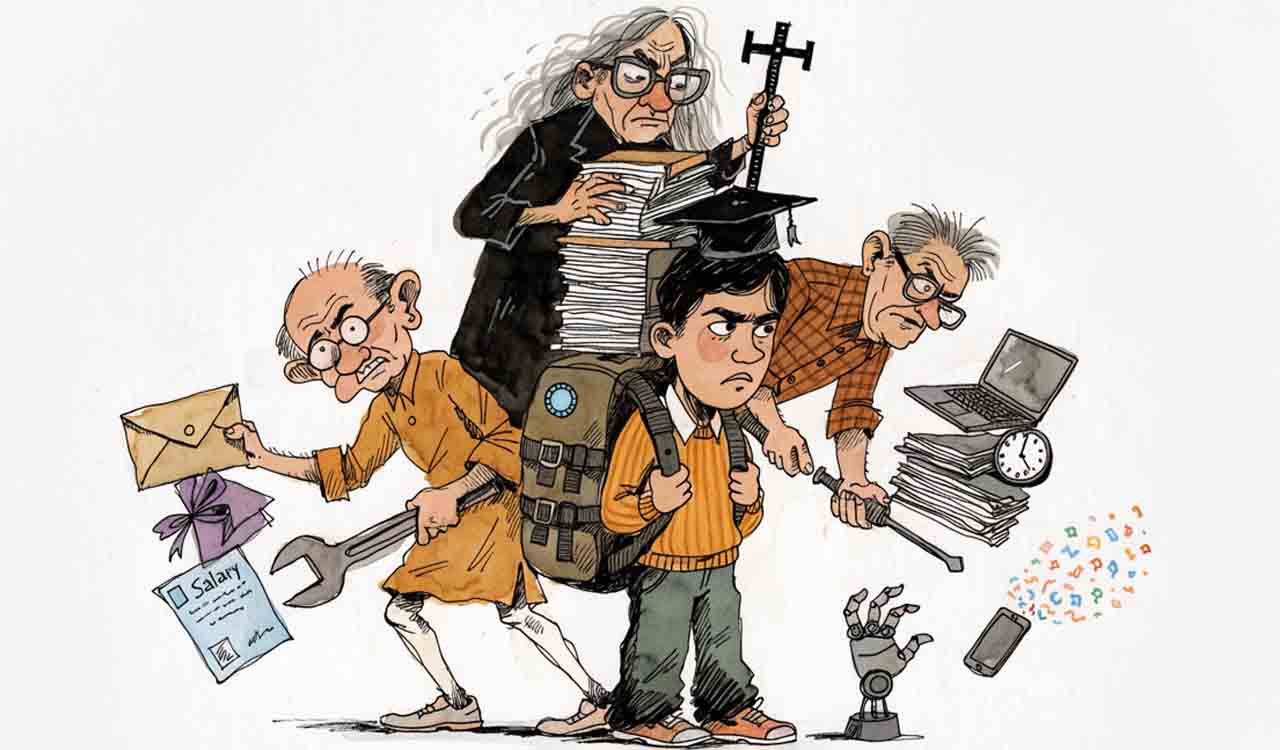
Opinion: From screen time to green time — the Right to Disconnect
Switching off is a human right — and a step toward a greener, healthier life, echoing the holistic vision of Article 21's Right to Life. Kerala's innovative legislative move has brought this right into national spotlight



By BNS Sriram, Dr Partha Sarothi Rakshit
In a world where work emails seem to follow us even at night, and smartphones change every minute of our lives into potential office time, the difference between professional and personal life is getting blurred rapidly. The modern “always-on” culture, heavily dependent on technology, keeps employees virtually connected to their employers around the clock.
Also Read
In the wake of serious concerns about burnout, loss of privacy, and disrupted home lives, a new legal and social doctrine is emerging in India and around the world — the Right to Disconnect. This right, most recently brought into the national spotlight by Kerala’s innovative legislative move (Kerala Right to Disconnect Bill 2025), is not only about reclaiming time but also about a bigger social and environmental reckoning.
Global Standards
The Right to Rest and Leisure is enshrined in Article 24 of the Universal Declaration of Human Rights (UDHR, 1948). The International Labour Organization (ILO) established global standards for working hours as early as 1919, notably the eight-hour workday and limits on the total workweek. France led the way on the Right to Disconnect by incorporating it into its Labour Code in 2017, making it mandatory for companies to negotiate and implement concrete after-hours communication policies. Other countries soon followed. Portugal forbids employers from contacting staff during rest hours; Belgium, Ireland, Spain, Italy, and, more recently, Australia (2024) have passed their own versions of this right.
The Right to Disconnect is now internationally recognised as a human rights commitment. Both the UDHR and the International Covenant on Economic, Social and Cultural Rights (ICESCR) regard rest, health, and family time as basic human rights. These agreements combine to acknowledge not only the right to “switch off” from work but also the need to reconnect with the world outside our screens.
The personal consequences of constant connectivity are substantial. Research indicates that people who are unable to detach themselves from work show higher levels of burnout, anxiety, depression, and even physical health problems. Take Indian IT workers as a case; burnout here is almost epidemic. On the other hand, work-life boundaries at home are becoming increasingly indistinct, destabilising family relationships and contributing to rising dissatisfaction.
Extinction of Experience
There is also growing evidence that perpetual digital connectivity weakens our relationship with the natural world. Usually, the more time a person spends in front of a screen, the less time will be left for outdoor activities, nature appreciation, or environmental stewardship. Studies reveal that digital “hyper-connectivity” is negatively correlated with ecological awareness: when natural sights, sounds, and experiences are replaced with pixelated ones, people not only lose their mental peace but also their tangible sense of environmental responsibility. This “extinction of experience” reduces public support for environmental protection, discourages ecological advocacy, and, most importantly, destroys the fundamental links necessary for the existence of sustainable societies.
Digital detox, the deliberate act of refraining from using digital devices, has a positive impact not only on the user’s mental health (less stress, better sleep, improved cognition) but also on the user’s ecological awareness. Those who occasionally “turn off” their devices are more likely to participate in open-air activities, feel more positive, and be more willing to participate in nature conservation. In India, where green crises such as air, noise pollution and deforestation negatively impact both public health and biodiversity, promoting digital disconnection can have two benefits. The Right to Disconnect is not only a protective measure against digital overwork, but it is also a means that allows people to reconnect with nature, reflect on environmental responsibilities, and take part in green civic life.
From an environmental standpoint, reduced screen time lowers carbon emissions from servers and data centres. The more people venture outdoors, the more they become a community that supports biodiversity conservation and environmental policymaking. Psychological research confirms that stronger connections with nature inspire pro-environmental behaviour, build stronger families, and vibrant communities.
Rejuvenating Bond
The Right to Disconnect is thus essential for social welfare, mental health, and sustainable labour — not just a simple gift from employer to employee. Still, implementing this right requires balancing businesses’ operational needs with workers’ dignity and autonomy, as challenges such as managing emergencies, ensuring accountability, and coordinating across global time zones remain unresolved. Sectoral variations must also be acknowledged, as the case of emergency services, such as fire, police, and healthcare, requires approaches distinct from typical office environments.
The Right to Disconnect goes beyond the right to rest. It is a right to live fully, rediscover inner calm, and reconnect with the Earth. It aligns with India’s constitutional values of dignity, privacy, and a healthy environment, resonating with the holistic vision of Article 21 as the Right to Life.
When viewed through the lens of international reforms and India’s ecological heritage, the Right to Disconnect is not only about restoring work-life balance but also about rejuvenating our collective bond with nature. By adopting this right and practising digital moderation, people can move towards a community where individual dignity, sustainable work, and ecological harmony coexist. Ultimately, to disengage from the digital deluge is to become more connected with one’s deepest obligations: to family, to oneself, to community, and to the planet.
(BNS Sriram is Assistant Professor cum Research Scholar and Dr Partha Sarothi Rakshit is Director cum Research Supervisor, Vignan Institute of Law, VFSTR, Guntur, Andhra Pradesh)

Related News