Opinion: Gender and missing data
By Dr Vanishree Joseph, Dr NV Madhuri The French philosopher Simone de Beauvoir, who laid the foundation for the modern feminist movement, said ‘Representation of the world, like the world itself, is the work of men; they describe it from their own point of view, which they confuse with the absolute truth”. Also, history is […]


By Dr Vanishree Joseph, Dr NV Madhuri
The French philosopher Simone de Beauvoir, who laid the foundation for the modern feminist movement, said ‘Representation of the world, like the world itself, is the work of men; they describe it from their own point of view, which they confuse with the absolute truth”.
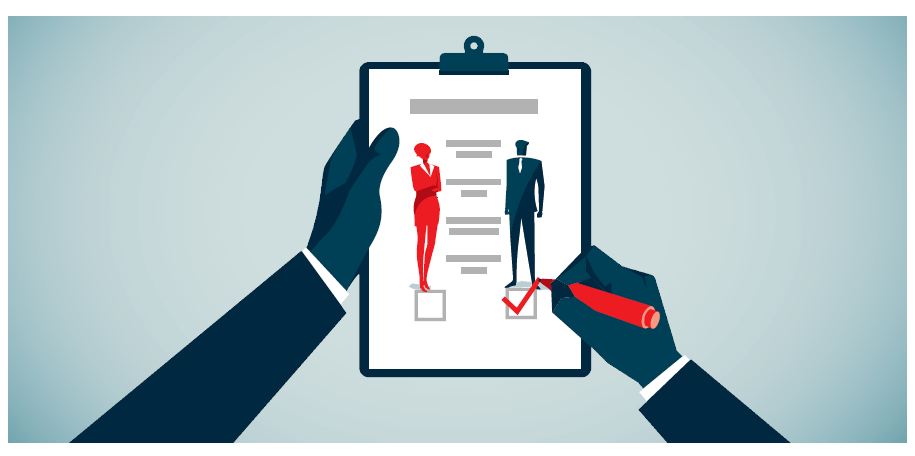
Also, history is always HIS-Story, not HER-story or the other non-binary person’s story. The recorded events in terms of data have been representing only men rather than overall human beings. Caroline Criado Perez in her famous book ‘Invisible Women’ had argued that the gender data gap is both a cause and a consequence of the type of unthinking that conceives humanity as almost exclusively male. When development strategies are designed, we need gender-segregated data to analyse the present status, identify the gaps in development and also to set the target for achievement. This will help develop appropriate, evidence-based responses and policies.
Gender Segregated Data
But, getting gender-segregated or differentiated data from the existing sources of data pool is quite difficult. Even if such segregated data is available it is focused only on women. All women are treated as a single category. In a country like India where the social hierarchy prevails in terms of caste, this does not get reflected even in the data which focuses only on women.
Further impediments to the development of gender data include lack of policy space, coordination and restricted resources. It will be very difficult to track Sustainable Development Goals (SDGs) if gender-segregated differentiated data is not made available. Even though SDG5 talks about gender equality, the measuring of progress which is inclusive of all gender goes beyond SDG 5 and cuts across all the SDGs. It is impossible to tell whether women and girls are benefiting from the actions adopted to achieve the 2030 Agenda, particularly those that directly target gender equality, without timely and reliable information about the position of women and girls.
For example, the target of SDG1 is to implement nationally appropriate social protection systems and measures for all. By 2030, this should be achieved substantially covering the poor and the vulnerable. One of the indicators to attain this target is social security and the data should be available for men, women and other non-binary categories.
Similarly, in SDG3, the data on Under 5 mortality and neo-natal mortality should be available for both boys and girls. Under SDG5, indicators like gender parity index, female labour force participation, sex ratio, and violence against women may not represent all genders and categories. Further, among the data available for women, data on women entrepreneurship and livelihood activities is missing.
Moreover, disaster is also not gender-neutral. Studies have shown that boys and girls are 14 times more likely than men to die during a disaster. If gender-segregated data is available on vulnerability many deaths can be averted. This kind of segregated and differentiated data will help in looking at the issue from a different perspective and enable appropriate policy measures.
Closing Gaps
Ongoing partnerships with the United Nations agencies and national offices like the Niti Aayog will enhance gender-disaggregated data collection in all development indicators. There is a need to integrate gender perspectives into mainstream indicators and data collection efforts.
But closing gender data gaps should go beyond data collection. The government should regularly conduct public consultation processes on gender to collect missing information. The data should be able to document different needs of people. It has to include the experiences and voices of people who are affected.
Leveraging Technology
Specialised surveys and the use of technology for data collection are the need of the hour. Data collecting institutions should be trained not only in collecting gender-segregated data but also in disseminating gender data. The results should be published on a national scale and also made available at the local governance level to allow policymakers to address State and local issues. Beyond that, it is critical to ensure that the data accurately reflects the lived experience of women and girls in diverse situations. Addressing deep-seated biases in concepts, definitions, classifications, and techniques is also essential to making women and girls visible.
The data revolution must include solutions for better gender statistics. Data that adequately reflects women”s life, including undervalued areas like time spent by women and girls in caring for children and elderly people, is grossly lacking. Data on entire groups of women and girls is missing in some circumstances. To close these gaps, national statistics systems must improve their traditional data collection and distribution capabilities, as well as harness the potential of non-traditional data sources while adhering to human rights principles. This is needed to capture gender inequalities in society and facilitate an effective process of change through development efforts.
 (Dr Vanishree Joseph is Assistant professor and Dr N V Madhuri is Head, Centre for Gender Studies and Development, NIRDPR, Hyderabad)

Related News
-

Opinion: Fuelling cars, emptying plates—the hidden costs of India’s ethanol policy
-
India can become global leader in affordable caregiving: NITI Aayog
-
Telangana students trail national average in key learning competencies: NITI Aayog
-
E20 fuel rollout based on scientific validation, field trials and industry consultations: Government