Opinion: Hyderabad’s lungs under threat — KBR Park must be integral to urban planning
Bulldozing KBR Park contradicts Hyderabad’s environmental goals, including Musi River rejuvenation and Hydraa initiatives


By Dr Sreeramulu Gosikonda
The ongoing protests around KBR Park in Hyderabad are not merely about a patch of green space; they represent a deeper contestation over the meaning of “development.” Academics, youth, environmentalists, and civil society groups are rightly questioning whether development should be equated with concrete infrastructure alone or must encompass the preservation of the ecological commons that sustain human life.
Also Read
Amartya Sen’s seminal work on human development reminds us that real progress lies not in GDP figures or flyovers, but in expanding people’s capabilities — their health, education, and freedom to live meaningful lives. Parks and forests, as urban lungs, are integral to this vision.
Eco-sensitive Zones Matter
KBR Park and the Kancha Gachibowli forest land are more than recreational spaces; they are biodiversity hotspots and carbon sinks. In a city grappling with rising pollution, urban heat islands, and unchecked construction, these green zones mitigate climate stress and safeguard public health. Environmental sociologists such as Ulrich Beck have long argued that modern societies are “risk societies,” in which the unintended consequences of industrial and technological growth—pollution, ecological degradation, climate change—pose existential threats. Ignoring eco-sensitive zones is not just negligence; it reproduces risk at the cost of collective well-being.
Indian scholars echo this concern. Madhav Gadgil and Ramachandra Guha, in their pioneering work Ecology and Equity, highlighted how environmental degradation disproportionately affects marginalised communities. When governments overlook forests and parks, they undermine not only ecological balance but also social justice, as poorer citizens rely more directly on common resources for survival and health.
Lessons from Kancha Gachibowli
In March 2025, nearly 400 acres of Kancha Gachibowli’s scrub forest—adjacent to the University of Hyderabad and rich in birdlife, peacocks, hares, and granite formations — were cleared for an IT park project. This forest is vital for groundwater recharge, cooling the city, and offering green breathing space. The deforestation sparked a student-led movement, joined by faculty, researchers, artists, and citizens, with creative protests such as tree-huging vigils, biodiversity walks, and art installations. Far from partisan politics, itembodied New Social Movements, prioritising ecological and cultural values over economic gains.
Digital platforms amplified their voices, while Public Interest Litigations led the Supreme Court to halt further destruction and order ecological assessments. By defending Kancha Gachibowli, students advanced the Sustainable Development Goals on climate action, sustainable cities, and life on land, demonstrating how local activism can align with global frameworks and reassert India’s civilisational respect for nature.
Traffic Crisis and Misplaced Solutions
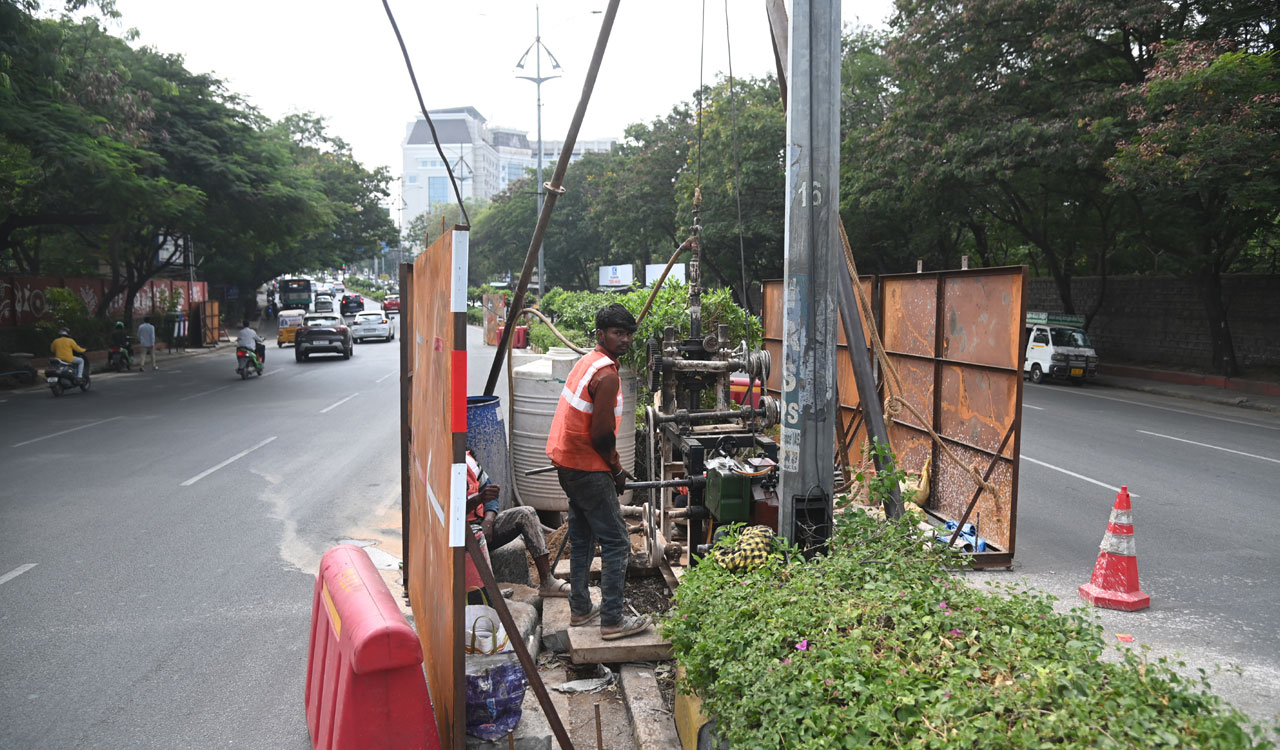
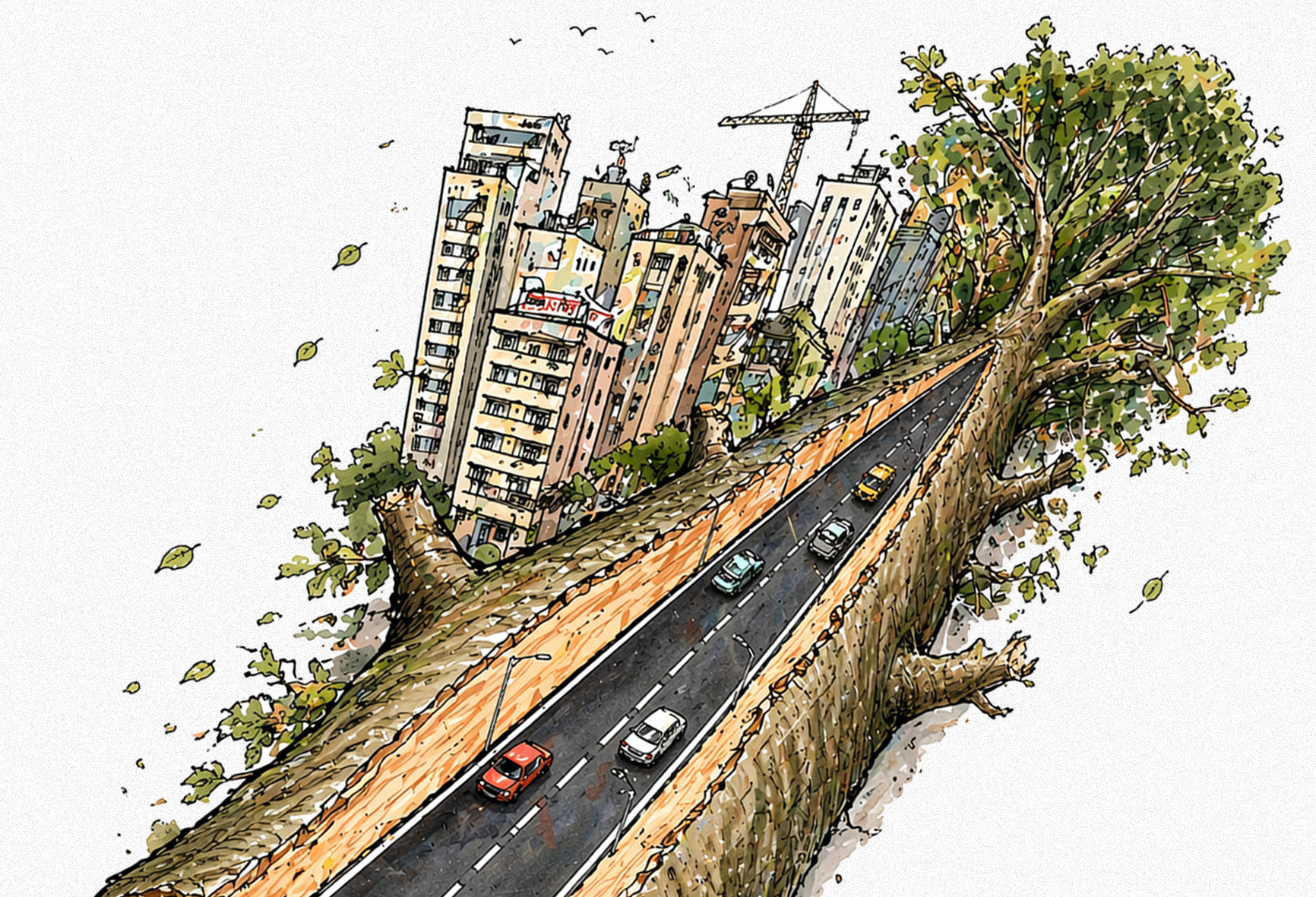
Flyovers are often justified as “environmental interventions” because they supposedly reduce congestion and emissions. In practice, however, they funnel more cars, deepen bottlenecks, and worsen pollution. John Urry’s sociology of mobility explains this as “path dependency”: once infrastructure favours cars, it generates more traffic and undermines sustainable mobility.
Sociologist John Urry’s theory of “path dependency” shows that car-centric infrastructure ultimately increases traffic and weakens sustainable urban mobility
Manuel Castells’ concept of the “space of flows” adds that privileging circulation over ecological and social spaces deepens urban crises rather than resolving them. Shrinking KBR Park accelerates heat island formation, reduces groundwater recharge, and worsens air quality—precisely the opposite of what is claimed.
Global Frameworks and Local Responsibilities
The United Nations Sustainable Development Goals (UNSDGs) emphasise the indivisibility of environment and development. Goal 11 calls for “sustainable cities and communities,” while Goal 13 urges “climate action.” These are not abstract ideals; they demand concrete policies such as protecting urban forests, expanding green cover, and integrating ecological concerns into infrastructure planning. When governments prioritise highways over parks, or malls over wetlands, they betray the spirit of the UNSDGs and compromise intergenerational equity.
Environmental sociologist John Dryzek argued that ecological democracy requires giving voice to nature and future generations in present-day decision-making. In Hyderabad, the protests around KBR Park embody this principle: citizens are speaking not only for themselves but for the health of their children and the survival of species that cannot protest.
Reflexive Modernity and Human Development
Development is essential — cities need infrastructure, housing, and transport. Yet, as sociologist Anthony Giddens reminds us, modernity must be reflexive, constantly examining its own consequences. Sustainable development is not about halting progress but about minimising negative impacts and maximising human well-being. In Hyderabad, this means integrating parks like KBR into urban planning, expanding green belts, and treating forests as essential infrastructure for health.
Amartya Sen’s human development approach provides a moral compass here. If development is about enhancing people’s capabilities, then clean air, access to nature, and ecological security are non-negotiable. A city without lungs cannot sustain human flourishing. Governments must, therefore, invest not only in roads and flyovers but also in parks, forests, and ecological corridors. Courts, too, have reinforced this principle, as seen in the case of redefining the Aravalli hills, by recognising the ‘right to a healthy environment’ under Article 21. This reminds policymakers that ecological scrutiny and public participation must guide development decisions.
Hyderabad’s Ecological Future
Hyderabad can become a model of ecological urbanism if it protects KBR Park and Kancha Gachibowli. Safeguarding green spaces is not an obstacle but true development, reducing carbon footprints, improving health, and strengthening climate resilience. Civil society and youth movements already articulate this vision, yet policymakers risk repeating past mistakes. Ignoring ecological risks, as Beck warned, multiplies crises.
Bulldozing KBR Park undermines Musi River rejuvenation and HYDRAA, stripping these projects of meaning. Sustainable urbanism demands coherence: forests and parks must be treated as essential infrastructure, vital to both human well-being and ecological balance.
Urban parks are not a new phenomenon. From the botanical gardens of Bengaluru to the Mughal gardens of Rashtrapati Bhavan, and similar parks across India, from the Mughal and colonial to modern times, policymakers have long recognised their importance in urban life. These precedents remind us that the role of parks in sustaining ecological balance and civic well-being must remain central to urban policy and visionary leadership.
(The author is Assistant Professor, Department of Sociology, Faculty of Social Sciences, Banaras Hindu University, Varanasi. Views are his personal)

Related News