Opinion: India needs a supply chain strategy amid Hormuz, Red Sea crises
Rising geopolitical tensions and disruptions in key maritime chokepoints expose India’s supply chain vulnerabilities


By Jayant Chandel
The turbulence the world has experienced this decade indicates larger structural shifts. The current Israel-US-Iran war and instability across West Asia since the October 7 attacks, along with the Russia-Ukraine war, symbolise shifting contours of the international order. The US-dominated unipolar era is over.
Also Read
Abroad, the Trump administration’s aggressive and hyper-militaristic policies cannot hide the fact that the world is no longer Pax Americana. At home, there’s little appetite for large-scale wars like Iraq. Without a large-scale troop deployment in West Asia, Iran cannot be restrained. Iran is not Venezuela. Air campaigns and targeted assassinations of the Iranian leadership have failed to deliver the desired strategic end.
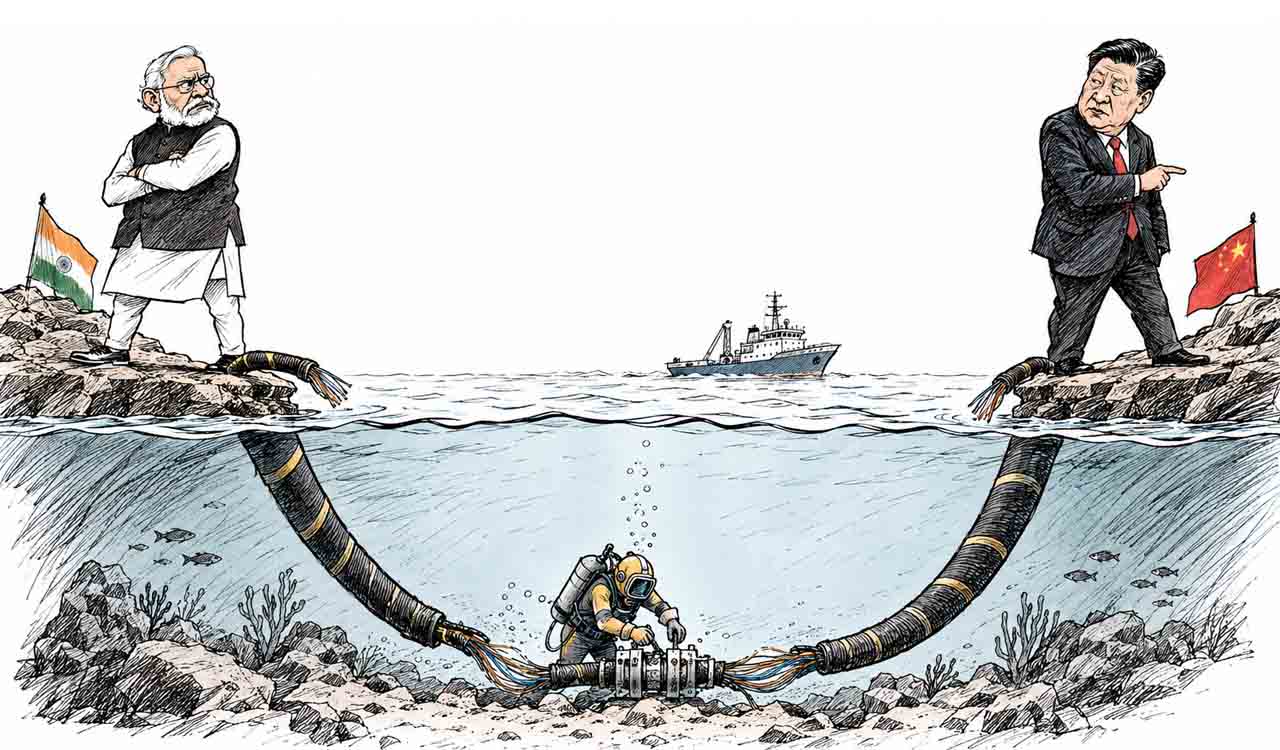
These changes highlight India’s strategic vulnerability. Two events in West Asia — the disruption of sea lanes through Bab-el-Mandeb in 2023 and the Strait of Hormuz in 2026 — clearly reveal our supply chain vulnerabilities. The Houthis and Iran successfully disrupted these straits for weeks, with the Americans struggling to keep these lanes open. Rising middle powers like India, located at the centre of the Indian Ocean, require a long-term supply chain strategy — not just for West Asia but for the entire Indian Ocean.
By adopting such a strategy, India can protect itself against vulnerabilities while also leveraging its locational advantages in the Indian Ocean Region.
Dependence on IOR
According to data from the government of India, maritime trade accounts for almost 95% of India’s trade by volume and 70% by value. India depends heavily on oil and natural gas that passes through the Straits of Hormuz and Bab-el-Mandeb. The country imported 4.5 million barrels per day of crude oil and condensate in 2023, with 45% of its crude imports still coming from West Asia even after Russia’s rise as a supplier. India was among the main Asian destinations for Hormuz crude flows in 2024. Roughly 90% of Indian LPG passed through Hormuz before the war. Qatar alone accounted for nearly 50% of LNG imports.
Apart from energy security, India’s overall trade is heavily dependent on these strategic chokepoints. India-Europe trade is deeply reliant on the Red Sea, with almost 80% of Indian exports to Europe passing through this route.
India must combine reshoring, decoupling, and strategic partnerships to secure supply chains, which are vital for sustaining trade and supporting its ambitions as a major Indian Ocean power
The Iran-US war and the Red Sea crisis instigated by the Houthis have highlighted the vulnerability of India’s oceanic trade. In response to these crises, India sought to diversify its sources. However, such ad hoc responses are insufficient and often too late. The question now is: how can India prepare for such future shocks, and what should a long-term supply chain strategy entail?
Global Supply Chain Strategy
Strategic autonomy lies at the core of India’s strategic orientation and major power ambitions in the 21st century. This entails avoiding military alliances with any great power, pursuing multi-alignment with like-minded states on specific issues, and maintaining overall strategic independence. In this context, the vulnerability of India’s global maritime supply chains is a key impediment. This requires prudent, long-term thinking about global supply chains. India’s major power ambitions require sustained economic growth and domestic political stability. These vulnerabilities create challenges on both fronts.
A nation’s grand strategy, according to scholars like Barry Posen, is “theory about how to produce security for itself.” This involves the prudent use of economic, political, military, and diplomatic means to achieve the desired end. For almost two decades, strategic thinkers have called for a grand strategy for Indiạ. Any long-term strategic document must take maritime security into account. In this context, the security of the supply chain is fundamental for an aspiring major power that depends on the Indian Ocean for the majority of its trade.
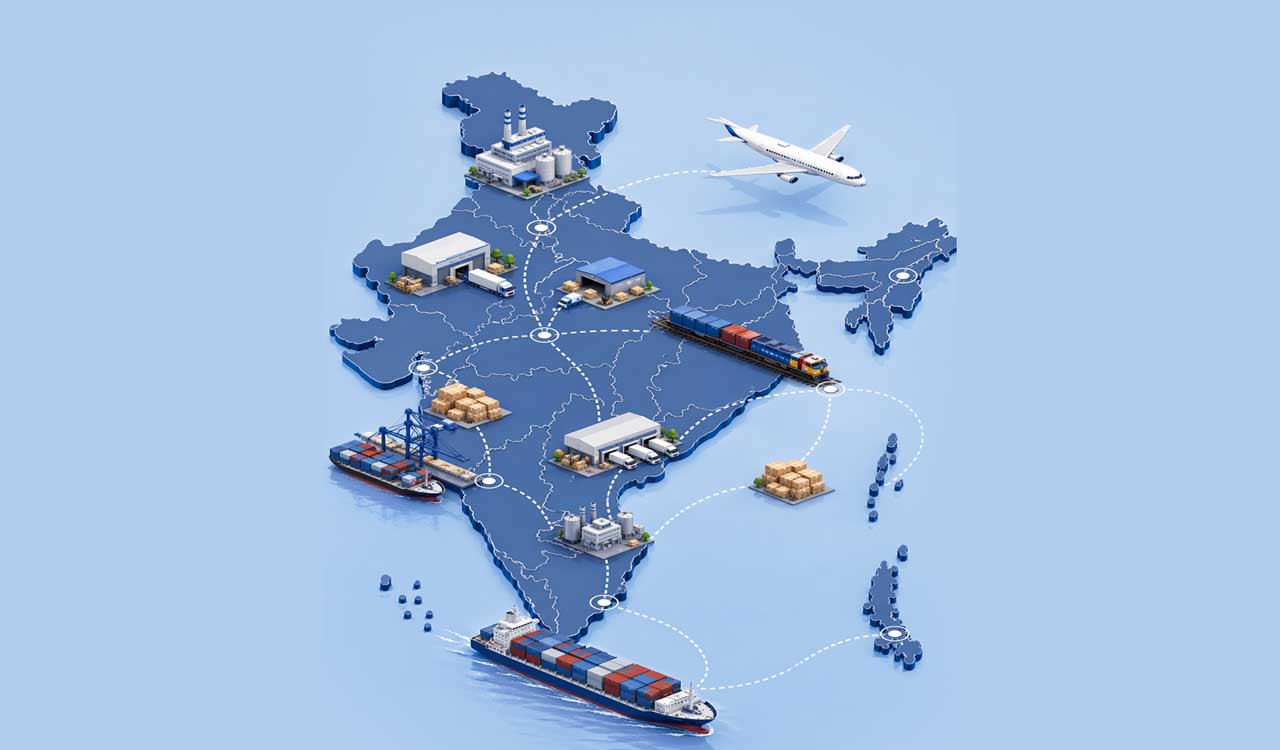
As part of this supply chain strategy, Indian policymakers need to prudently combine reshoring, decoupling, and interest-based coupling. First and foremost, India should decouple its strategic industries from vulnerable regions and states with which its security interests do not align. Economic logic alone should not shape the supply chain for such industries. Strategic industries include core defence manufacturing, semiconductors, defence-related electronics systems, and pharmaceuticals. Reshoring such industries should be the next step.
In the case of other strategic sectors, such as energy and critical minerals, where reshoring is not possible, supply chains should be diversified as much as possible, avoiding concentration in any one region. Finally, for manufacturing processes that are not part of core security interests but are important for economic growth, supply chains should be concentrated in economies that do not directly threaten Indian security interests.
Another key feature of the post-Trump era is the decline of liberal ideas, such as the belief that economic interdependence leads to less competition. As China’s rise shows, facilitating the economic growth of a potential or real rival can hurt a state strategically in the long term. In the past, Indian policymakers, driven by such liberal logic, considered ideas like gas or oil pipelines from Pakistan, similar to Russian pipelines in Europe. In hindsight, in a world where Europe is struggling due to dependence on Russian energy and faces Trump’s tariff wars, such ideas appear naïve.
These grand ideas required a liberal hegemon willing to police the globe, secure the global commons, and promote free trade. In a multipolar world, states aspiring to become major powers must prepare themselves accordingly. For that, India must secure its supply chains and sustain economic growth.

(The author is scholar and writer based in Delhi)

Related News