Opinion: Panic buying and policy gaps – what Hyderabad’s fuel crisis reveals
India needs a Digital Essential Commodities Misinformation Policy to enable real-time government–platform coordination, curb viral supply rumours, and prevent panic buying that disrupts markets and public trust


By Dr N Chaitanya Pradeep
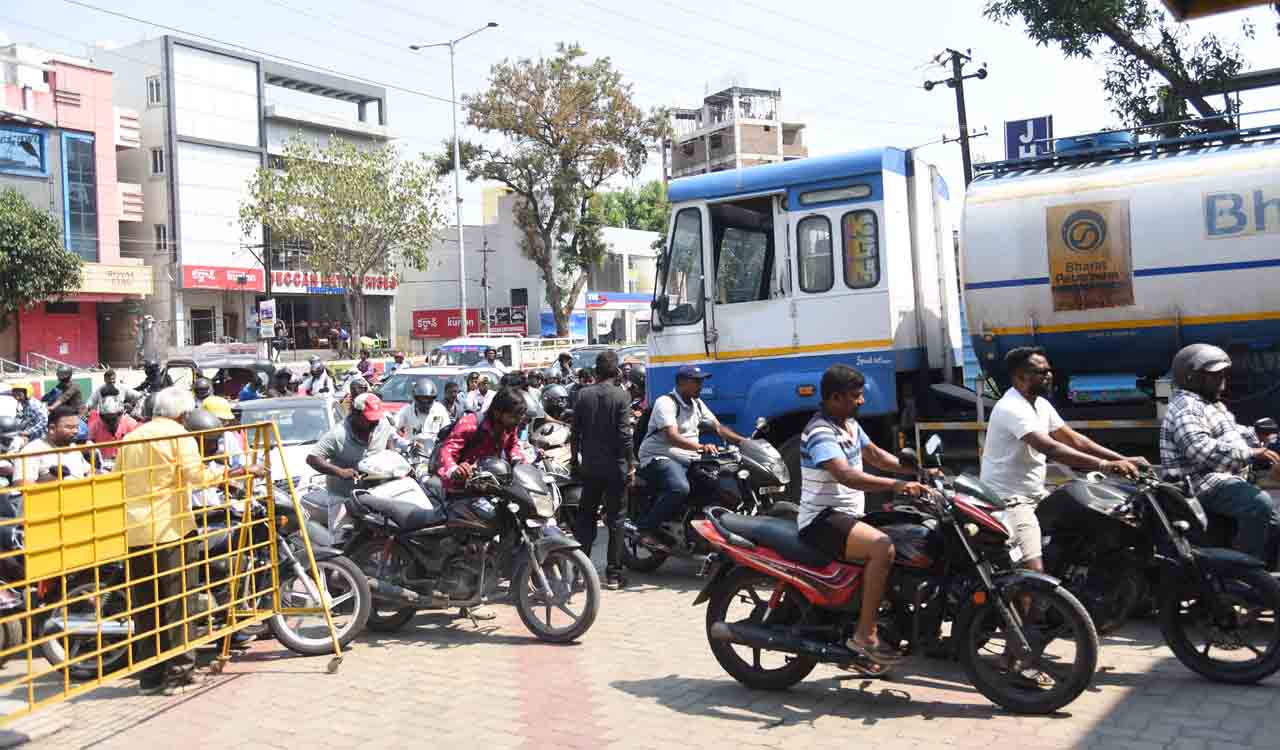
On the evening of March 24, 2026, serpentine queues of vehicles choked the arteries of Hyderabad’s Banjara Hills and Lakdikapul. Pump attenders hung “No Stock” boards. Police deployed public address systems to calm motorists. A city (within GHMC limits) of nine million was gripped by fuel panic – not because oil had run out, but because a viral WhatsApp forward had claimed it would.
Also Read
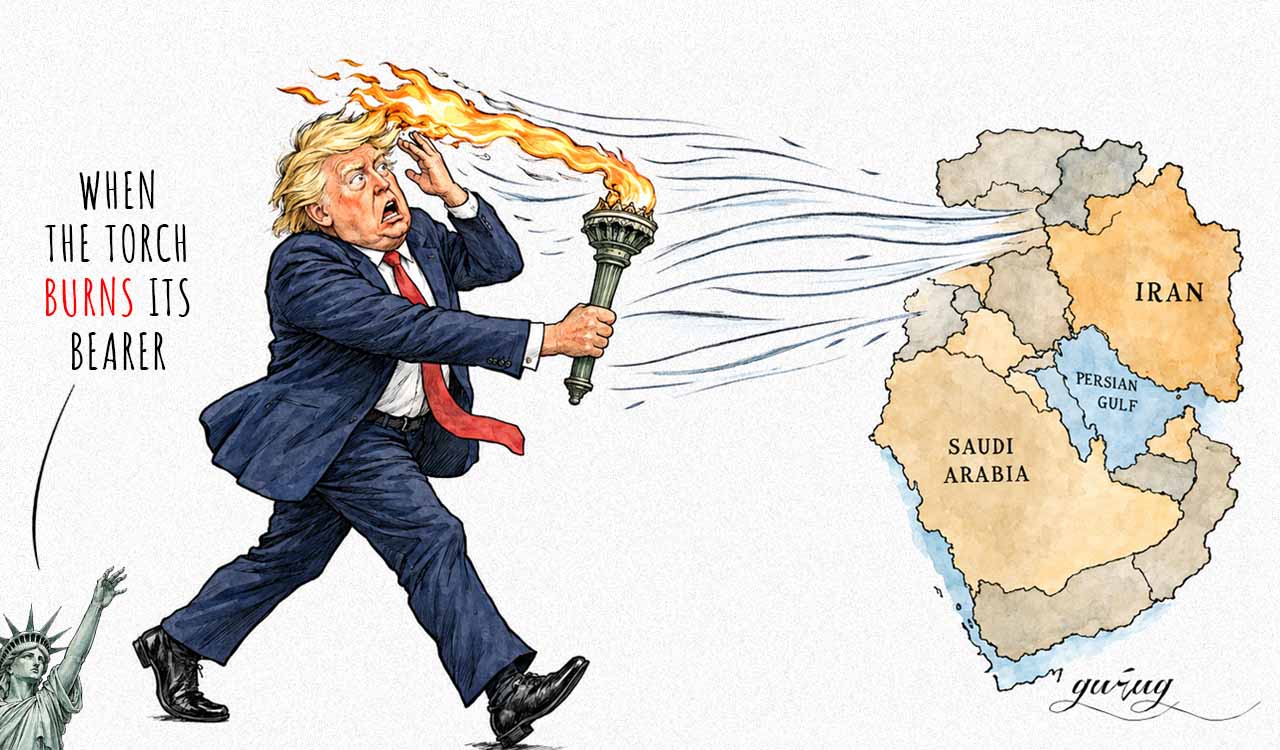
The trigger was geopolitical, but the crisis was psychological. Iran’s blockade of the Strait of Hormuz, escalating West Asia hostilities, and a 45 per cent surge in global crude prices since February created fertile ground for anxiety. Fake images of empty petrol stations from Sri Lanka (2022) and Pakistan (2023) – far more actually affected – were circulated on Indian WhatsApp groups with captions placing them in Hyderabad and Mumbai.
Within hours, fuel sales tripled (a 200-300% increase). The scarcity was entirely self-created: Pumps are designed to hold 3-5 days of stock for normal demand, and selling 3 days’ worth of fuel in 8 hours caused them to physically run dry.
Fear of Shortage
This is panic buying — a globally documented phenomenon in which the fear of shortage creates the very shortage it fears. It is not confined to cities. While urban Hyderabad witnessed pumps running dry, rural Telangana households with Pradhan Mantri Ujjwala Yojana connections saw LPG delivery timelines stretch from two days to nearly two weeks. Black-market cylinders appeared at Rs 2,500, nearly three times the regulated price. The panic radiates outward, and the poorest bear its worst consequences.
The distinction between misinformation and disinformation matters here. Most citizens who forwarded the alarming messages were not malicious – they were frightened. But, behind this panic, vested interests operated deliberately. Illegal LPG hoarders who sell domestic cylinders at inflated prices benefit structurally from artificial scarcity.
The Ministry of Petroleum and Natural Gas (MoPNG) conducted over 12,000 raids nationally and seized more than 15,000 cylinders. Tamil Nadu took the extraordinary step of invoking the Tamil Nadu Preventive Detention Act, 1982, popularly known as the Goondas Act, against LPG black-marketeers in Madurai. The panic, in part, was a crime scene.
The Telangana Civil Supplies Department’s enforcement wing activated a toll-free number, 1967, to report black marketing, raided Warangal, Hanmakonda, Karmanghat (in Hyderabad) and Karimnagar, registered multiple cases under 6-A of the Essential Commodities Act, 1955, along with rapid public clarifications and dealer coordination. However, effectiveness in a crisis is not the same as prevention of one.
Today’s governance is reactive by design. Bureaucrats built around rules wait for instructions before acting; viral rumours travel faster than any instruction memo. What March 2026 demands is a systemic shift – from reactive rule following to proactive role-fulfilling, from institutional inertia to governance imagination.
Instructive Models
Other countries offer instructive models. Singapore’s AI-driven surveillance and sense-making platforms (S&S), such as HTX’s Alchemix and InXeption, ingest massive datasets from video feeds and digital sensors to identify anomalies. By tracking the velocity of fear-based sentiments across multiple digital platforms, these tools can detect behavioural spikes before they manifest physically.
Australia’s Fuel Security Act, 2021, obligates dealers to maintain minimum stockholding levels and report weekly inventory to regulators, removing the information vacuum that rumours exploit. South Korea’s AI Basic Act, 2025, is a unified groundbreaking law that consolidates 19 separate AI bills. It classifies systems that affect public safety or supply chain as “high-impact” and monitors signals of market manipulation or hoarding. The Act mandates a digital watermark on all AI-generated content, making it significantly harder for ‘fake’ photos of empty shelves to go viral unnoticed. It was the then government’s direct response to a series of digital panics, including the 2021 urea solution crisis and the 2023 salt-buying panic.
Outdated Laws
India’s regulatory toolkit – the Essential Commodities Act, 1955, the Prevention of Blackmarketing and Maintenance of Supplies of Essential Commodities Act, 1980, the IT Act, 2000 – is useful but analogue in a digital crisis. None of these laws was designed for the speed of a WhatsApp forward. What is needed is a Digital Essential Commodities Misinformation and Disinformation Prevention Policy: a legal basis for real-time government partnership with social media platforms to flag and suppress deliberate supply-shortage disinformation.
Along with this, a State-level Essential Commodities Digital Dashboard – showing real-time fuel and LPG stock positions across all dealers – would eliminate the information vacuum that panic exploits. RFID tracking of LPG cylinders, AI-powered rumour detections, and WhatsApp-based citizen stock-status alerts are no longer futuristic luxuries. They are the minimum infrastructure of modern civil supplies governance.
Four thrust areas are urgently needed to build this architecture: a study of social media misinformation and disinformation patters in essential commodity panics; a supply chain vulnerability assessment focused on LPG diversion and black market networks; A capacity-building programme for civil supplies enforcement officers aligned with Mission Karmayogi’s role-based framework; and a technology and digital governance study for smart, and real-time commodity monitoring.
The queues at Banjara Hills have dispersed. The fuel was there all along. But the next viral rumour is already being typed — and the system remains unprepared. Closing that gap —through technology, law, and a reimagined civil service — is the public policy challenge of our times.
(The author is Assistant Professor at the Centre for Public Policy, Governance and Performance, Administrative Staff College of India [ASCI], Hyderabad)

Related News