Opinion: India’s Budget still undervalues orange economy
In a world where narrative, design, and creativity shape global influence as much as steel and silicon, investing in orange economy is not indulgence but strategy


By Dr Anuradha PS, Dr Divyashree
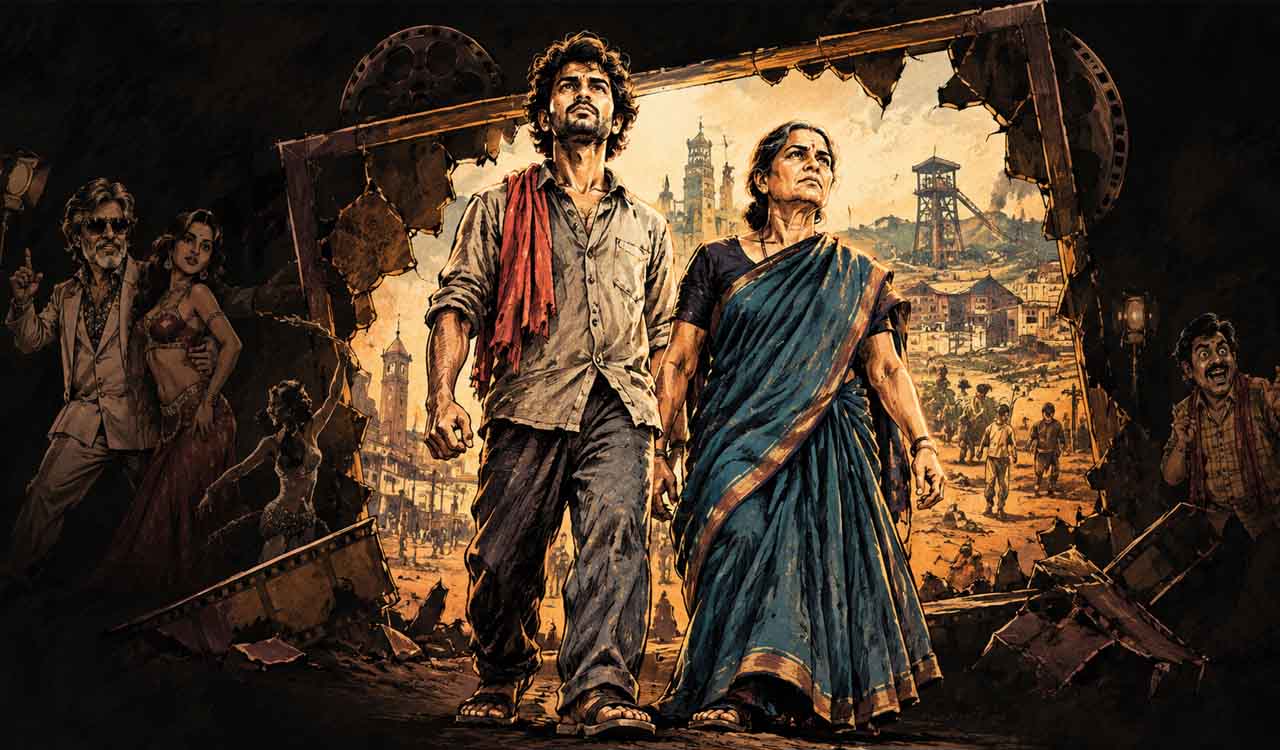
All Union Budgets speak the language of growth, innovation and jobs. The 2026 Union Budget has gone further by explicitly mentioning the so-called orange economy. This is a unique occasion when culture, creativity, and content creation are recognised as economic forces rather than ornamental accessories. However, more broadly, India’s fiscal policy still underestimates the creative economy as a legitimate source of growth and job creation (Government of India, 2026). Previously regarded as soft power or leisure activity, creative industries are now being marketed, at least rhetorically, as engines of growth, jobs and global competitiveness.
Also Read
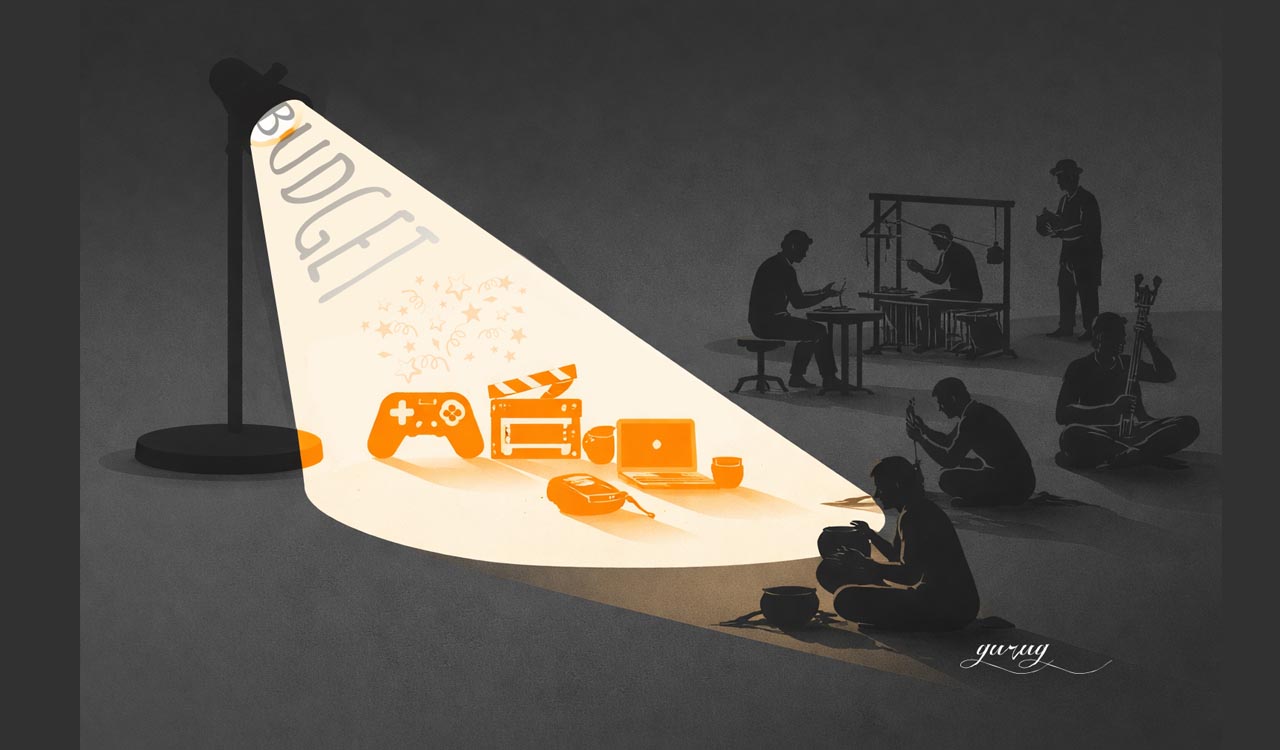
The orange economy broadly encompasses domains in which value is created through creativity and intellectual property: film, music, animation, gaming, design, fashion, publishing, advertising, and digital content (UNESCO, 2022; UNCTAD, 2024). Globally, these industries have proven to be resilient and fast-growing, especially in digitally networked economies. The promise is particularly high for India, given its demographic dividend and rich cultural capital.
The cultural and creative industries, including arts and crafts, design, media, heritage, fashion, gaming, and digital content, employ millions silently, generate soft power, and sustain local economies. Yet, they continue to remain on the margins of fiscal policy and economic planning. As India emerges as a global cultural and digital powerhouse, there is a striking lack of a coherent vision for the creative economy in the Budget. The orange economy is no soft sector, but a serious economic force, which should be supported with hard policy.
Why it Matters Now
Unemployment and automation-induced disruptions are putting pressure on India’s growth (Government of India, 2025). In contrast, creative industries are labour-intensive and youth-driven. They offer employment across a wide range of skills — from artists and writers to coders, editors, sound engineers, designers and platform managers. These industries rely on talent, ideas and networks, unlike capital-intensive manufacturing.
The prioritisation of Animation, Visual Effects, Gaming and Comics (AVGC) in Budget 2026-27, including the development of creative technology labs in schools and colleges, indicates the efforts to build a future-ready talent pipeline (Government of India, 2026; FICCI-EY, 2023). Government projections suggest that the AVGC sector alone may require about two million professionals by the end of the decade. Creativity, therefore, is no longer a niche aspiration but a mainstream employment strategy.
Culture as Economic Infrastructure
The orange economy also generates significant spillover effects. Tourism depends on film and music, manufacturing and export benefit from design, and platform economies and advertising revenues depend on digital content. Cities with thriving creative clusters often experience urban regeneration and enhanced global visibility. Creative industries thus can be seen as economic infrastructure, less visible than a road or a port, but equally catalytic.
Besides, cultural exports promote India globally in ways traditional trade cannot. Creativity in the form of soft power, with real economic payoff, can be seen in the cinema and streaming content, and even gaming stories rooted in local mythology.
The 2026 Budget is only a beginning. Without credit access, social protection, IP safeguards, and export support, India’s creative workforce will remain economically insecure
However, this potential cannot be realised through budgetary recognition alone (UNCTAD, 2024; UNESCO, 2022). Much of India’s creative workforce is informal, lacking contracts and social security as well as regular income. Access to funding remains limited, as creative projects do not conform to the standard lending procedures. Regulatory complexities, fragmeted data and inadequate measurement systems imply that the real contribution of the orange economy has been underrated in national accounts.
The threat of over-concentration also exists: prioritising the most noticeable industries such as gaming and digital content over traditional arts, local crafts, publishing, and local cultural ecosystems that support livelihood beyond metropolitan centres.
Budget Optics versus Structural Support
Recent Union Budgets have acknowledged culture and creativity more through visibility-driven interventions than structural economic planning. For example, the 2024-25 Budget increased allocations for museum development, cultural digitisation and heritage tourism, while the 2025-26 Budget continued investments in tourism circuits and global cultural showcases.
Broader initiatives, such as increased investment in digital public infrastructure, the PM Vishwakarma scheme for traditional artisans, and MSME credit programmes, indirectly support the creative industries. However, a key gap remains: the lack of clear recognition of creative work as productive labour, situated at the intersection of culture, business, and technology.
What is still missing:
- Dedicated credit lines for creative businesspersons and freelancers
- Social security and insurance for gig-based cultural workers
- Skill and upskilling programmes in line with new-age creative roles
- Export facilitation for creative goods and digital content
Without these, the orange economy will remain an aesthetic supplement rather than a true growth engine.
The Digital Turn: Opportunity Without a Safety Net
India’s digital expansion has created more room than ever for creators through OTT platforms, gaming, animation, podcasts, and influencer economies. However, monetisation remains uneven and unstable. Creators are subject to algorithmic dependence, lack formal contracts, and often have limited awareness of intellectual property rights.
A forward-looking Budget should invest in: creator awareness and legal support to intellectual property; public digital infrastructure for content distribution, and incubation centres focused on local language and local content.
A serious approach to the orange economy would involve:
- Recognising creative industries as a distinct economic sector
- Integrating culture with MSMEs, start-ups, and skilling missions
- Ensuring social protection for informal creative workers
- Promoting State- and city-level creative clusters
- Quantifying innovative output beyond tourism footfalls
These would bring economic growth and cultural vitality into co-existence — an area where India is naturally comparatively advantaged.
Investing in Imagination
Budgets are moral documents. They reflect national priorities. India runs the risk of underestimating imagination, diversity, and cultural labour by not supporting and not realistically framing the orange economy. In a world where narrative, design, and creativity shape global influence as much as steel and silicon do, investing in the orange economy is not indulgence but a strategy.
The 2026 Budget is a starting point, and not a solution. Without credit availability, social protection, IP safeguards and export assistance, creative workers will remain vulnerable.
Until future Budgets move beyond symbolism to provide economic security and sectoral integration, the orange economy will fall short of its potential as a driver of inclusive growth. India’s creative workers will continue to enrich cultural capital, but without fully sharing in the economic gains.
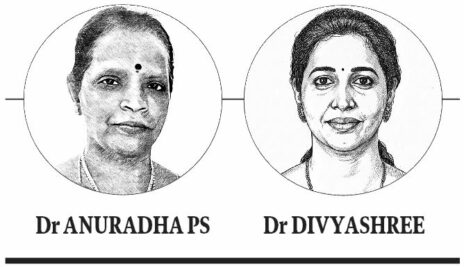
(Dr Anuradha PS is Professor, Christ University, Bengaluru. Dr Divyashree is Professor, Alliance Ascent College, Alliance University, Bengaluru)

Related News