Opinion: Kurdish angle threatens to broaden Iran conflict
US strategy to involve Kurds in a ground offensive against Iran may set the entire West Asia on fire


By Sanjay Turi
During his previous presidential term (2016–2020), one of the major election campaign strategies of Donald Trump was to reduce America’s military footprint abroad, particularly after the costly experience in Afghanistan. In fact, it was Trump’s policy to withdraw from Afghanistan, which was officially carried out during President Joe Biden’s tenure in August 2021.
Also Read
During more than two decades of American occupation in Afghanistan, thousands of US soldiers fell victim to the Taliban’s guerrilla warfare. That experience remains relevant even today, as Iran increasingly adopts similar asymmetric tactics, actively deploying guerrilla strategies, complicating US and Israeli military responses and pushing them into a more defensive posture.
Ineffective US Strategy
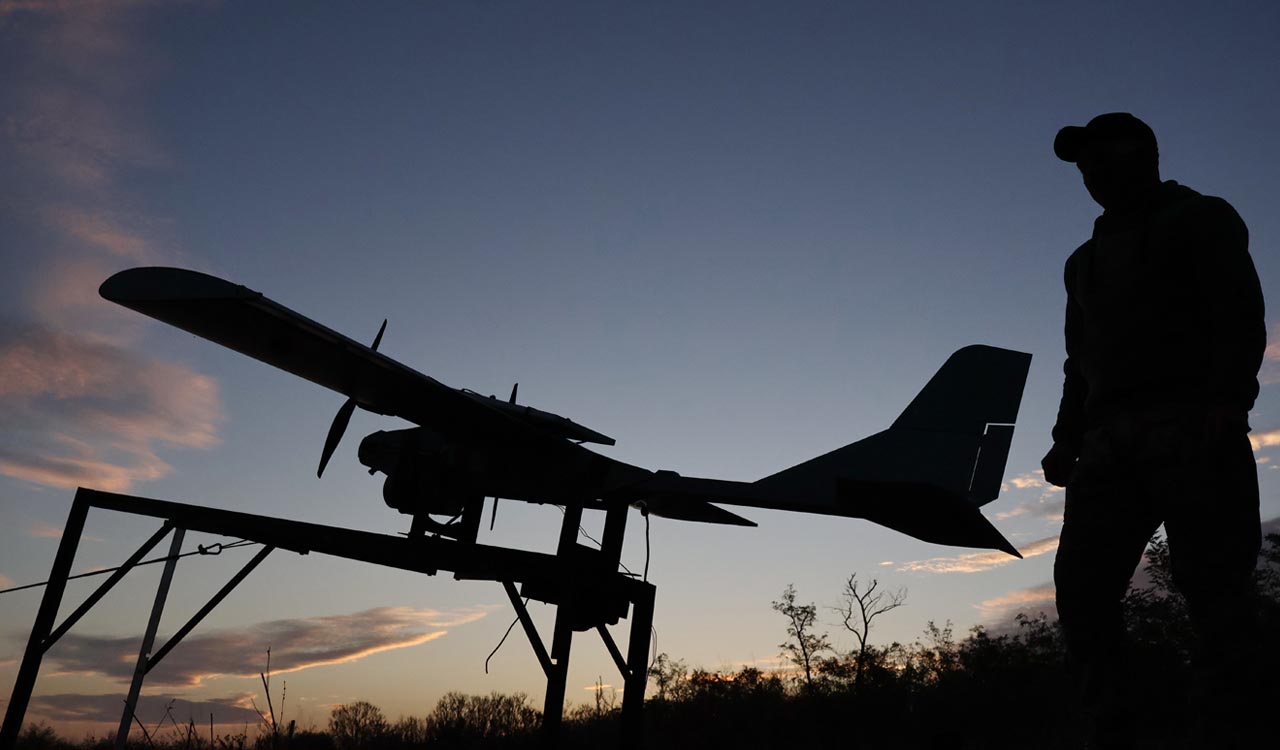
Ever since Iran blocked the Strait of Hormuz, a major choke point for energy trade from the Gulf to the world, the US-Israel attack on Iran seems to have taken a new turn. The American strategy of defeating Iran and toppling the Khamenei regime is becoming ineffective. As Iran has been deploying a variety of low-cost drones to attack enemy targets, it has become difficult for US and Israel forces to intercept them, as interception costs are reportedly 15-20 times higher than the cost of the drones. This is possibly forcing the US and Israel to reconsider their offensive.
In retaliation, Iran has also opened multiple war fronts, targeting US military bases in Gulf countries and exerting significant security and economic pressure on Gulf monarchies to compel the US to withdraw its military presence from the region. A recent statement by the Islamic Revolutionary Guard Corps (IRGC) that the US and Israel may have started the war, but Iran will decide when it ends, reflects Tehran’s stance. With little left to lose, Iran’s retaliation, in response to what it perceives as an existential threat, is intensifying, causing broader economic disruptions globally and particularly affecting its adversaries.
Analysing the Iranian President’s conditional offer that the country will not attack its neighbours, it can be inferred that Iran’s strikes on Gulf countries are not just solely aimed at damaging US interests but also exposing the US security umbrella over these states. In this context, retired Colonel Rajiv Agrawal argues that the ongoing war serves as a lesson for the Gulf states: a nation’s security cannot be bought or outsourced.
Following the killing of its Supreme Leader, Iran, fearing regime change, decentralised its army command within the IRGC into 31 divisions, allowing them operational autonomy. This has made it difficult for the US to topple the regime through airstrikes alone.
For Iran’s marginalised Kurds, conflict may offer opportunity—but their involvement risks fuelling internal unrest and complicating an already volatile war
Given Iran’s difficult terrain, modern warfare strategies may not be as effective, especially as Iran’s centralised command aligns with guerrilla tactics. The US’ past experience in Afghanistan may deter it from repeating such an approach in Iran. A ground offensive would require a large number of troops, yet Iran’s geography and local resistance would pose significant challenges. Also, with midterm elections approaching, Trump’s promises of bringing troops home may discourage such escalation.
Kurdish Involvement
The Iranian leadership’s response makes one thing very clear: President Trump may have realised that he made a mistake by equating Iran’s capabilities with Afghanistan’s. The frequently changing rhetorical stance of Trump and Israeli Prime Minister Benjamin Netanyahu shows that the Iranian regime is far from collapsing. Rising energy prices and supply chain disruptions are increasing pressure on the US to seek an early exit.
Ironically, this pressure is driven less by international actors and more by economic consequences such as global inflation, which also affects the US. Despite sustained bombardment, the US and Israel are finding it difficult to achieve their objectives, as Iran continues retaliatory strikes.
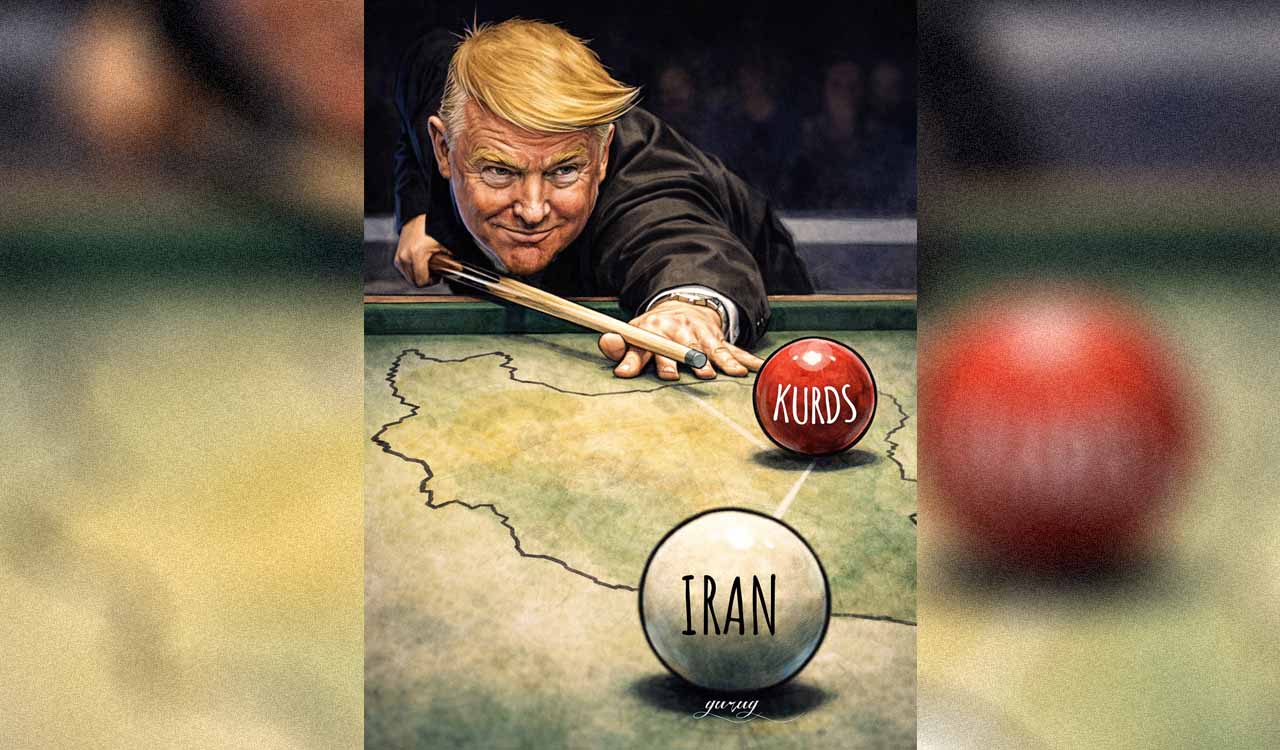
However, here comes the twist: reports suggest that the US is reaching out to Kurdish groups in Iran and neighbouring areas to participate in the conflict. Although Trump has denied earlier statements about involving Kurdish militias, such assertions remain part of ongoing psychological warfare.
While Israel may be less concerned about the political fallout, the US, given its image as a global hegemon, cannot afford to leave West Asia in turmoil, as it did in Afghanistan. Regardless of the outcome — whether regime change or compromise — the conflict is likely to end soon. However, any hasty miscalculation, particularly involving Kurdish forces, could escalate the situation into wider regional chaos.
Stateless Ethnic Group
Historically, Kurds have been a marginalised ethnic group in the region. Following the collapse of the Ottoman Empire after World War I, Kurdish territories — bordering region of Iran, Iraq, Syria and Turkey — were divided among several states, leaving Kurds as minorities. Today, with a population of 25-45 million, the Kurds remain the world’s largest stateless ethnic group.
Kurds in Iran constitute around 20% of the total Kurdish population in West Asia and about 8–17% of Iran’s population. They have long faced suppression and marginalisation under the Iranian regime. While the current conflict may present an opportunity for greater autonomy, their involvement could trigger wider instability.
Countries such as Turkey would strongly oppose such developments, fearing a domino effect that could revive separatist movements across the region. Therefore, involving Kurdish militias in a ground offensive against Iran would not only be catastrophic but could also set the entire West Asia on fire.
(The author is Doctoral Candidate, Centre for West Asian Studies, School of International Studies, Jawaharlal Nehru University [JNU], New Delhi)

Related News