Editorial: Modi’s milestone calls for honest assessment
India’s growth story resembles a relay race, with the baton passing through the hands of more than 13 Prime Ministers, each with their distinct strengths, political philosophies, and international stature
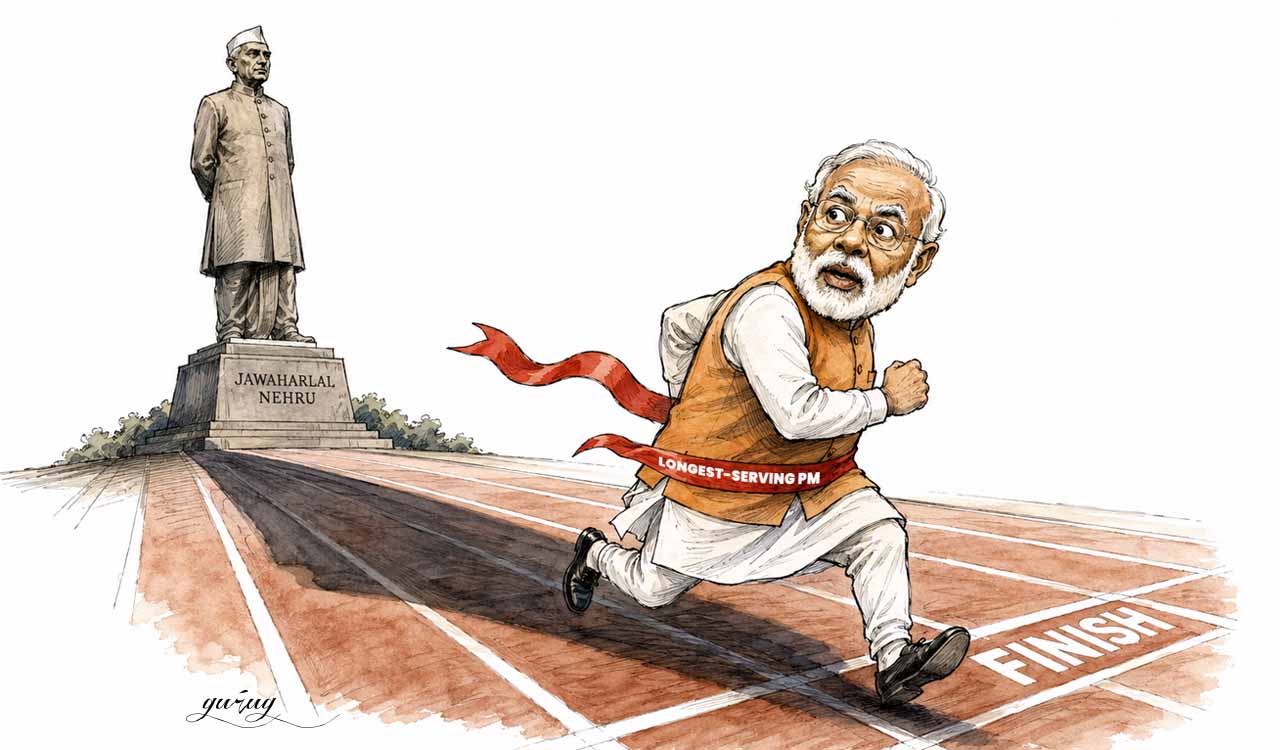


As Narendra Modi becomes India’s longest-serving Prime Minister, surpassing Jawaharlal Nehru’s record, the occasion is not just a personal milestone in the political journey of an individual leader but is also a celebration of the power of democracy. It is a tribute to the enduring strength of the country’s core values that a leader from a humble background can occupy the highest elected office as long as s/he enjoys public trust. It must be said to Modi’s credit that his rise signified a victory against multiple odds as he had neither the privilege, pedigree, nor patronage that was available to the Nehru dynasty. While the BJP is justifiably excited over his personal milestone, the tendency to project him as a larger-than-life figure and the sole saviour who has transformed the country is simply untenable. In fact, India’s growth story is like a relay race, with the baton passing through the hands of more than 13 Prime Ministers, each with their distinct strengths, political philosophies, and international stature. Each Prime Minister built upon the gains made by their predecessors. India’s story has been one of uninterrupted celebration of democracy, smooth transfers of power through fair elections, and experiments with multiple development models. Each era of development had its own challenges and rewards. Given this reality, it is comical to frame the “Nehru Versus Modi” debate in binary terms and argue over who has done a better job. The two leaders inherited different sets of circumstances and faced different challenges that defy comparisons.
Modi entered South Block in May 2014 riding a wave of genuine popular energy at a time when people were frustrated by the perceived policy paralysis and a string of scams that rocked the Congress-led UPA government. Modi offered decisiveness, development, and the romance of a chai-wallah’s son remaking the republic and dismantling the hold of a well-entrenched dynasty. His brand of politics reflects a blend of nationalism and welfarism, mixing elements of socialist outreach and right-wing assertion. While his party’s ascension in the national political landscape was entirely on the crest of Hindu revivalism, Modi has, over the years, cultivated a persona that has transcended the party. As a result, his image and appeal go beyond the saffron party’s ambit, so much so that his ardent supporters attribute the BJP’s electoral successes to his personal charisma. As Modi enters the 13th year in office, he is saddled with a host of challenges, particularly on the economic front, as India is coming under strain due to the ongoing war in Iran. His party may have reaffirmed its dominance with the recent electoral victories, particularly in West Bengal, but the politics of polarisation is on the rise, and concerns are growing over the marginalisation of minorities, dilution of institutional autonomy, undermining the powers of the States, and the pursuit of predatory politics.
Also Read

Related News