Opinion: Ensure ‘Mobility For All’ first
Without mobility connectivity, providing ‘Housing For All’ may create more challenges than solutions for the poor


By Goutham Raj Konda
In today’s global landscape, urbanisation and the resulting regional growth driven by urban areas are central to any nation’s economic strategy. Despite the increasing urbanisation, access, affordability and adequacy of basic amenities remain critical concerns for many residents in low-income and impoverished urban neighborhoods across India.
As the new government at the Centre is gearing up, it’s imperative to shed light on contemporary challenges related to urban transportation and its interconnectedness with other essential needs, such as housing. The question arises: can a city effectively address its housing issues without tackling its mobility challenges? This enquiry underscores the plight of the poorest segments within our cities and urges policymakers to prioritise evidence-based solutions.
A glance at the data on urban modal share and the contemporary transport infrastructural development highlights a stark mismatch and that the current transport planning disregards the National Urban Transport Policy’s (NUTP) objectives.
Mobility Patterns, Planning
A TERI study reported that 36% of urban residents relied on non-motorised transit (NMT), 17% on motorised two-wheelers, 11% on public transport and only 4% on cars. A 2019 CEEW study reported that 63% of India’s urban residents rely on walking when accounted for all types of trips weekly. However, the availability of pedestrian pathways in urban streets is only at 30%. Lacking adequate pedestrian infrastructure is alarming considering that pedestrian fatality is over 40% in metros like New Delhi, Kolkata and Bengaluru. The elderly and children are the most affected with 23% fatalities and 25% injuries.
The NUTP envisioned expanding and revamping the NMT (pedestrian and cycling) infrastructure in transport planning to promote sustainable urban transit. However, in recent times, public investments in urban transportation have been aimed at prioritising car users’ needs, particularly in large metros. Such infrastructural planning may support the Indian market’s desire to drive up the car-centric consumerist culture but it will never address the sustainable development goals India promises to adhere to and rather, it may worsen climate risks in city regions.
Furthermore, governments often prioritise costly high-tech rail systems over affordable and efficient solutions like enhancing bus rapid transit systems (BRTS) despite their potential to address the mobility challenges of the urban poor. BRTS offers cost-effective transportation for passengers and enhances last-mile connectivity. However, policymakers often prioritise metro-rail projects for their city-branding aspirations.
The vast majority of urban India’s low-income citizens cannot afford car ownership or metro rail fares for their daily travel. Approximately 25% of the population lives below the poverty line, with nearly 50% residing in urban slums. Unfortunately, urban planning and transport services often overlook the mobility needs of the urban poor, with many of the poorest neighborhoods excluded from public bus and metro-rail routes.
The evidence presented highlights a significant disparity between current mobility trends and modern transport planning. However, policymakers seem to overlook a crucial empirical question: Can ‘housing for all’ truly be achieved without ensuring ‘mobility for all’? The evidence strongly suggests these two are interconnected, emphasising the necessity for integrated planning that addresses both.
Policy, Planning
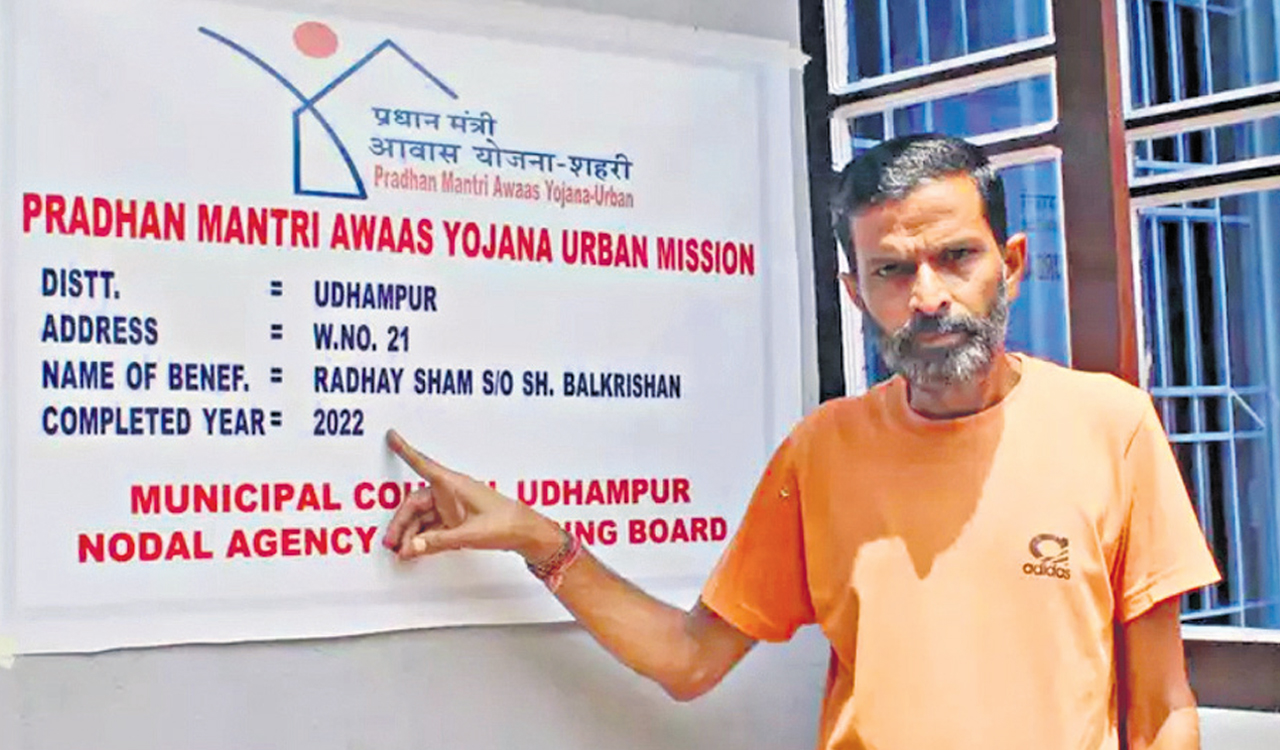
The central government’s national housing policy (PMAY) garnered appreciation for its multi-pronged approach to achieving housing for all through repair, slum redevelopment, credit access and rental housing. With nearly a crore new units completed, the PMAY has been influential in urban India’s housing stock growth. However, the PMAY, previous national housing policies, or state governments’ housing policies have mostly failed in planning the intended public housing colonies in integration with transport plans and its existing infrastructure. This is a result of the absence of integrated planning approaches in the housing policy vision documents. It is to say that the current housing policies like the PMAY are limited by its policy vision in viewing housing as just houses – a sole focus on the housing units as against a comprehensive approach to improving the neighbourhood-level infrastructure.
The stark realities of resettlement colonies, often situated far from urban centres without adequate transport links, exemplify this issue. Evidence indicates that slums relocated to the outskirts of cities face abandonment due to insufficient transport infrastructure, leaving residents unable to commute to their workplaces. Many of the poorest, particularly migrant workers, settle near their jobs in informal settlements due to the ease of squatting compared to finding employment.
It is imperative to reconsider transport planning to cater to the needs of the marginalised
For instance, the former Telangana government’s 2BHK Dignity Housing Scheme’s biggest complex in Kollur lies adjacent to the Nehru Outer Ring Road (ORR) in Hyderabad’s western periphery. This is the most ambitious housing complex produced out of the scheme for the Hyderabad’s poorest. However, despite its long distance from the core city, neither the State government nor the city’s public transport or urban planning nodal agencies have announced any plans to address the mobility needs (via bus or rail transit etc) of the beneficiaries yet.
Integrated Planning
Without integrated planning, the failure of one policy inevitably leads to the failure of the other. Our housing policy must extend beyond providing physical structures to addressing essential needs, ensuring that “houses” truly become “housing.” Without mobility connectivity, providing housing units may create more challenges than solutions for the poor. Similarly, inadequate planning of transport infrastructure based on urban mobility patterns can lead to urban sprawl across class lines, resulting in unsustainable outcomes such as longer trip durations and increased distances travelled.
Investing in adequate mobility infrastructure, including NMT and BRTS, can profoundly transform the lives of the urban poor, enabling them to access the city and its surroundings more effectively. It is imperative to reconsider transport planning to cater to the needs of the marginalised, as it significantly impacts the housing crisis and vice versa in India.
Incorporating the recommendations of the NUTP is a crucial step in this direction. Policymakers must heed the scientific evidence demonstrating that achieving ‘housing for all’ is contingent upon ensuring ‘mobility for all.’ It is only through such holistic approaches that sustainable and equitable urban development can be realised. Therefore, the need of the hour to achieve good governance to better administer India’s ‘urban turn’ is to ensure this integrated planning approach (housing with other basic amenities and vice versa) imbibed into planning urban areas by overcoming the departmental silos in our urban governance structures.
(The author is an urban and social policy researcher based in Telangana)

Related News