Opinion: The missing subject in India’s education system — Civic Awareness
Civic awareness should not be an occasional chapter buried in a social studies textbook. It must become a practical and continuous part of education


By Venkat Parthasarathy
India’s education system has achieved something remarkable. Every year, it produces lakhs of capable professionals: engineers, doctors, scientists, entrepreneurs, managers, and skilled workers who contribute not only to the country’s growth but also to economies across the world.
Also Read
Yet, somewhere along the way, an important lesson often gets left behind. We spend years teaching children how to solve equations, write examinations, secure jobs, and build careers. But we spend very little time teaching them how to function responsibly within a society. The result is visible all around us, not in grand acts of wrongdoing, but in the countless small behaviours that shape everyday life.
Road Not Taken
Take something as simple as crossing a road. Across India, many traffic junctions lack proper pedestrian infrastructure. There may be no zebra crossing, no dedicated pedestrian signal, and often very little guidance on when it is safe to cross. In such situations, pedestrians frequently weave through moving traffic, crossing directly in front of vehicles with a green signal.
Many may not realise that the signal will soon turn red for vehicles, giving them a safer opportunity to cross. Others may know but choose convenience over patience. Either way, the result is confusion, risk, and unnecessary disruption. Ironically, while traffic cameras and enforcement systems are designed to identify vehicles and their drivers, pedestrians remain largely anonymous. As a consequence, jaywalking has become so commonplace that it is often no longer viewed as a violation at all.
Moving Without Manners
The same lack of awareness can be seen in our public transport systems. Anyone who regularly travels on a metro train has witnessed it. Passengers crowd around train doors before others have had a chance to step out. Queues dissolve into clusters. Escalators become blocked because people occupy the entire width without considering those who may be in a hurry.
India excels at producing skilled professionals, but often neglects civic education. From traffic discipline and public transport etiquette to cleanliness and respect for shared spaces, responsible citizenship is essential for building a safer, cleaner, and more developed nation
Then there is the issue of designated seating. Seats reserved for senior citizens, persons with disabilities, or other priority groups are often occupied by those who do not need them. At times, even well-intentioned young parents carrying infants settle into spaces meant for the elderly.
While one naturally sympathises with a parent carrying a child, the elderly passenger standing nearby often suffers in silence, unwilling to ask someone to move. Civic awareness is not merely about obeying a rule; it is about understanding why that rule exists in the first place.
And these are far from isolated examples. Walk through any public space, and you will find evidence of the same mindset. Someone drops litter a few feet away from a dustbin. Another spits on a freshly painted wall. Public parks, railway stations, and even cinema halls are often left strewn with food wrappers and disposable cups, as though cleaning up is always someone else’s responsibility.
Not My Responsibility
On the roads, vehicles routinely stop beyond the designated stop line, occupying space meant for pedestrians. Drivers lean on their horns in traffic jams despite knowing that the noise will do nothing to move vehicles faster. In residential neighbourhoods, garbage is sometimes discarded in common areas, even as the very same residents complain about poor civic conditions and municipal inefficiency.
The problem is equally visible wherever people are expected to wait their turn. Whether at railway stations, airports, temples, government offices, or even elevators, queues are frequently treated as suggestions rather than systems. Many believe that getting ahead by a few minutes justifies inconveniencing everyone else.
Even in apartment complexes and gated communities, common spaces are often treated as personal property. Vehicles are parked carelessly, pathways are blocked, and community rules are ignored whenever they become inconvenient. Water is wasted because someone assumes there will always be more. Lights and electrical equipment are left running because the cost is being shared by everyone.
None of these actions, in isolation, appears particularly serious. But together they reveal something important. Many people are taught how to earn a living, but not necessarily how to live as responsible members of a community.
The irony is that most of us desire cleaner streets, safer roads, more orderly public transport, better public services, and greater consideration from those around us. Yet these outcomes cannot be achieved solely through government policies, stricter enforcement, or larger budgets. They depend equally on the everyday behaviour of ordinary citizens.
Invest in Civic Education
Countries admired for their cleanliness, orderliness, and civic discipline did not arrive there by accident. They invested heavily in civic education from an early age. Children are taught not only their rights but also their responsibilities. They learn that public spaces belong to everyone, that queues represent fairness, that traffic rules protect lives, and that consideration for others is a sign of maturity rather than inconvenience.
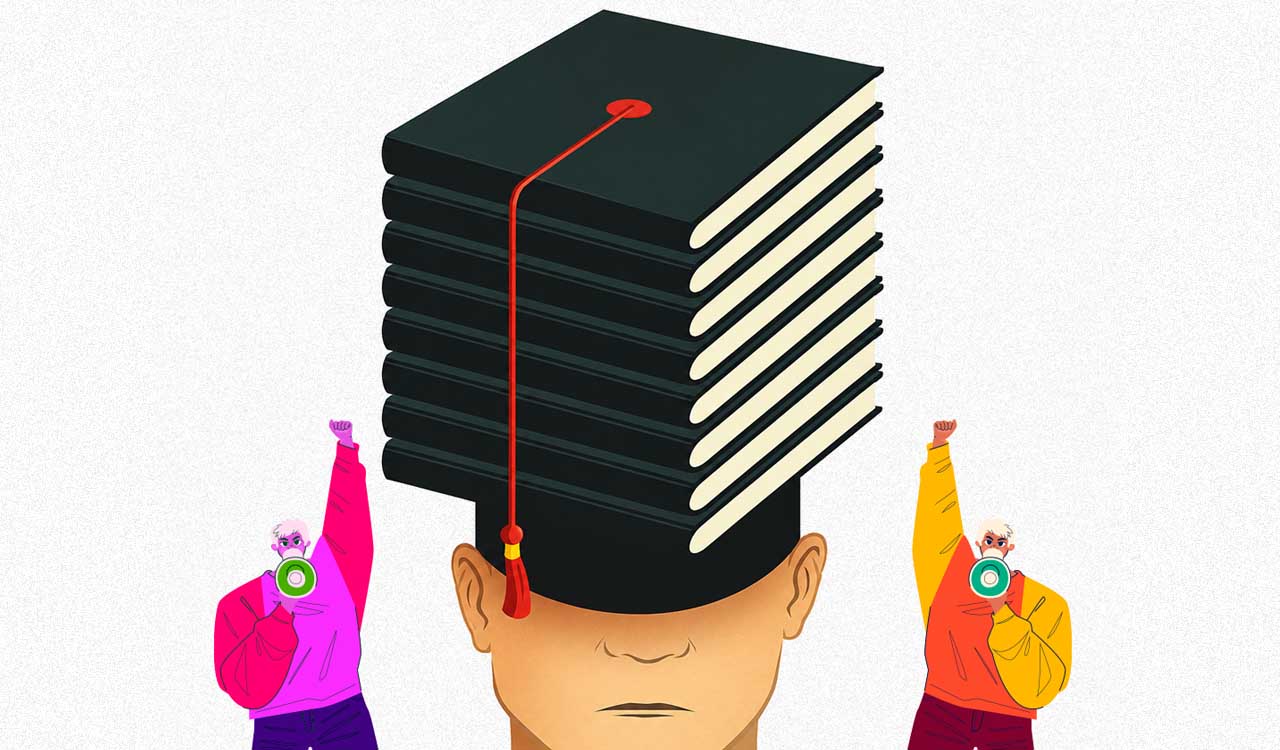
Perhaps it is time for India to do the same. Civic awareness should not be an occasional chapter buried within a social studies textbook. It should become a practical and continuous part of education. Students should learn road etiquette, public transport conduct, waste management, environmental responsibility, respect for public property, emergency response behaviour, and the importance of empathy in shared spaces.
Equally important, such learning should not stop at graduation. Young adults entering the workforce, and indeed society at large, need regular reminders that citizenship extends beyond paying taxes and obeying laws. It includes the small everyday choices that make life easier—or harder, for everyone around us.
A truly developed nation is not measured only by the height of its buildings, the size of its economy, or the sophistication of its infrastructure. It is measured by how its citizens behave in the ordinary moments of daily life.
- When they stand in a queue, even when nobody is watching.
- When they wait patiently for a signal to change.
- When they offer a seat to someone who needs it more.
- When they dispose of waste responsibly.
- When they recognise that public spaces belong to all of us.
Perhaps that is the lesson India needs to teach more deliberately, not just in schools, but throughout society itself. Because nations are not built only by governments. They are built, every single day, by the habits of their citizens.
(The author is a blogger and a cricket analyst)

Related News