Opinion: The Museumification of Life — are we curating ourselves too much?
Life too tightly curated becomes one that can no longer surprise you, and when everything is an exhibit, nothing truly feels alive


By Viiveck Verma
We once lived life first and documented it later, if at all. Now, increasingly, it seems we live to document. Whether it’s the perfectly arranged bookshelf on Zoom, the Sunday brunch spread laid out like a Dutch still life, or the soft-filtered chaos of a toddler’s playroom made Instagram-worthy with strategic lighting and captions, the aesthetic of life has begun to consume the substance of it. In our bid to capture moments, we’ve begun to curate them in advance. Life is no longer just lived — it is exhibited. And in this silent, sophisticated shift, we must ask: have we museumified our own existence?
Museumification
The term “museumification” was once the domain of cultural critics and urban planners, often used to describe how historic neighbourhoods or traditions are preserved in a way that renders them lifeless, displayed but no longer evolving, like artefacts behind glass. What once thrived organically is frozen for admiration. But what happens when we begin to apply the same principle to ourselves? When the line between living and displaying gets blurred to the point of collapse?
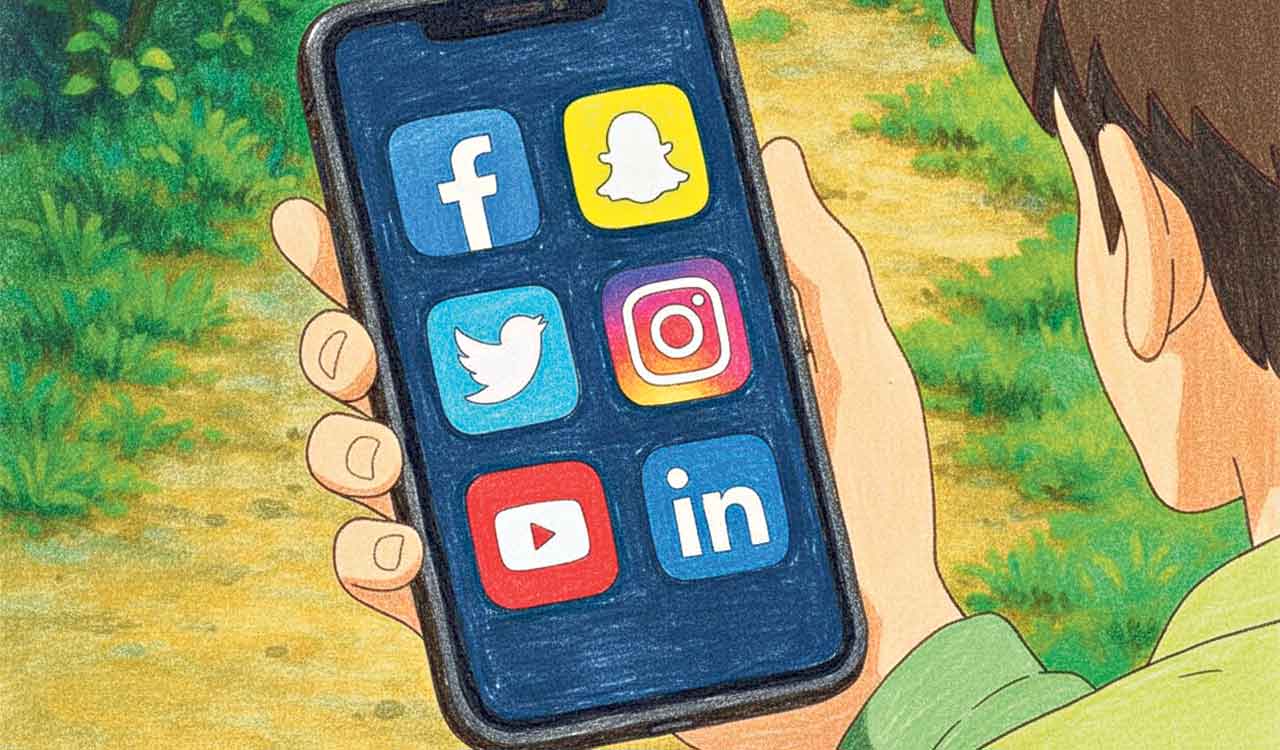
Social media is, of course, the most obvious catalyst. Instagram, Pinterest, even LinkedIn and X have encouraged a kind of low-grade performance anxiety in our daily lives. We post not what we are, but what we want to be seen as. Even the “authentic” posts are carefully staged, messy buns arranged just so, mental health confessions wrapped in pastel graphics. The aesthetics of vulnerability, too, have a formula now. The personal has become content. The kitchen shelf has become a tableau. Even grief is often filtered through a cinematic lens.
This isn’t just about vanity or social posturing; it’s about how our tools shape our behaviour. Philosopher Marshall McLuhan famously said, “The medium is the message,” and never has that been truer. Platforms built on visual storytelling naturally push us toward visual curation. The camera is always rolling, and if it’s not, the algorithm reminds you that your story hasn’t been updated in 24 hours. Silence is now suspect. Privacy is interpreted as the absence. If you didn’t post about it, did it even happen?
When you’re always editing your life for an invisible audience, it becomes hard to know where performance ends, and reality begins. The private self shrinks
This has repercussions not just for how we present ourselves, but how we experience life. Vacations are planned around ‘Instagrammable’ spots. Meals are chosen for how they’ll look, not how they’ll taste. Homes are designed not just for comfort but for aesthetics that match one’s digital persona. Even fleeting, everyday emotions, boredom, confusion, frustration are being sanitised out of existence. Life becomes a series of highlight reels, cut and colour-graded for public consumption.
Lives into Exhibitions
What we risk losing in this museumification is not just spontaneity but complexity. Museums, by their nature, simplify. They label, they theme, they arrange in digestible narratives. They offer interpretation over ambiguity. When we turn our lives into exhibitions, we risk doing the same to ourselves. We become brand managers of our identities, sculpting every detail to fit a narrative that is palatable, cohesive, and ultimately, profitable in the social economy.
The irony, of course, is that much of this curation masquerades as authenticity. ‘Realness’ has become a performance category in itself. Influencers cry on camera; celebrities share unfiltered selfies; writers post confessional essays that feel like diary entries. But even these moments are monetised, liked, shared, and subjected to the same invisible pressures to fit the feed’s mood. Nothing is just being anymore; it must mean something, be communicated, be seen. We are all content creators now, even when we’re off the clock.
Psychological Cost
There’s also a deeper psychological cost. The constant need to curate can lead to a fractured sense of self. When you’re always editing your life for an invisible audience, it becomes hard to know where performance ends and reality begins. The private self shrinks. Introspection becomes rare. We begin to judge experiences not by how they feel, but by how they’ll be perceived. This is especially alarming for younger generations, many of whom have grown up never knowing life without a front-facing camera. To be clear, this is not a Luddite argument against technology. Social media has given voice to the marginalised, preserved memories, created communities, and sparked movements. The problem is not the camera, but the reflexive need to be in front of it, and the systems that reward visibility over presence, spectacle over substance.
One might argue that curation has always been part of human nature. After all, we’ve kept diaries, created photo albums, and told embellished stories around dinner tables for centuries. But what’s different now is the scale, speed, and pressure to curate constantly. There’s little room left for the unmediated moment, for the imperfect, the incomplete, the unremarkable. And yet it is in these uncurated spaces that life actually unfolds.
So what’s the way out of the museum? It’s not necessarily deletion or digital exile. Perhaps the answer lies in embracing ephemerality. Let things pass. Let moments not be documented. Take the photo, yes—but also take a breath. Let there be spaces in your day that aren’t post-worthy, conversations that don’t need to be transcribed, rooms that aren’t tidy. Let life be lived in full dimension, not just lit, labelled, and framed. Because a life too tightly curated becomes one that can no longer surprise you. And when everything is an exhibit, nothing truly feels alive.
We do not need to become artefacts in our own lives. We are not static displays. We are messy, evolving, breathing stories. And some of the best parts are the ones that never make it into the feed.
(The author is the founder & CEO, Upsurge Global, co-founder, Global Carbon Warriors, and Adjunct Professor, EThames College)

Related News