People with obesity may have changed connection patterns with brain structure involved in motivation
For the first time, researchers have found that people with obesity had changed connection patterns with particular brain regions in VTA, a crucial brain structure involved in motivation and reward appreciation
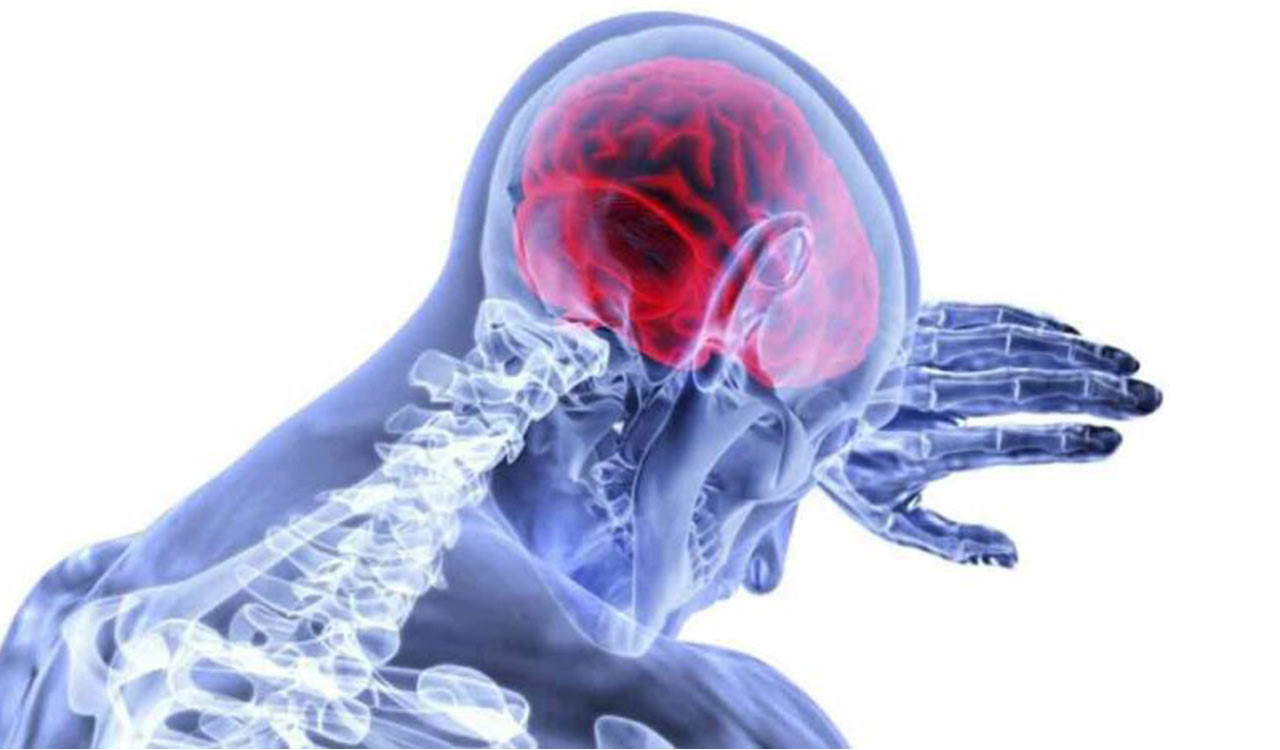


Washington: For the first time, researchers have found that people with obesity had changed connection patterns with particular brain regions in the ventral tegmental area (VTA), a crucial brain structure involved in motivation and reward appreciation.
According to a recent study, people who are obese exhibit hypo-connectivity with the left inferior frontal gyrus (related with cognitive control) and hyper-connectivity with a portion of the ventral occipitotemporal cortex. The findings of the study were published in the journal Obesity.
Additionally, researchers have established that these functional anatomical circuits play a specialised role in appetite and cognition. However, neither impulsivity nor hunger are connected to the routes. The results show that sensory-specific visual regions and the prefrontal cortex, which is involved in cognitive control, are inequitably connected to the reward system, which may cause food-related visual stimuli to become cravingly salient.
Our study is relevant for basic scientists, clinicians, and for patients, alike, said Francantonio Devoto, PhD, Department of Psychology, University of Milano-Bicocca, Milan, Italy. Devoto is the corresponding author of the study.
We provide novel insights into the brain mechanisms underlying excessive motivation towards food in obesity, a feeling that every person who is overweight or living with obesity has felt when tempted by food images. Based on these findings and once validated by clinical trials, patients may appreciate that there soon might be more strategies becoming available for their treatment.
Obesity is characterized by altered connectivity of the mesocorticolimbic and of the prefrontal cognitive control network. Most studies to date have focused on the main efferents and afferents of the VTA projections, including the hypothalamus, amygdala and ventral striatum, rather than on the VTA itself. This leaves the possibility that the observed differences do not strictly pertain to neuroadaptations occurring at the roots of the mesocorticolimbic circuit, according to experts.
In the current research, the study’s authors characterized resting-state functional connectivity of the VTA in 23 healthy-weight adults compared to the same number of adults with obesity to investigate whether obesity is associated with altered mesocorticolimbic activity.
The two groups were matched for age, gender and education.
Both groups of individuals underwent a resting-state functional magnetic resonance imaging scan and an assessment for impulsivity, food craving, appetite and implicit bias for food and non-food stimuli. The VTA was used as a seed to map for each participant the strength of its functional connections with the rest of the brain. The between group difference in functional connectivity was then computed and brain-behavior correlations were performed.
Results revealed VTA-ventral occipitotemporal cortex connectivity was positively associated with food craving and food-related bias towards high-calorie foods, and not associated with bias towards non-food stimuli. The reverse correlation was observed for VTA-inferior frontal gyrus connectivity and food craving.
The study’s authors explained that the findings provide two insights: tighter VTA-ventral occipitotemporal cortex connectivity may reflect stronger cue-reward associations in obesity, which favors food craving via the automatic activation of the rewarding properties of food and second, weaker coupling of the VTA with the lateral prefrontal cortex may contribute to faulty cognitive control over food craving and behavior due to inefficient down regulation of the midbrain via the prefrontal cortex.
Our results pave the way to novel interventions to treat obesity, providing a proof of concept that non-invasive brain neurostimulation techniques may be used to modulate midbrain activity and connectivity via the lateral prefrontal cortex, the study’s authors write in the report.
Over the past decade, several imaging studies in children and adults demonstrated that subjects with obesity have enhanced brain activation in sites involved in reward/incentive salience. On the other hand, a recent meta-analysis (Morys et al.) suggests that there is little evidence for such an effect.
The current study by Devoto et al. is the first to demonstrate food-related visual stimuli in subjects with obesity were cravingly salient due to hyper-connectivity of the VTA with areas of the brain involved in visual stimuli. They found decreased connectivity with brain sites involved in cognitive control.
The authors suggest such findings could help treat obesity via noninvasive brain stimulation. It would be of interest to evaluate whether subjects being treated with GLP-1 medications have brain activity similar to patients without obesity,†said Professor Emeritus of Food Science and Nutrition Allen S. Levine, PhD, of the University of Minnesota. Levine was not associated with the research.

Related News