Rewind: Every bird counts — to protect them is to protect Earth
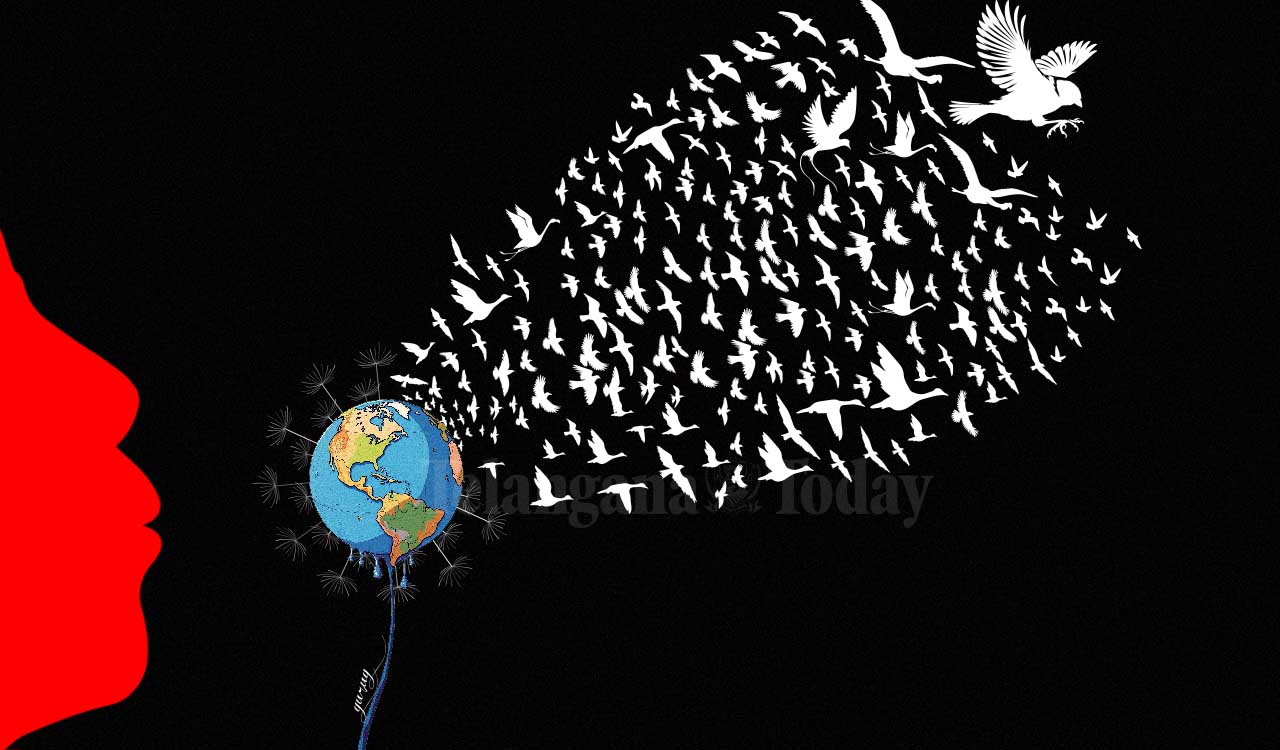
Vanishing sparrows, altered migrations, and deformed birds are Earth’s warning signals — nature’s whistle-blowers telling us ecosystems are under siege today globally


By N Shiva Kumar
When I first began birdwatching in the twin cities of Hyderabad during the 1980s, the city was still more town than metropolis, layered in ancient history and wrapped in vast stretches of scrub jungle, rock, and patches of forest. Those were years when birdlife flourished effortlessly, especially during the migratory season from September to March. Lakes and wetlands brimmed with migratory visitors, hillocks echoed with calls, and the skies felt alive.
Also Read
As Hyderabad steadily expanded into a megacity, much of that natural wealth was erased. The birds, too, withdrew to distant outskirts, fragmented habitats, and shrinking refuges. The once-untouched rocky landscapes of Banjara Hills and Jubilee Hills, which pulsated with avian life, have largely vanished under concrete and crowds. Against this transformed urban backdrop, National Bird Day on January 5 offered me a moment to pause and reflect on why birds still matter, perhaps now more than ever.
Each year, National Bird Day encourages us to look up towards open skies, forest canopies, wetlands, farmlands, and even our crowded cities, and acknowledge the beings that quietly sustain life on Earth. Birds are not mere ornaments of nature or fleeting silhouettes against the sun. They are ecological custodians, climate messengers, and inseparable allies of human survival. Their presence signals balance, and their silence, danger.
Wild Wings
Today, the world is home to more than 11,000 known species of birds, a breathtaking diversity shaped by millions of years of evolution. India stands out as a global avian stronghold, supporting approximately 1,429 birds, about 12 per cent of the world’s birds, within just 2.4 per cent of the planet’s land area. From the icy reaches of the Himalayas to the coral-fringed Andamans, from the rain-soaked forests of the Northeast to the arid landscapes of the western coast, birds stitch together ecosystems that would otherwise unravel.
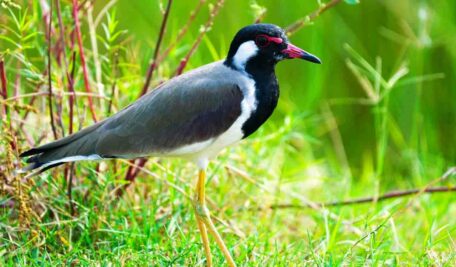
Red wattled lapwing, a ground-loving bird and often the whistle-blower when there is a threat. Photos: N Shiva Kumar
Pest Managers
One of the most understated yet critical roles birds play is natural pest control. Insectivorous birds like drongo, swallows, flycatchers, bee-eaters, warblers, and many others consume hordes of insects every day. A single small bird can eat hundreds of insects daily, naturally regulating populations of crop pests and disease-carrying mosquitoes. Without them, agriculture would lean ever more heavily on chemical pesticides, further poisoning our soils, waters, and food chains.
For instance, the tiny Indian palm swift performs a vital ecological role above our homes and fields. Feeding entirely on the wing, it consumes thousands of tiny flying insects each day, mosquitoes among them, along with midges and flies. Though no single species can control pests alone, every bird reduces our dependence on chemicals. Protecting their wild and urban habitats means allowing nature to maintain balance, quietly and efficiently, in the skies we share.
Birds of prey like eagles, owls, hawks, kestrels, and kites stand atop food webs as biological regulators. By preying on rodents and other small mammals, they protect crops, granaries, and human settlements, while also reducing the spread of diseases such as plague and leptospirosis.
Timberland Pollinators
Many bird species as the silent architects of forests. Fruit-eating birds such as hornbills, barbets, bulbuls, and pigeons act as long-distance seed dispersers, carrying seeds across valleys, hillocks, and river systems, depositing them far from the parent tree. In doing so, they often create new woodlands when conditions are right. This quiet movement of seeds ensures forest regeneration, maintains genetic diversity, and builds resilience against climate stress.
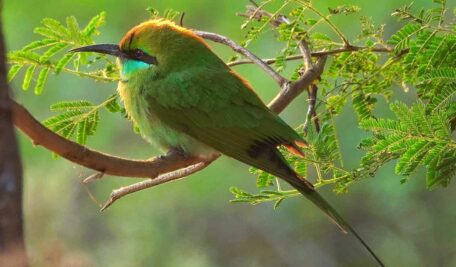
The little green bee-eater is a busybody, energetically gulping up to 400 insects a day.
In several ecosystems, birds also serve as primary pollinators. Sunbirds, white-eyes, and other nectar-feeding species transfer pollen as they move from flower to flower, enabling plants to reproduce, especially in regions where insect pollinators are scarce or seasonally absent. Without these birds, entire plant communities would slowly fade, leading to local extinctions. Many forests would simply collapse without the rebirth of their own progeny.
Clean-Up Crew
Some of the most critical work done by birds is also the least celebrated. Scavengers provide nature’s sanitation service. Vultures were once so abundant that we even loathed them for their ungainly looks and their habit of feeding at carcasses and trash dumps. Yet few creatures are as efficient: by consuming animal remains with astonishing speed, vultures prevent the spread of deadly pathogens.
I witnessed firsthand the consequences of their catastrophic decline in India during the 1990s. Carcasses were left to rot in the open, feral dog populations exploded, and cases of rabies rose sharply across the country. Few examples illustrate more clearly how the loss of birds can directly threaten human health. Today, birdwatchers go bonkers at the sight of even a single vulture, an encounter that was once taken for granted.
Wetland birds like storks, cranes, herons, ibises, flamingos, and ducks also play a similar regulatory role in aquatic ecosystems. By feeding on fish, molluscs, and invertebrates, they recycle nutrients and keep wetlands productive. They instinctively remove the weak and the sick, helping maintain balanced, resilient wetlands that enrich the land around them.
Environmental Barometers
Birds are among the most reliable indicators of environmental health I know. Changes in their numbers, behaviour, migration timing, or even physical deformities often reveal pollution, habitat loss, pesticide exposure, and climate stress long before scientists recognise the damage.
The disappearance of house sparrows from our cities, the shifting arrival times of migratory birds from distant lands, or birds with twisted beaks and abnormal plumage are not coincidences. They are ecological distress signals. In this sense, birds are the planet’s messengers; they are like our early-warning system, whistle-blowers alerting us that ecosystems are under siege.
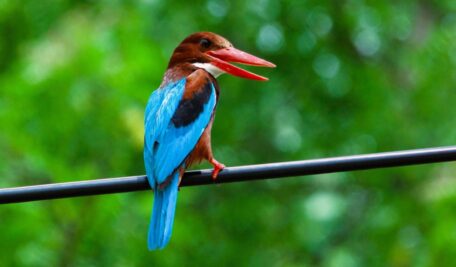
The white-breasted kingfisher is an adaptable omnivore, consuming more insects, lizards, and rodents than fish.
Birds and Humans
Beyond their ecological services, birds enriched my life and human life at large, emotionally, culturally, and economically. Their songs calm frayed minds, their presence lifts mental well-being, and bird-rich green spaces quietly enhance our quality of life. Birdwatching and nature photography nurture conservation awareness while supporting sustainable livelihoods and eco-tourism, especially in rural and forested landscapes where nature still shapes daily existence.
In the stone memory of civilisations, I see birds speaking long before humans learned to listen. On the pyramids and temple walls of ancient Egypt, the ibis stands etched in reverence — a sacred god of wisdom and writing, a reminder that knowledge itself was once imagined with wings. The falcon of Horus is carved with fierce precision.
Closer home, as I walk through ancient temples of India, birds rise again from stone as Peacocks frozen mid-stride on pillars. Gopurams have Garuda spread in eternal flight or hamsa, the swan, is depicted on Hoysala temples. These are not decorative relics — they are declarations carved in granite, affirming that birds were once seen as divine bridges between Earth and sky, and that our ancestors acknowledged a sacred relationship we are now in danger of forgetting.
Fragile Feathered Friends
Despite their immense value, birds today face unprecedented threats, habitat destruction, air and chemical pollution, climate change, shrinking wetlands, glass collisions, power lines, and relentlessly expanding cities. Each vanished bird species weakens ecosystems and erodes the life-support systems upon which humans depend. Dozens of birds have become extinct in the last five decades, and another 200 are critically endangered in the world.
National Bird Day must, therefore, be more than symbolic admiration. Protecting birds means safeguarding forests, wetlands, farmlands, and clean air. Simple, conscious actions like planting native trees, reducing pesticide use, protecting water bodies, making buildings bird-safe, and preserving open green spaces can still make a lasting difference.
Birds are not separate from us; they are woven into the same ecological web that sustains human life. They disperse seeds, silence pests, cleanse landscapes, and remind us of the planet’s fragile harmony. When birds thrive, ecosystems prosper. When they vanish, the warning is meant for humanity.
In recent years, I have watched India’s birding and bird photography fraternity grow from a niche pursuit into a vibrant national movement. Citizen science initiatives such as the Great Backyard Bird Count and City Surveys have drawn thousands of participants across States, contributing valuable observations through platforms like eBird. This growing blend of passionate observation and science-linked documentation is a prudent step forward and one that steadily elevates the value of birds in the public consciousness.
On this National Bird Day, under the theme “Every Bird Counts —Your Observations Matter!”, we are reminded of an urgent truth: to protect birds is to protect the Earth — and in doing so, we ultimately protect ourselves.

(The author is a wildlife writer and photographer)

Related News