Trump’s tariff stance on India seen as economically counterproductive
India’s economy continues to grow robustly despite US tariffs, with domestic consumption driving 68% of GDP. Corporate investments, like Apple’s $2.5 billion India expansion, signal confidence, highlighting risks that Trump’s confrontational trade stance could weaken America’s long-term strategic and economic position.


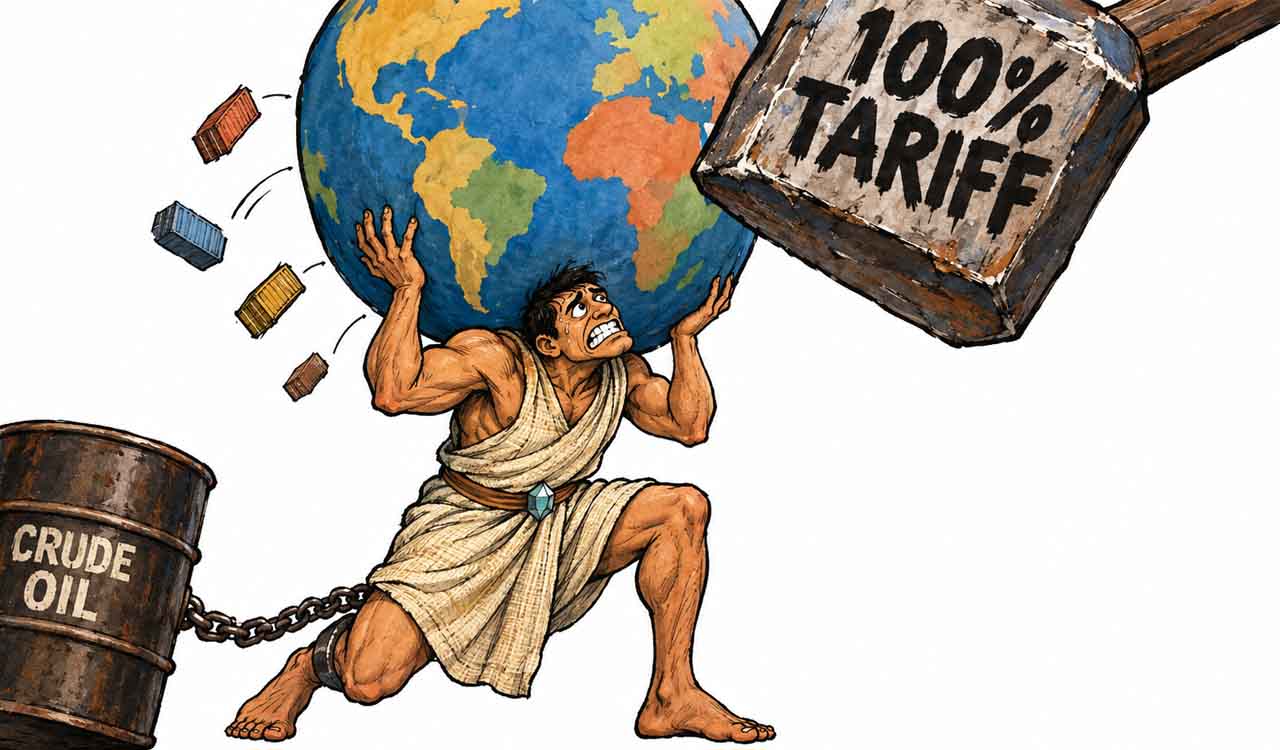
New Delhi: US President Donald Trump’s current stand on India, which involves a sharp hike in tariffs on goods imported from the world’s fastest-growing large economy, “is strategically flawed and economically counterproductive”, according to a new report.
An article in One World Outlook highlighted that India’s economy has posted a robust 7.8 per cent growth in the April-June quarter despite the tariff turmoil. This is in glaring contrast to the notion suggested by Trump of India’s economy being “dead” or weak.
Even with punitive tariffs aimed at curbing imports from India, the economy has posted a five-quarter high growth rate, signalling robust underlying strength beyond external trade conflicts.
The article pointed out that India’s economic growth is not export-driven like other emerging markets, as close to 68 per cent of its GDP is fuelled by domestic consumption, including household and government spending.
Global companies like Apple are deepening manufacturing investments in India, reflecting confidence in its market and capabilities. Consequently, a coercive US stance risks sidelining America from an increasingly influential partner with significant economic and strategic potential. The emerging economic realities suggest the need for policies that recognise India’s growth dynamics and position the US-India partnership for mutual advantage, rather than perpetuating counterproductive discord, the article by Andrew Wilson said.
It further pointed out that despite Trump’s calls for US companies to reduce ties with India and “make in the US”, Apple’s actions reflect a starkly different approach. Apple is investing approximately $2.5 billion in India to expand its iPhone production capabilities as part of the tech giant’s broader strategy to diversify its global supply chain away from China amid heightened geopolitical uncertainties.
Such moves demonstrate strong corporate confidence in India’s manufacturing ecosystem, skill availability, and policy environment, countering Trump’s rhetoric about limiting Indian labour or influence in US companies.
The article said that reducing bilateral trade engagement could curtail US access to a rapidly growing market and a partner that complements American economic and technological strengths.
According to the article, with the imposition of steep tariffs and its punitive posture, the Trump administration risks damaging a strategically valuable relationship. India is not only an economic powerhouse but also a crucial geopolitical partner in maintaining a balance of power in the Indo-Pacific region.
The tariffs threaten thousands of exporters and jobs in India, aggravating tensions and fostering mistrust. Instead of strengthening ties through dialogue and cooperation on trade and investment, the confrontational approach may push India closer to other global powers such as China or Russia.
The long-term risks include diminished US geopolitical leverage and missed economic opportunities in areas such as technology co-development, supply chain diversification, and services trade, the article added.

Related News