Where romance meets risk: Cyber crooks exploit valentine week buzz
As Valentine week floods social media with romantic messages and gift offers, cybercriminals are exploiting the occasion to spread phishing links and malware. Authorities have flagged suspicious messages such as ‘Secret Valentine’ and ‘Claim Your Special Gift,’ which redirect users to fake websites or prompt them to share personal details.
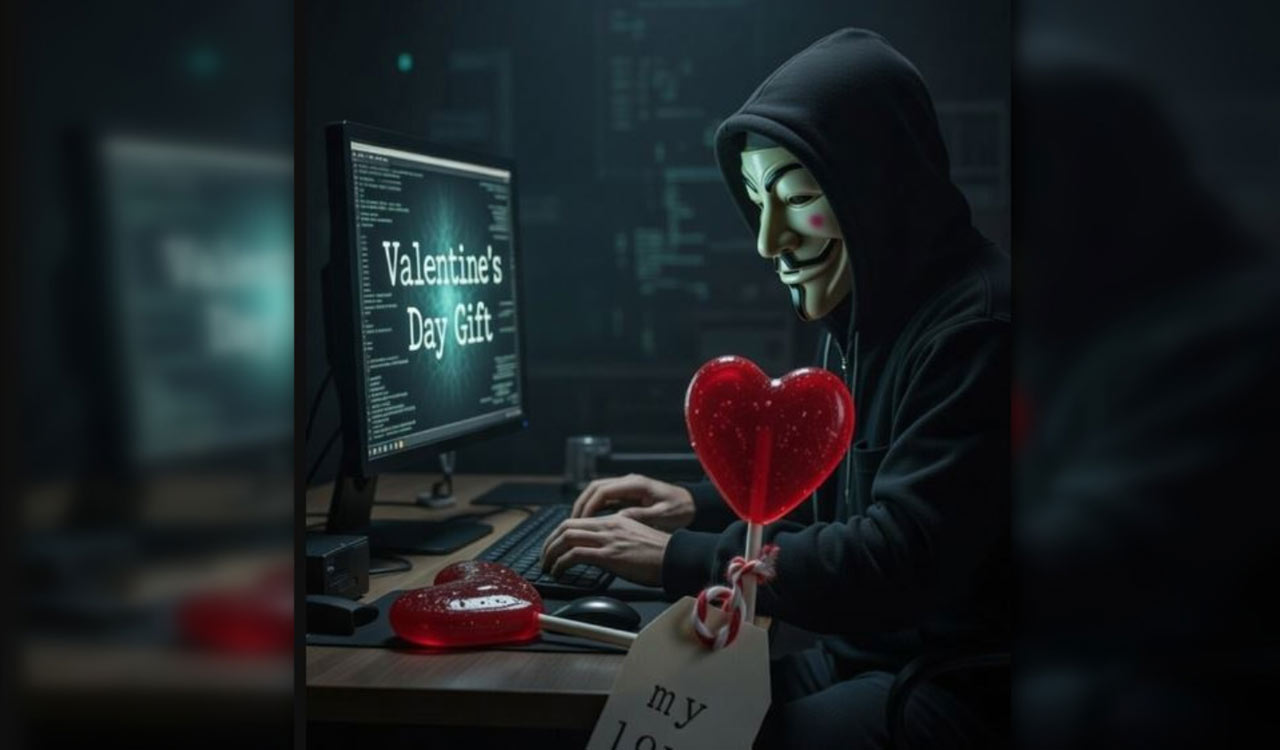


Hyderabad: As Valentine week fills social media with roses, proposals and heartfelt messages, cybercriminals seem to have quietly woven their own web by turning exciting romance themed messages, links and surprise gift offers into a way for digital fraud.
In a season that is otherwise meant for genuine connections, the surge in cybercrime incidents reminds youngsters to verify before they trust and proceed, because in the online world, not every valentine message comes from the heart.
Cybercrime authorities have flagged a noticeable rise in suspicious messages circulating on various social media platforms including WhatsApp, Instagram, E-mails and other platforms. Phrases such as ‘Secret Valentine,’ ‘Accept Your Valentine,’ ‘Someone Has A Crush On You,’ and ‘Claim Your Special Gift’ are some of the messages widely noticed and shared, often accompanied by clickable links.
While they appear playful and harmless, officials warn that these links may lead to phishing websites or trigger the download of malicious software. According to cybercrime officials, fraudsters deliberately time such campaigns around popular celebrations.
“Cyber fraudsters are aware that such special days or celebrations or festive periods lower people’s guard. When emotions like excitement or curiosity take over, users are more likely to click without verifying,” an official from Cybercrime police station said.
Once a user clicks on a suspicious link, they may be redirected to a fake webpage designed to resemble a legitimate site. In some cases, malware can be silently installed on the device. “Victims might also be prompted to enter personal details or banking information under the pretext of unlocking a gift or viewing a message,” the official added.
Another common tactic involves asking users to pay a token amount, sometimes as little as Rs 1 to claim a digital gift card or special Valentine Surprise. Even such small transactions can expose card details and lead to unauthorised withdrawals.
Officials have warned that if any malicious software gains access to a device, it can collect sensitive information including saved passwords, OTPs, contact lists and banking credentials, potentially resulting in financial loss or identity misuse.
Remain alert to online threats during Valentine scams and beyond
*Messages from unknown numbers or profiles
*Links with shortened or unfamiliar URLs
*Requests for OTPs or confidential details
*Offers that seem too good or too romantic to be true
*Legitimate organisations do not ask for sensitive information through unsolicited links
*Avoid clicking on unknown links
*Enable two-factor authentication for banking and social media accounts
*Keep devices updated with the latest security and regularly monitor financial transactions

Related News
-

Hyderabad: Two held for supplying mule accounts, SIM cards to cyber fraudsters
-
Telangana Cyber Security Bureau arrests over 100 in mule account crackdown
-
HMWSSB cautions consumers against Cyber fraudsters posing as Water Board representatives
-
Hyderabad cybercrime: Retired employee loses Rs 38 lakh in honey-trap scam