Wildlife thrives in Khammam forests, camera traps capture leopard, sloth bear movements
Wildlife in Khammam’s forests is thriving due to proactive conservation measures by the Forest Department. Camera traps have recorded leopards, sloth bears, and spotted deer, signalling healthy biodiversity.
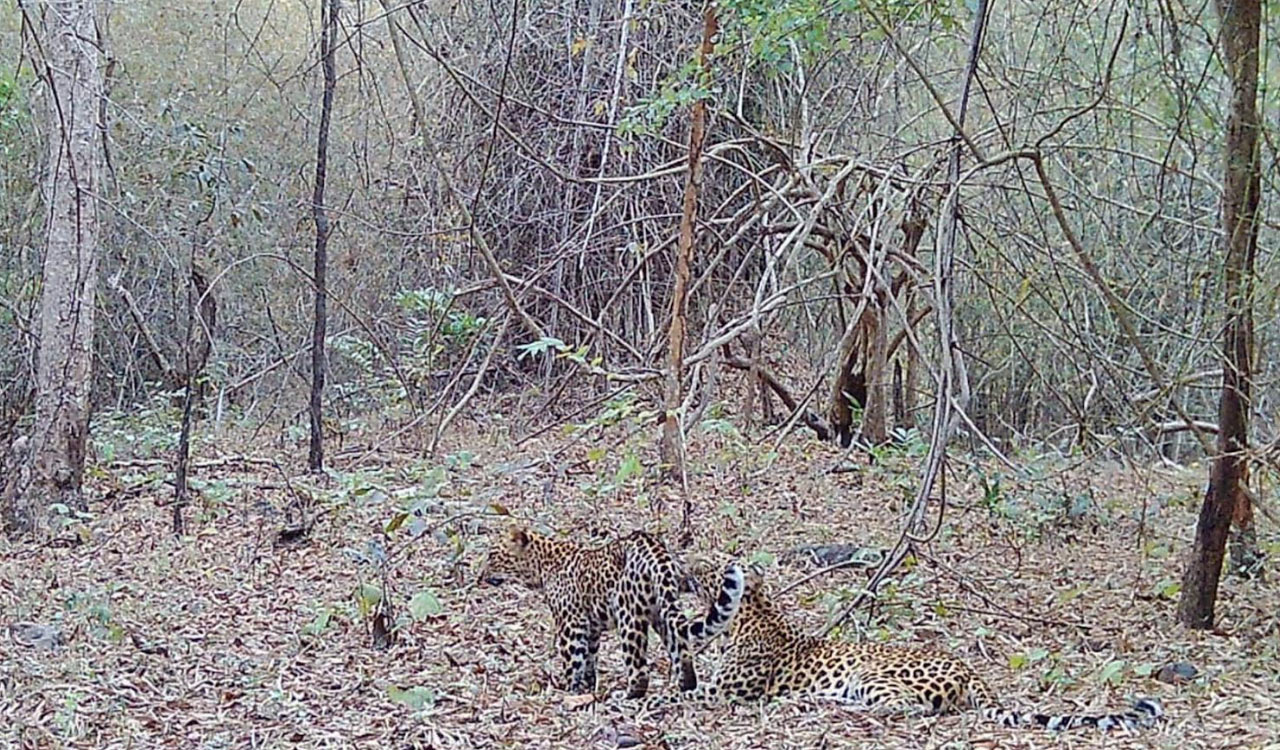
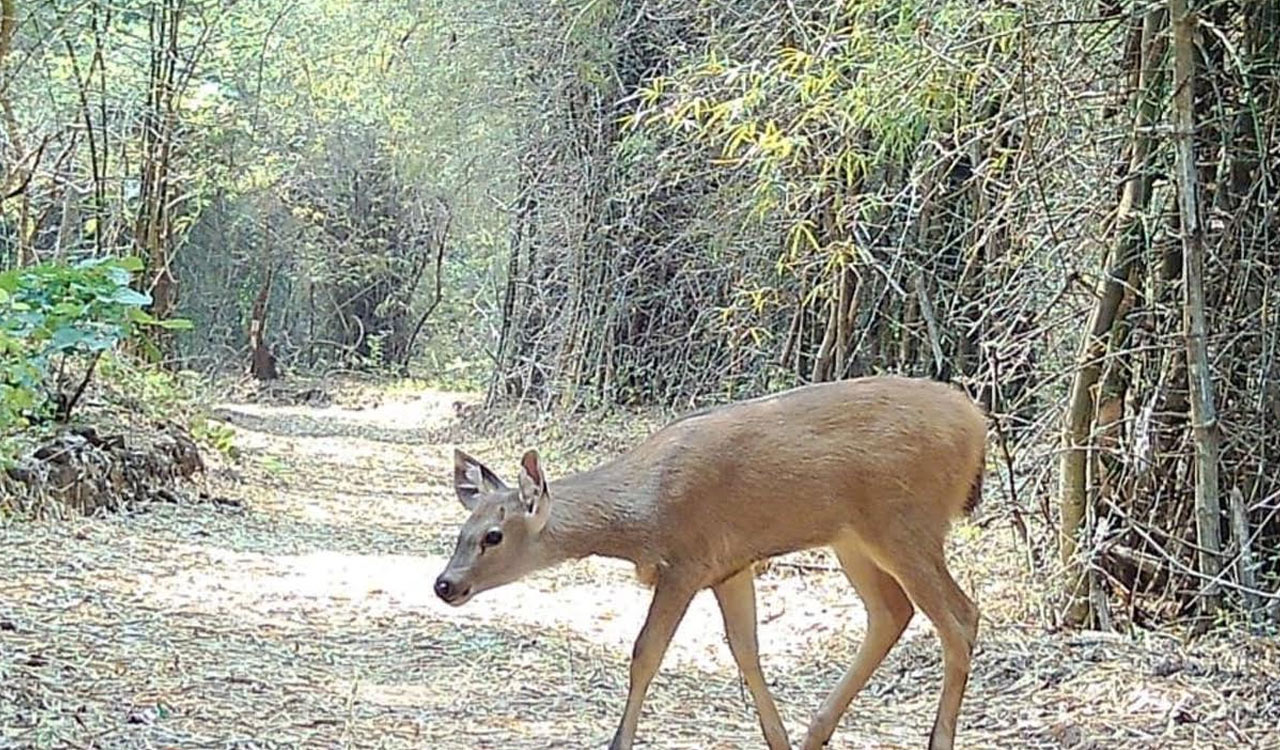


Khammam: Wildlife is thriving in Khammam forests thanks to measures taken by the Forest department to improve habitat protection and enhance forest wealth.
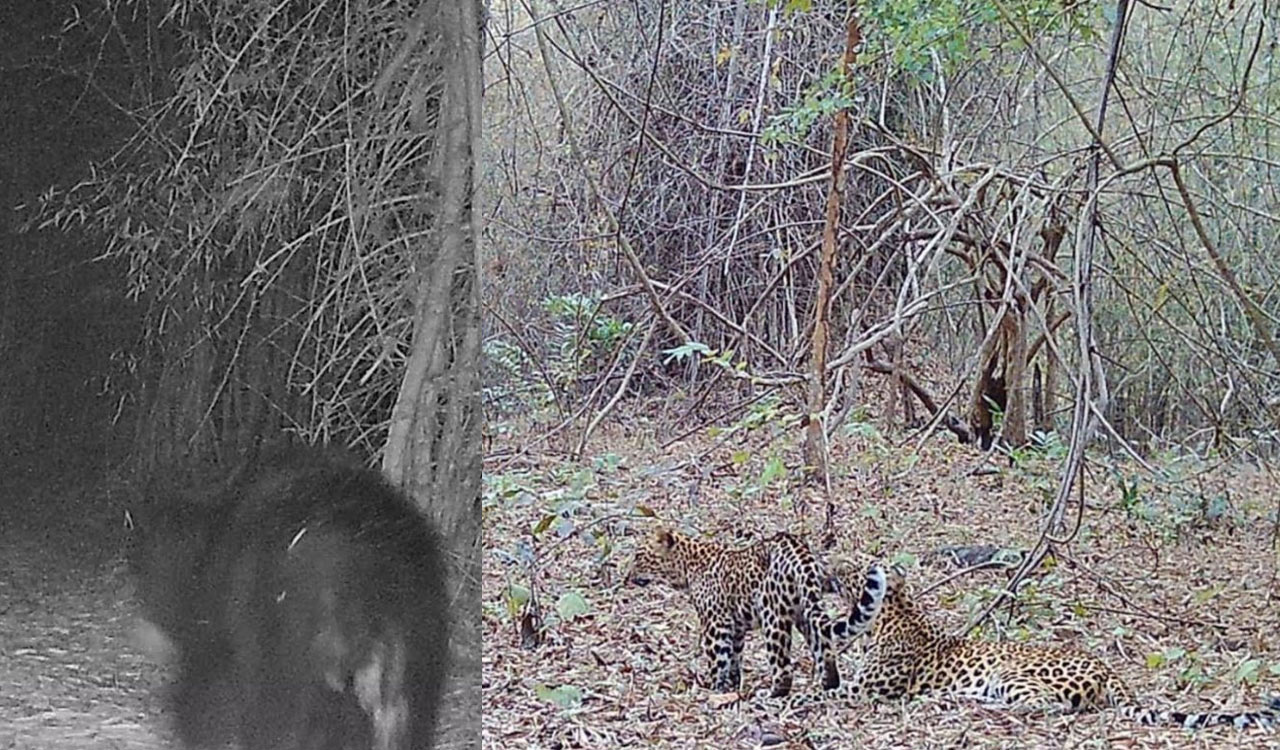
Camera traps installed in reserve forest areas have recently captured movements of a leopard (Panthera pardus) along with its cub, a sloth bear (Melursus ursinus) and spotted deer, indicating healthy wildlife movement within the forest ecosystems of the district.
The District Forest Officer (DFO) Siddharth Vikram Singh informed that the camera trap recordings are part of the department’s efforts to scientifically monitor wildlife populations and understand biodiversity patterns across forest landscapes.
The presence of these species reflects the improving habitat conditions and ecological health of the forests in Khammam. Over the past year, the department has taken several initiatives to strengthen wildlife protection and habitat management in the district.
The measures include scientific waterhole management across forest areas to support wildlife during dry seasons, installation of 360-degree surveillance cameras at sensitive forest locations, and intensified anti-poaching operations, the DFO said.
The department has also introduced drone-based monitoring of forest areas, which has greatly improved surveillance, wildlife observation and biodiversity documentation. The use of modern technology has enabled more effective monitoring as well as enhanced biodiversity documentation
Multiple forest offence cases against hunters and wildlife offenders have been registered. People living in forest fringe areas are advised to avoid entering forest areas at night, not to disturb wildlife habitats and inform officials when they notice wildlife movement near habitations, Vikram Singh noted.
The Puligundala Eco-Tourism Project developed recently by the department is aimed at promoting nature awareness, eco-tourism and conservation besides ensuring sustainable livelihood for local communities, he added.

Related News
-

Over 1.5 lakh pictures taken for tiger estimation exercise in UP’s four reserves
-
Watch: 8-foot python spotted in KBR park, video goes viral
-
Chenchu tribals oppose relocation from Amrabad Tiger Reserve
-
Tiger from Maharashtra settles in Adilabad forests for six months, forest officials track movements