Babban Khan, legendary Hyderabadi comedian, passes away
Legendary Hyderabadi comedian Babban Khan, creator of the iconic one-man show Adrak Ke Panje, has passed away after a brief illness. Known for his socially relevant humour, he leaves behind a lasting cultural legacy spanning over three decades.
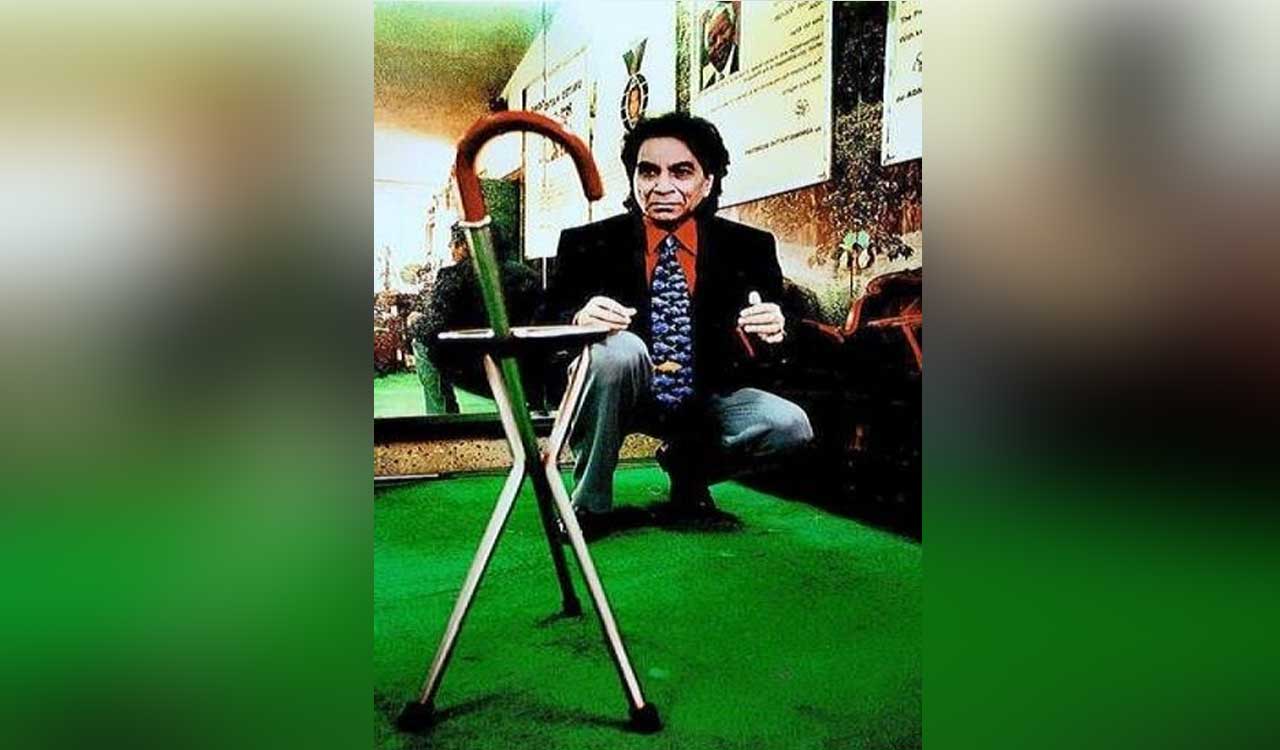


Hyderabad: The man who lit up dull evenings and brought smiles to weary faces is no more. Babban Khan, the undisputed king of comedy, has passed away after a brief illness, bringing the final curtain down on an extraordinary life. He is survived by his wife, Shaila Khan and their two daughters. The mortal remains of the showman were laid to rest at a graveyard in Shantinagar on Saturday.
“Baba aaye, baba aaye… Arey chup. Main daftar se aaroon, jail se thodi aaroon.”
Who can forget these iconic lines? They once echoed across packed auditoriums, defining an era of humour that was uniquely Hyderabadi.
For 35 remarkable years, Adrak Ke Panje reigned supreme as one of the longest-running one-man shows in the world. From September 22, 1965, to February 11, 2001, it clocked an astonishing 10,000 performances across 60 countries in 27 languages. In sheer scale and endurance, it surpassed global stage legends like The Mousetrap by Agatha Christie and the Broadway sensation A Chorus Line.
What made the feat even more extraordinary was its simplicity. No elaborate lighting, no music, no changing sets – just raw performance. The stage could be set in 17 minutes and cleared in 10. The entire production cost a mere Rs 650. Even seasoned theatre personalities like Rex Harrison were astonished by its minimalism.
Yet nothing changed—not the script, not the costumes, not even the worn-out black sherwani, umbrella, and tiffin carrier carried by the unforgettable character Ramtoo. It was consistency powered by brilliance.
From the bylanes of Hyderabad to global stages across America, Russia, London, Tokyo, and beyond, the play drew packed audiences. It even entered the Guinness Book of World Records in 1984. Recognition poured in from prestigious institutions worldwide, and admiration came from towering figures such as Margaret Thatcher, Nelson Mandela, Queen Elizabeth II, Indira Gandhi, Frederick Forsyth, and Francis Ford Coppola.
The genius of Adrak Ke Panje lay in its rootedness. Babban Khan struck gold with his very first play, using humour to explore the harsh realities of an unplanned, large family. The metaphor of “Adrak ke panje”, ginger roots spreading in all directions, became a powerful social commentary. Through Ramtoo and his chaotic household, the play touched upon issues like poverty, dowry, pollution, and family planning – long before they became mainstream concerns.
Ironically, this comedy was born out of deep personal tragedy. Babban Khan’s childhood was marked by poverty and loss. His father, a poorly paid clerk, struggled to support a large family, losing several children to deprivation. Those painful memories became the soul of his writing. The boy, once called simply “Babban”, went on to create a legacy that would outlive generations.
The story of the play’s creation is as compelling as the play itself. Written in just a few hours under a streetlight at Charkhandil in Aghapura, it was staged by selling his mother’s gold pendant. The first show was a financial failure but a creative success. The second show changed everything, and history was made.
Even after decades of performing the same script, Babban Khan never grew tired. “It has become part of my life,” he once said. And indeed, it became part of Hyderabad’s cultural identity.
The play’s dialogues, much like those from Sholay, became timeless. Sharp, witty, and laced with irony, they reflected both humour and hardship. Audiences laughed, smiled, and sometimes even wept—because beneath the comedy lay uncomfortable truths.
For Babban Khan, comedy was never just about laughter. It was, as he believed, “a funny way of being serious.”
Today, the man is gone. But his words, his wit, and his world remain alive in memory, echoing in laughter that refuses to fade.

Related News