Editorial: A big challenge to Islamabad’s authority
Raging protests in Pakistan-occupied Kashmir expose deep governance failures and a growing crisis of public trust
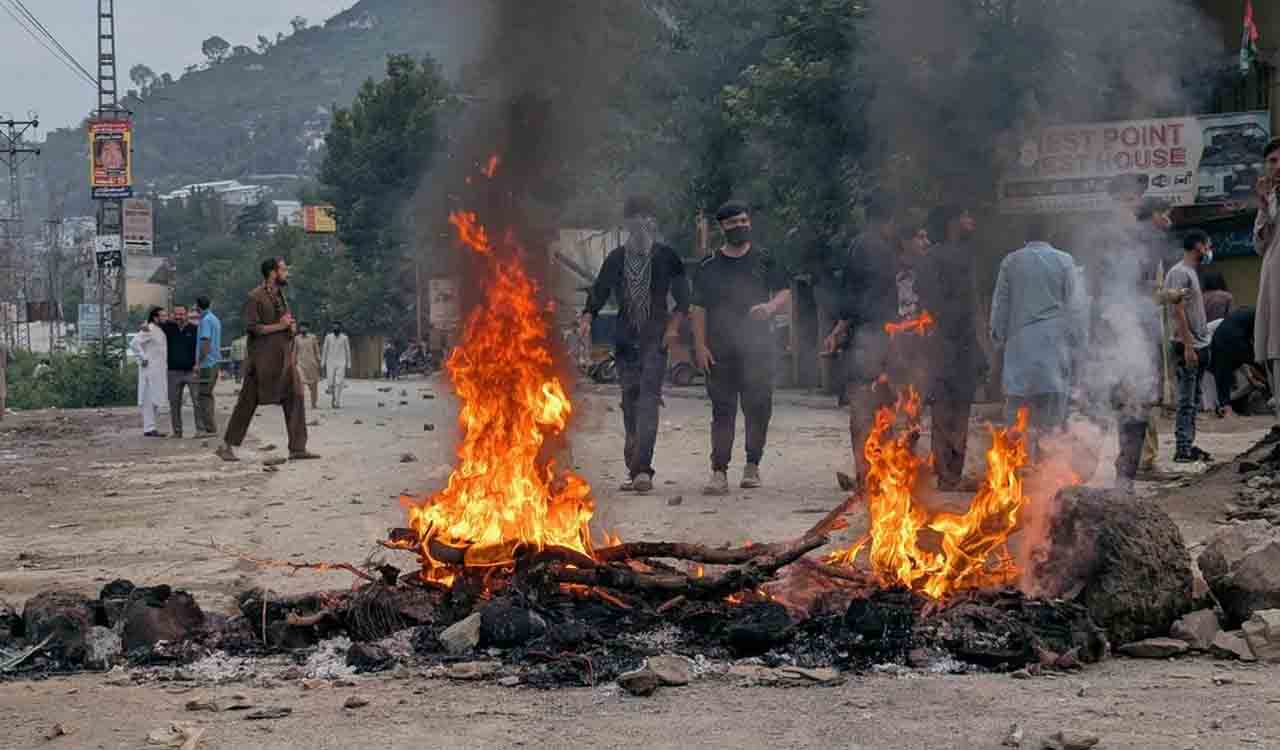


The growing civil unrest in Pakistan-occupied Kashmir (PoK) is fundamentally a challenge to Islamabad’s control of the territory and its policy of repression. Political disenfranchisement has given way to demands for self-determination. What began as demonstrations over the soaring cost of living has now evolved into a sustained political movement led by the Joint Awami Action Committee (JAAC), a coalition of traders, civil society activists and local politicians. The coalition has organised protests in recent weeks that are posing the most significant challenge in years to Pakistan’s authority over the region. Over 40 protesters have been killed so far by security forces. Faced with brutal oppression, denial of human rights, high power tariffs, residents of PoK are now demanding the deployment of a United Nations peacekeeping force to replace the Pakistani army. The emerging civil strife provides a window of opportunity for India to launch a diplomatic offensive and expose Islamabad’s horrific misdeeds in the region. For a country that has used terrorism as an instrument of state policy to foment trouble on foreign soil, decades of misadventures are now coming home to roost. The very “mujahideen” that the Pakistani establishment trained, armed and sent to bleed India have now turned their guns inward, weaponising themselves against the state. New Delhi must use international forums to highlight the ongoing atrocities in the PoK region and demand accountability from Pakistan. In fact, India has been amplifying JAAC’s grievances at every briefing conducted by the Ministry of External Affairs. However, New Delhi is bound by certain limitations.
A military action across the Line of Control to protect the citizens of PoK would be an act of war against a nuclear-armed neighbour, undertaken not in response to cross-border terrorism but in response to Pakistan’s internal repression of its own citizens — a rationale with no precedent in India’s post-1971 conduct and no clear indication of where such action might end. The raging protests have exposed deep governance failures and eroding public trust. The JAAC’s immediate trigger is a constitutional anomaly that exposes the contempt with which Islamabad treats PoK’s electoral democracy: the allocation of 12 reserved seats for refugees from other parts of the country in the elections for the 45-member PoK assembly. It is evident that Islamabad is using these 12 seats as a means of direct interference in the governance and administration of occupied Kashmir. Unlike previous protests that were largely sectoral or economic, this movement has expanded into a multi-stakeholder campaign addressing structural governance issues such as legislative reform, accountability, and local control over resources. PoK is a land of extraordinary natural wealth, but the majority of people live in utter poverty. Thousands of civilians are crying foul, claiming that they have been unjustly deprived of development opportunities, with protests revolving around the denial of basic fundamental rights to the people.

Related News