Editorial: Brutal crackdown on PoK protests
The unrest has laid bare deep governance failures and declining public trust, exposing the contempt with which Islamabad treats PoK’s electoral democracy
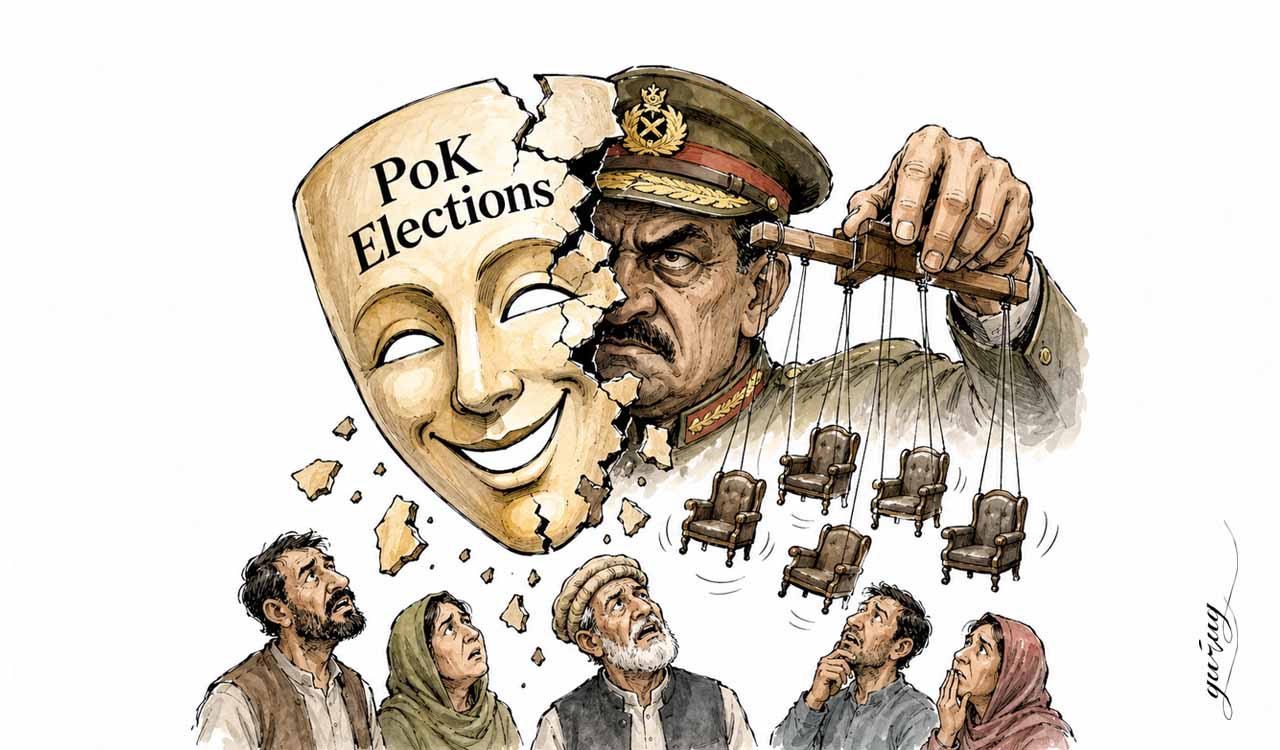


For a country that has used terrorism as an instrument of state policy to foment trouble on foreign soil, decades of misadventures are now coming home to roost. Karma is now coming back to bite Pakistan hard in the form of massive public protests across the occupied Kashmir region. However, Islamabad’s response to the latest uprising has followed a depressingly familiar script: repression, denial and deflection. More than 30 protesters have been killed and at least 200 injured as Pakistani security forces launched a brutal crackdown on demonstrators in Pakistan-occupied Kashmir (PoK). The dead are not militants but ordinary citizens and members of Jammu Kashmir Joint Awami Action Committee (JAAC), a civil society coalition that has been peacefully demanding economic rights and political dignity for the people of the resource-rich region. A similar response template was seen during past protests as well. Each time, Islamabad has made promises only to renege on them later. This cycle continues because the structural causes — resource extraction without representation, denial of constitutional status, governance by distant bureaucrats answerable to Rawalpindi rather than Muzaffarabad — remain untouched. No matter how ruthlessly the Pakistan government may try to crush the protests, they are spreading across the occupied Kashmir. The unrest has exposed deep governance failures and eroded public trust. The JAAC’s immediate trigger is a constitutional anomaly that exposes the contempt with which Islamabad treats PoK’s electoral democracy: the allocation of 12 reserved seats for refugees from other parts of the country in the upcoming July 27 legislative elections.
The PoK Assembly has 45 seats. Of these, 12 are reserved for people who do not live there but are spread across Pakistan, particularly in the provinces of Punjab and Sindh. They constitute more than one-fourth of the total seats in the occupied Kashmir Assembly. Without the support of these 12 members, no government can remain stable in occupied Kashmir. It is evident that Islamabad is using these seats as a means of direct interference in the governance and administration of occupied Kashmir. Unlike previous protests that were largely sectoral or economic, this movement has expanded into a multi-stakeholder campaign addressing structural governance issues such as legislative reform, accountability, and local control over resources. PoK is a land of extraordinary natural wealth, but the majority of people live in utter poverty. Thousands of civilians are crying foul, claiming that they have been unjustly deprived of development opportunities, with protests revolving around the denial of basic fundamental rights to the people. If Pakistan’s relationship with PoK resembles the extractive logic of a colonial power, then China’s entry through the China-Pakistan Economic Corridor (CPEC) has multiplied and deepened that extraction. Far from resolving Pakistan’s legitimacy crisis, China’s deepening footprint — through CPEC, Gwadar, and Shaksgam — has entrenched the very extractive dynamics driving locals onto the streets.
Also Read

Related News