Editorial: Another feather in ISRO’s cap
The latest analysis of data from one of the instruments aboard Chandrayaan-3 that had successfully soft-landed in August 2023 reveals the presence of water ice outside the Moon’s polar regions
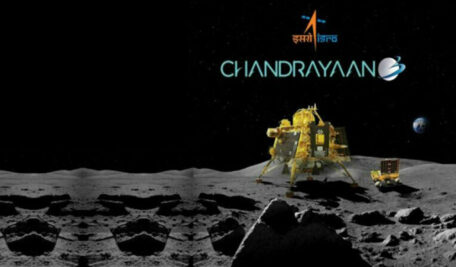


Nearly five-and-a-half decades after the first human landing on the Moon, the global focus is now back on our nearest astronomical neighbour as it holds massive opportunities ahead. It is heartening that India is among the leading players in the lunar race. In fact, it was Chandrayaan-1 spacecraft, launched in 2008, that is credited with discovering the presence of water molecules on the parched lunar surface in 2009. Two instruments on board Chandrayaan-1 confirmed the presence of water in the polar region. Now, the latest analysis of data from one of the instruments aboard Chandrayaan-3 that had successfully soft-landed in August 2023 reveals the presence of water ice outside the Moon’s polar regions. This huge game changer reflects a significant breakthrough for the Indian space research community. It is now clear that the hidden reserves of water ice, buried beneath the Moon’s surface, may be more abundant than once believed. The latest findings suggest that future astronauts could one day tap into this frozen resource — not just for drinking water but to cool equipment, produce oxygen and even fuel deep-space exploration. Using data from Chandra’s Surface Thermophysical Experiment (ChaSTE), scientists at the Ahmedabad-based Physical Research Laboratory have shown that surface and sub-surface temperatures in the higher latitudes of the Moon’s surface varied greatly with even very small changes in altitudes over a short distance. Inclined areas in these latitudes that were not directly facing the Sun could have environments very similar to the polar regions, and could host water ice below the surface.
ChaSTE, which is a sort of thermometer, was the first instrument to carry out on-site temperature measurements of the Moon’s surface and sub-surface near the polar regions. Previous estimates of temperatures in these regions came from satellite measurements. ChaSTE had earlier revealed that there was a difference of nearly 60 degrees Celsius between the temperature of the Moon’s surface, and the layer just 10 cm beneath it. This extreme non-conductivity of heat by the top layer of the lunar surface sheds new light on the composition and evolution of the Moon, and could have interesting practical implications like creating temperature-controlled habitats for future human visitors. The study’s findings have significant implications for future lunar exploration, including NASA’s planned Artemis missions, which aim to land astronauts near the Moon’s south pole. Now, the big challenge before scientists is to figure out how to extract and utilise ice for long-term lunar sustainability. This is because liquid water cannot exist on the Moon’s surface due to an extremely low atmospheric pressure. Ice would sublimate directly into vapour rather than melting into liquid form. Looking ahead, researchers aim to survey different locations for the presence and quantity of water ice. They also call for a deeper understanding of the lunar water cycle and its spatial and temporal variations, which could aid in future human and robotic exploration efforts.

Related News