Editorial: Avoid triumphalism, focus on development
It is time for government to focus on developing regions that have become hostage to violent activities by naxalite groups
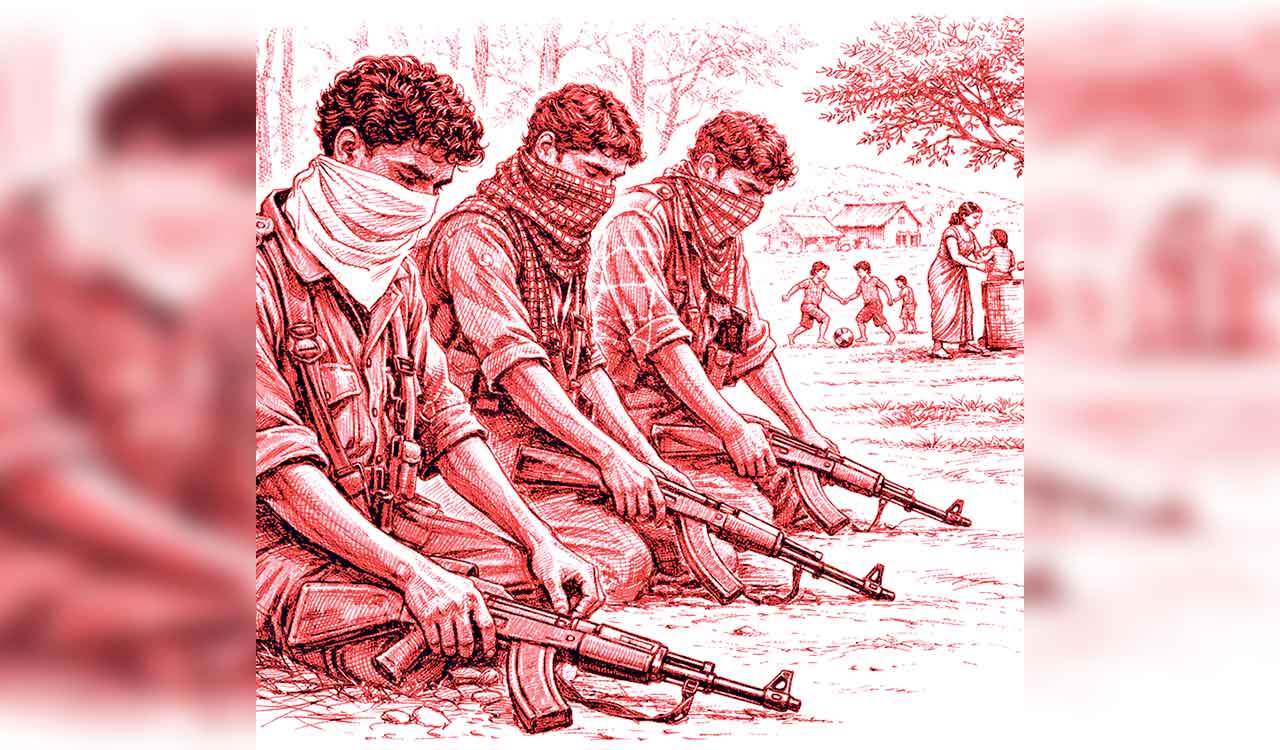


As Maoist ideology is on the brink of slipping into history, it is a sobering moment for those who were drawn towards the pursuit of overthrowing the state and capturing power through the barrel of a gun and those who egged on youth to chase a false dream in the name of championing the cause of the poor. It is also a time for the government to avoid triumphalism and instead focus on the socio-economic development of the regions that were virtually turned into killing fields and became hostage to the violent activity of naxalite outfits for decades. In 2009, then Prime Minister Manmohan Singh dubbed naxalism as the “gravest internal security threat” to India. Nearly 17 years later, Union Home Minister Amit Shah stood on the floor of Parliament and declared that the country has now become ‘naxal-free’, meeting the March 2026 deadline set by the NDA government. This is the culmination of an aggressive and well-coordinated security operation to hunt the Maoists in their strongholds, particularly in the Bastar region. Over the last five decades of violence, nearly 20,000 people have died, including over 5,000 security personnel. Since its birth in West Bengal’s Naxalbari in 1967, the movement spread its tentacles across the country. At its peak, the insurgency had spread across 12 States, encompassing 17% of India’s territory. In the Red Corridor, the Maoists virtually ran a parallel administration with kangaroo courts, armed enforcement units, and shadow taxation levied on contractors and villagers alike.
However, over the years, the revolutionary movement lost steam and began to crumble under an unrelenting offensive by the security forces and the steady erosion of its support base. Once a romantic notion that attracted both the restive urban youth on campuses and the underprivileged and exploited sections in rural areas and gave them a sense of purpose and justice, naxalism gradually degenerated into a refuge for a clutch of extortionists and trigger-happy vigilantes indulging in pointless violent attacks and blindly obstructing developmental projects. Indiscriminate killing of innocent people, branding them as police informers, and resorting to the same brutal methods that they often accuse their enemy classes of, public hangings after holding kangaroo courts, killing politicians and policemen and resorting to extortions resulted in a steady erosion of public support. Academics and the intellectual class, once the mainstay of the Maoist ideology, slowly moved away from it. Leading security experts believe that the latest turn of events may well signal the end of Maoism in the country. Government data indicate that districts once considered Maoist strongholds have either been cleared of insurgent elements or substantially stabilised. Security forces, supported by improved intelligence, road connectivity, telecommunications expansion, and welfare delivery systems, have steadily pushed armed cadres into retreat. In 2019, the Centre imposed a single unified command structure, bridging central and State security forces.
Also Read

Related News