Opinion: Naxal-free India must begin with youth welfare
Crushing ideologues is only the first step; without restoring trust among youth, justice and governance will remain fragile


By Nayakara Veeresha
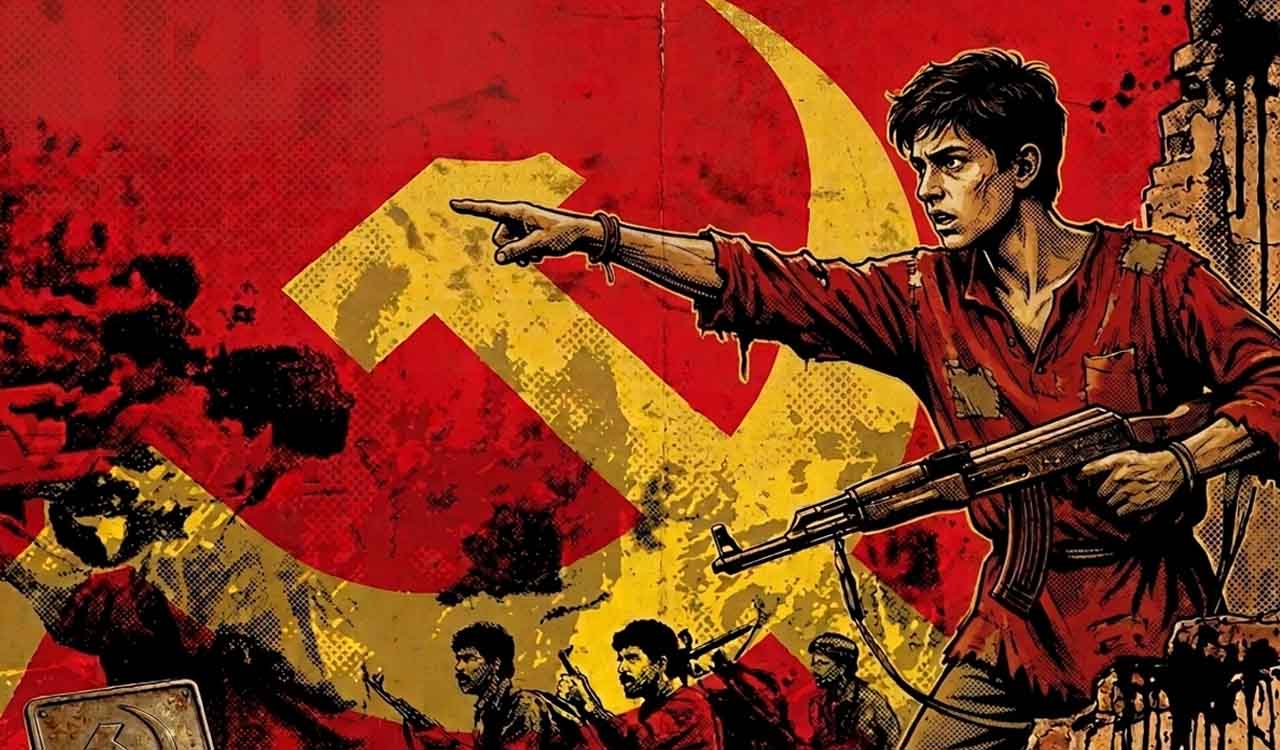
Left Wing Extremism (LWE) denotes an ideology that seeks to replace the existing sociopolitical order through extra/unconstitutional means, drawing from the political philosophies of Marx, Lenin, and Mao. The eighty-year-long political insurrection, which began in Telangana in 1946, appears to have reached its decisive moment in Telangana in 2026. With the surrender of Devji, the Communist Party of India (Maoist) seems to be nearing the end of the insurrection.
Also Read
Most of the lower-rank cadres comprise the youth population, largely drawn from Adivasis (Scheduled Tribes), Dalits (Scheduled Castes), and Other Backward Classes (OBC). Dominant theories argue that underdevelopment and unemployment are the two primary reasons why youth resort to extreme political actions.
Through the Stages
The participation of youth in the movement can be explained through the six phases: Ascendancy (1945-65); Insurrectionary (1966-86); Consolidation (1987-2004); Regrouping (2005-2014); Retaliatory (2015-2024), and Withering (2025-26).
In the first phase, the establishment of the CPI in India and its ideological lineage were the main motivational factors for youth. Land was the primary site of conflict, leading to the Tebhaga and Telangana insurrection at the dawn of Independence. The second phase was the most intense, with active youth participation in resisting the government. The Naxalbari and Srikakulam uprisings in 1967 shook the nation’s conscience in their pursuit of an egalitarian society.
Unresolved agrarian issues, coupled with a centralised development model, became the main catalysts for youth participation. During the consolidation phase, ideological debates and conflicts led to the formation of the Communist Party of India (Maoist) in 2004, through the merger of the CPI (Marxist—Leninist) People’s War (People’s War Group), and the Maoist Communist Centre of India (MCCI).
The regrouping stage was the second most crucial phase in the insurrection. Failures in governance, in general, and ineffective implementation of the provisions of the Fifth Schedule, the Panchayat Extension to. Scheduled Areas (PESA) Act, 1996, and Forest Rights Act (FRA), 2006, significantly influenced youth participation.
Unlike earlier generations, Gen Z engages with political ideas in real time through social media, reshaping the contours of dissent and identity
Economic reforms and associated land alienation, lack of adequate employment, persistent inequality, atrocities against SCs, STs, and women, and large-scale human rights violations further contributed to youth disillusionment. This phase saw active recruitment by the CPI(Maoist) among dissatisfied youth seeking change.
The fifth phase was marked by a change in political regime, which formally labelled naxalism/Maoism as Left-Wing Extremism in 2014. The movement entered its final phase, evidenced by large-scale surrenders by the CPI (Maoist) cadres, including the central leadership. Significantly, the surrendered cadre included youth in large numbers. The aggressive approach of security forces, along with the Union and State government’s push to eliminate Maoism by March 2026, has posed serious challenges to the ideology.
Gen Z Approach
The Gen Z approach to political ideologies differs from that of the 1950s and 60s generations. Social media has emerged as a platform for stimulating the exchange of ideas and debates. Analysis of CPI (Maoist) documents and conversations with surrendered youth reveal that the reasons for joining the CPI (Maoist) Party include experiences with local administration, family legacy, personal circumstances, fascination with guns or perceived livelihood opportunities. Most recruits have education levels below the tenth standard, and a few have completed Class 12 but failed in maths and science.
The question of unemployment as a determining factor needs deeper engagement. The author’s field notes from 2016 suggest a complex reality; the motivation of employment or livelihood is a supplement to the treatment meted out to the youth by the state.
As one youth noted, “It is not the unemployment alone that makes local youth support insurgents. They have their personal reasons. A friend joined the party after his brother was killed by police under the false accusation of being a naxalite. I am joining the party to support my family”.
Another said, “If unemployment alone were the reason, I would have joined. While we lack certain skills required for formal jobs, it does not mean we support insurgents.”
Findings from Chhattisgarh indicate that while unemployment and underdevelopment are relevant, they are not the sole drivers for youth to take part in insurrection. Everyday experiences with the state, bureaucratic apathy, exploitation, legacy of ‘insurrectionary culture’ and role of political ideology play significant roles.
The Union and State governments must prioritise employment generation along with a sensitive and humane approach to development in Fifth Schedule areas. While economic security is critical, values such as dignity, self-respect and autonomy must also be emphasised. Eliminating ideologues is only the first step. Building trust building among youth is essential for delivering justice and strengthening governance.
(The author is Assistant Professor, Symbiosis Law School, Pune, Symbiosis International [Deemed University], Pune. Views expressed are personal)

Related News