Editorial: Bihar politics at an inflection point
The Bihar template reveals the BJP’s smart game plan for power in States with strong regional allies
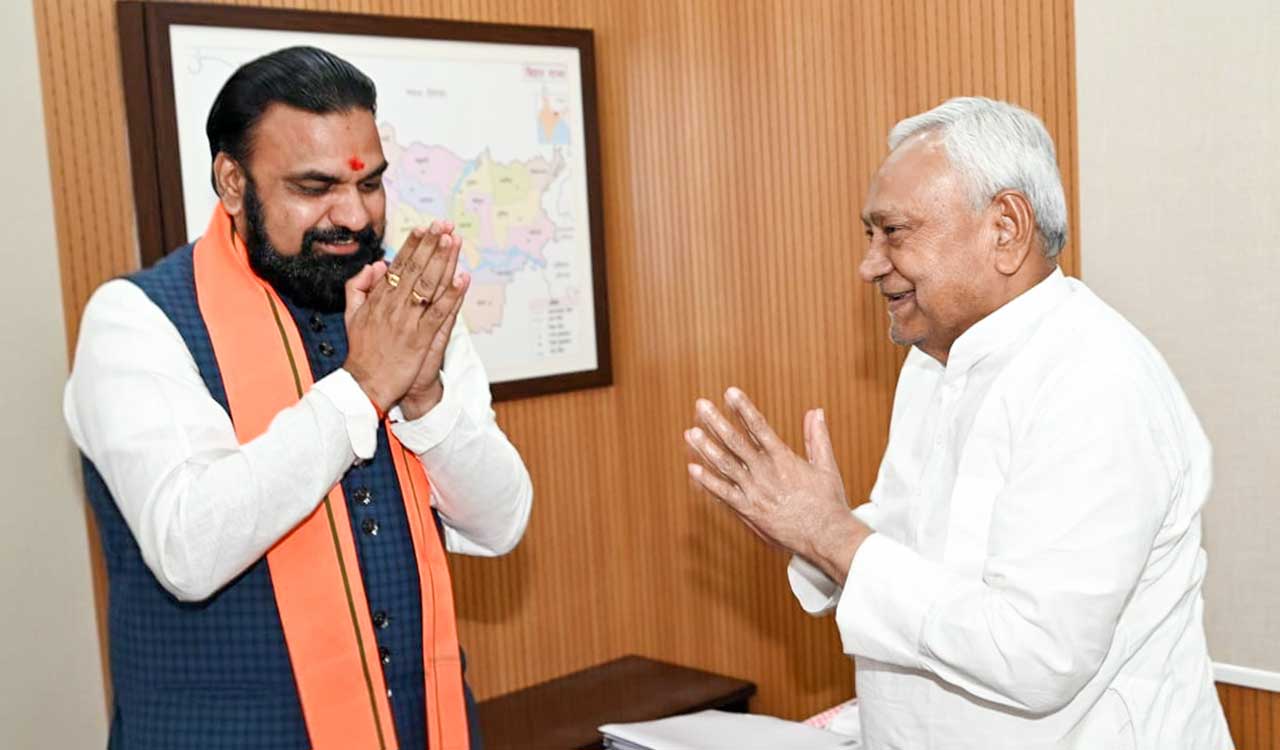


A new era has begun in Bihar politics with Nitish Kumar, a 10-time Chief Minister who strode the State’s political landscape like a colossus and guided its development narrative for over two decades, handing over the baton to the alliance partner BJP and moving to the Rajya Sabha. After remaining under his towering shadow and preferring to play second fiddle to the JD (U) for years, the saffron party has now occupied the driving seat for the first time. This marks the beginning of the BJP’s dominance in a State whose political identity was largely shaped by two icons — Lalu Prasad Yadav and Nitish Kumar; the former as the champion of Mandal politics and the latter as a reformer and architect of good governance. The Bihar template provides a peek into the BJP’s strategy of power politics in States where it has a formidable regional party as its alliance partner. So far, it has adopted two approaches in such settings: First, weaken the alliance partner by engineering an internal split and then appropriating its support base, as it did in Maharashtra. Second, work meticulously to strengthen its organisational structure and expand the social reach to emerge as a dominant player over time. In Bihar, the party has expanded its footprint and become a formidable player. In fact, it emerged as the single largest party in the last Assembly elections. In the 243-member Assembly, the NDA commands a formidable majority, with the BJP holding 89 seats and the JD(U) 85.
By choosing Samrat Choudhary, who belongs to the prominent OBC group — Kushwaha — for the Chief Minister’s post, the BJP has signalled a smart game plan in a State where caste remains the fulcrum around which the politics revolve. He was part of RJD and JD(U) before joining the BJP in 2017. Since then, his rise has been swift as he soon assumed the leadership of the party’s Bihar unit, then became Deputy Chief Minister. Choudhary’s appointment as CM is not just a routine change of guard but a signal of Bihar’s evolving political identity. It’s a chance for the BJP to assert its brand of politics on the back of a solid foundation laid by Nitish Kumar, who successfully blended social engineering with welfarism and governance reforms. Bihar is the only Hindi heartland State where the BJP has not had a Chief Minister of its own so far. On the one hand, Choudhary’s elevation signals a generational shift and the possibility of a more assertive governance model. It could bring greater policy alignment with the Centre, potentially accelerating infrastructure, investment, and welfare initiatives. On the other hand, it places the burden of delivery on a leader who must now move beyond political mobilisation to administrative effectiveness. But the challenges are equally daunting. Bihar remains an underdeveloped State with issues of unemployment, industrial stagnation, and gaps in education and healthcare.
Also Read

Related News