Editorial: The high cost of Bihar’s dry law
A decade after Bihar imposed prohibition, alcohol consumption, illicit liquor use and substance abuse remain significant concerns
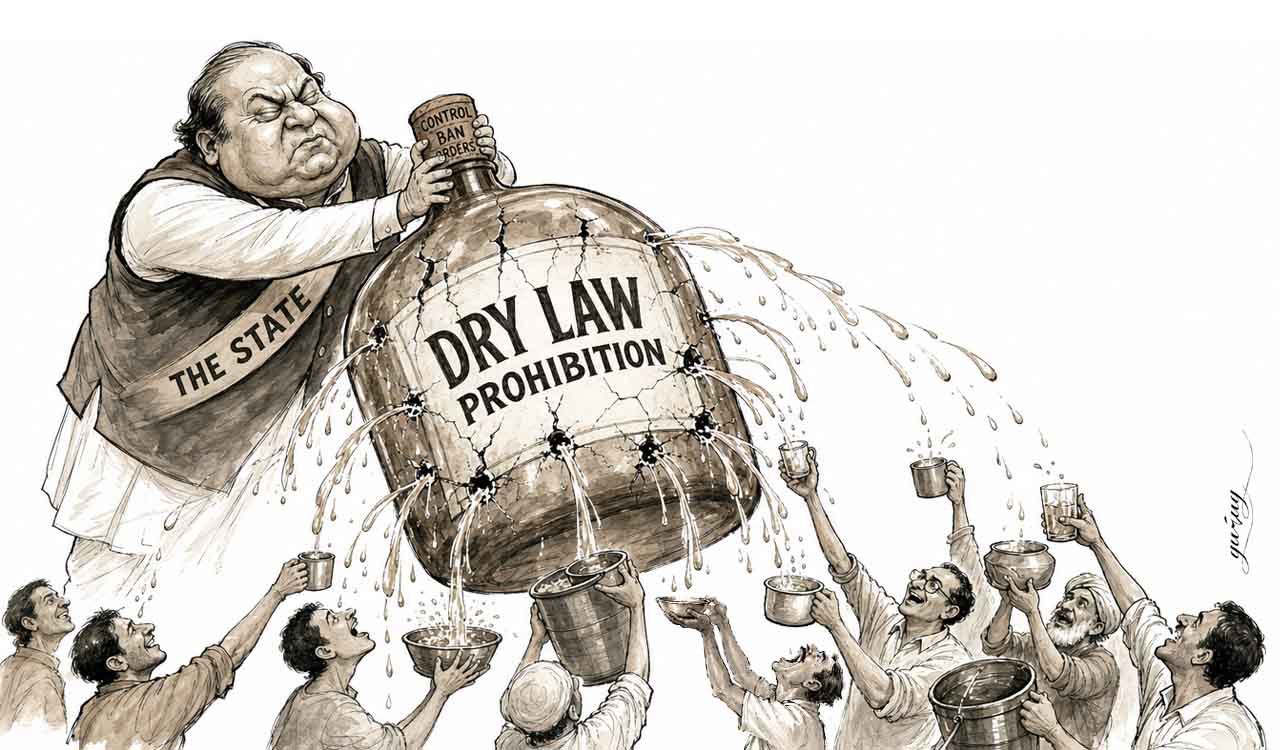


The idea of a nanny state deciding people’s habits is incongruous in this day and age. Prohibition is one such idea that is out of sync with the times; impractical and unimplementable. Ten years of implementation of the dry law in Bihar has brought no cheer for the people. In fact, the National Family Health Survey (NFHS) data show that despite the ban on booze, Biharis are drinking more. Worse, they are drinking illicit alcohol. Substance abuse has also gone up. The NFHS survey recorded a 1.1 percentage point increase in the share of men consuming alcohol. This raises important questions about the effectiveness of the much-touted prohibition. An alarming consequence of the total prohibition, introduced by the Nitish Kumar government in 2016 to fulfil a key poll promise, has been the proliferation of cheap liquor consumption and substance abuse. Persistence of illegal drinking presents a major policy challenge. Bihar is incurring a substantial financial cost due to the loss of excise revenue and also the cost of enforcing the dry law, estimated at nearly Rs 25,000 crore annually. According to the survey, barely 11% of the women said their husbands had quit drinking post-prohibition. Imposing the dry law is not an ideal way to check the menace of alcoholism or to promote public awareness about the deleterious effects of liquor abuse. Despite the clear failure of its prohibition policy, the Bihar government is persisting with the failed experiment.
One of prohibition’s objectives was to reduce alcohol-related expenditure among poorer households. But, the NFHS 2019-20 in Bihar found that 23% of men in lower-income groups continue to be hooked to the habit. Many were spending three to four times more on illicit liquor than they had previously spent on legal alcohol. Evidence also suggests a shift towards alternative intoxicants. The combined share of expenditure on intoxicants, tobacco, and paan in rural Bihar nearly doubled from 1.5% of monthly household spend in 2011-12 to 3% in 2023-24. Growing substance abuse among individuals with alcohol dependency, including the use of drugs, cough syrups, and other intoxicants, was also on the rise. Instead of a total ban, initiatives like encouraging moderation, restricting availability through fewer retail outlets, limited operating hours, stricter enforcement against underage drinking, appropriate pricing and taxation policies, and tighter regulation of alcohol marketing would help improve the overall social conditions. In the past, experiments with dry laws have failed in many States. The combined Andhra Pradesh’s tryst with dry law in the mid-1990s was a spectacular failure. An anti-arrack agitation started by a group of women in Nellore district in 1990 had prompted NTR to introduce the dry law soon after coming to power in 1994. However, rampant smuggling of illicit liquor and massive loss to the exchequer forced his successor, N Chandrababu Naidu, to finally withdraw prohibition in 1997.
Also Read

Related News