How an EMI calculator helps you compare fixed and floating rate options
Knowing how your EMI is calculated is vital for sound financial planning and maintaining monthly budget discipline. An EMI calculator simplifies this by helping you test different loan scenarios, compare interest rates and tenures, and clearly assess repayment commitments in advance.



Deciding on the right loan can be challenging, especially when choosing between fixed and floating interest rates. Many borrowers struggle to understand how monthly payments and overall interest costs may change over time. An Equated Monthly Instalment (EMI) is the fixed amount you pay each month towards a loan, which includes both principal and interest.
Knowing how your EMI is calculated is vital for sound financial planning and maintaining monthly budget discipline. An EMI calculator simplifies this by helping you test different loan scenarios, compare interest rates and tenures, and clearly assess repayment commitments in advance.
With these insights, you can make informed decisions, avoid financial strain, and confidently manage short- and long-term goals. Keep reading to learn how an EMI calculator can guide smarter borrowing decisions.
What is an EMI calculator, and how does it simplify loan planning?
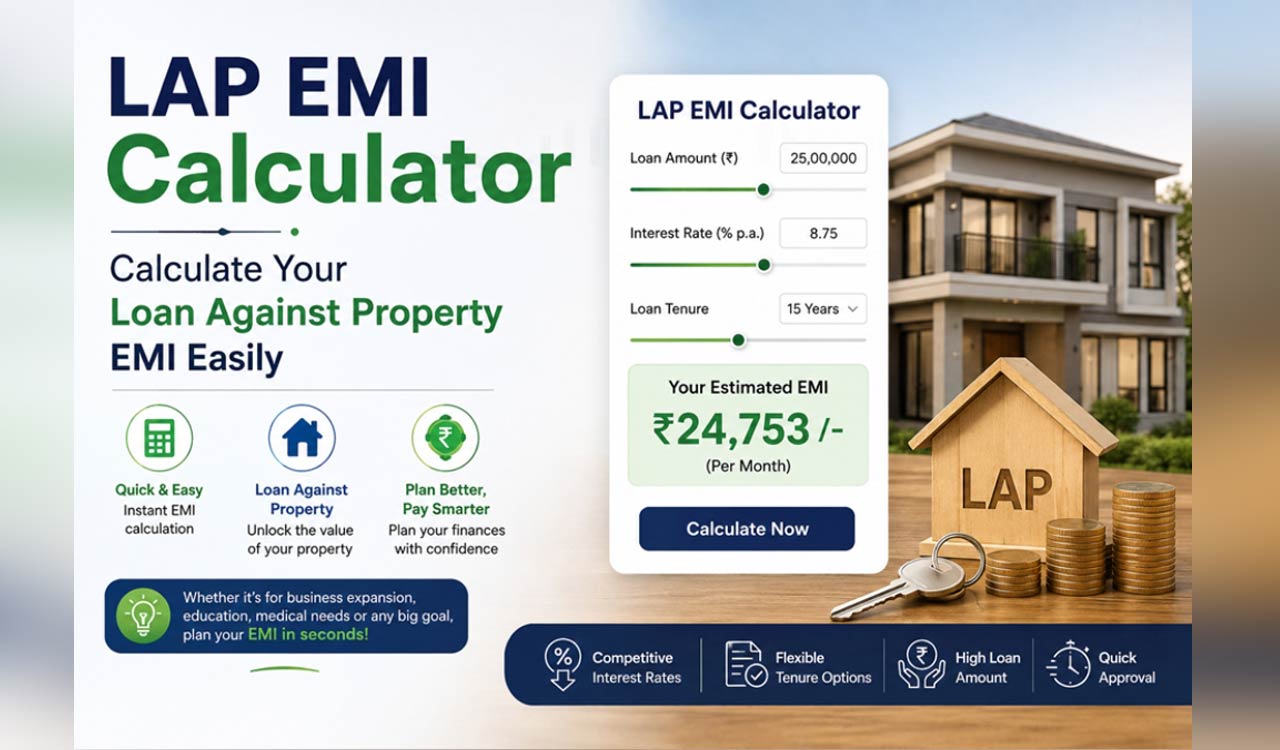
An EMI calculator is an online tool that estimates monthly loan payments. By inputting the loan amount, interest rate, and tenure, you gain clarity on repayment obligations and can plan accordingly.
- Calculate monthly payments accurately
Know exactly how much you will pay each month for any loan amount, interest rate, and tenure. This prevents overcommitting and helps manage monthly budgets efficiently.
- Compare fixed and floating-rate loans easily
A side-by-side comparison shows how changes in interest rates affect monthly payments.
- Plan your finances better
By visualising total interest and repayment schedules, borrowers can effectively manage both short- and long-term financial goals.
Understanding fixed and floating interest rates
Choosing between fixed and floating interest rates is an important step when taking a loan, as it directly affects your monthly repayments and long-term financial planning. Each option works differently and suits different borrowing needs, depending on income stability, risk tolerance, and future financial goals.
- Fixed interest rate
A fixed interest rate remains the same throughout the loan tenure, ensuring that your EMI does not change with market conditions. This gives borrowers a clear understanding of both monthly repayments and the total interest payable from the beginning.
- Typical use cases
Fixed-rate loans are well-suited to borrowers with stable income who value certainty and predictable outgoings. They are often chosen during periods of economic uncertainty or when interest rates are expected to rise.
- Pros:
- Consistent monthly repayments for the entire loan term
- Easier household budgeting and cash flow management
- Protection against increases in market interest rates
- Clear visibility of the total loan cost
- Cons:
- Higher initial EMI compared to floating-rate loans
- No benefit if interest rates fall in the market
- Limited flexibility in adjusting repayments
- Possible prepayment or early repayment charges
- Floating interest rate
A floating interest rate varies in line with benchmark rates such as the repo rate or MCLR. Changes in these benchmarks can lead to adjustments in EMI or loan tenure over time.
- Typical use cases
Floating-rate loans are suitable for borrowers who can manage fluctuations in repayments and expect their income to increase. They are commonly preferred during stable or declining interest rate cycles.
- Pros:
- Lower initial EMI in many cases
- Opportunity to benefit from falling interest rates
- Potential reduction in total interest payable
- Greater flexibility in repayment options
- Cons:
- EMI may increase unexpectedly if benchmark rates rise
- Budgeting becomes more challenging due to variable repayments
- Higher exposure to risk for long-term loans
- Larger loan amounts amplify the impact of rate changes
How fixed and floating-rate loans differ: Compare with examples
Monthly instalments vary depending on whether the loan is fixed or floating. A reliable EMI calculator can simulate multiple scenarios to help identify the most suitable option.
| Loan type | Loan amount | Tenure | Interest rate | EMI (₹) | Total interest (₹) |
| Fixed rate | ₹10,00,000 | 5 yrs | 8% | ₹20,243 | 2,14,580 |
| Floating rate | ₹10,00,000 | 5 yrs | 7.5–9% | ₹19,950–21,200 | 2,00,000–2,30,000 |
| Fixed rate | ₹15,00,000 | 7 yrs | 8.50% | ₹24,970 | 2,96,020 |
| Floating rate | ₹15,00,000 | 7 yrs | 8–9.5% | ₹24,500–26,300 | ₹2,90,000–3,15,000 |
| Fixed rate | ₹20,00,000 | 10 yrs | 9% | ₹25,500 | ₹6,60,000 |
| Floating rate | ₹20,00,000 | 10 yrs | 8.5–10% | ₹25,200–27,000 | ₹6,50,000–7,00,000 |
Key insights:
- Floating-rate loans offer potentially lower initial payments but can rise if rates increase.
- Fixed-rate loans provide stability, making budgeting predictable.
- The total interest on floating loans varies, so risk assessment is essential.
Overall, the difference between fixed and floating-rate loans lies in the balance between stability and flexibility. Using an EMI calculator available on many online trading platforms helps borrowers compare scenarios clearly and understand how changes in interest rates may affect repayments.
Make smarter borrowing decisions with an EMI calculator today
Choosing between fixed and floating-rate loans requires careful consideration of the benefits, risks, and your personal financial capacity. An EMI calculator helps map all these factors before selecting a loan, providing clarity on monthly payments, total interest, and repayment schedules.
By simulating different loan amounts, tenures, and interest rates, borrowers can make informed decisions aligned with their budgets and long-term goals. Online trading and investment platforms like Ventura make such tools accessible, helping users plan and borrow smarter. Start using an EMI calculator today to secure a well-planned and financially stable future.

Related News