‘Nifty no longer barometer of economy’
The index no longer captures the economy or its constituents effectively. It may no longer be the barometer of the Indian economy, Dr Vikas Singh, president, Crux Management Services tells Y V Phani Raj in an interview. Excerpts
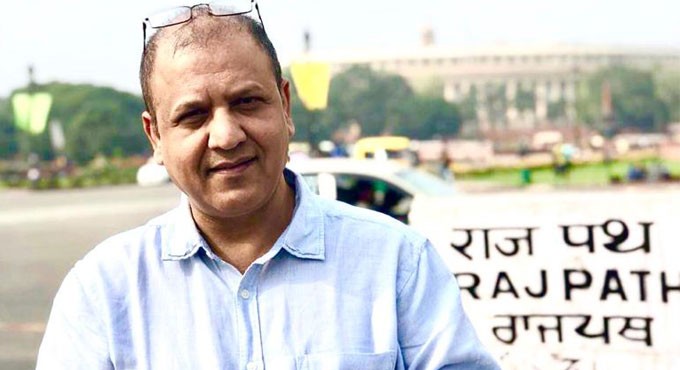


Hyderabad: The absence of co-linearity between Nifty earnings and GDP growth raises questions about our premier benchmark index. Particularly, its construct and composition must worry us. The index no longer captures the economy or its constituents effectively. It may no longer be the barometer of the Indian economy, Dr Vikas Singh, president, Crux Management Services tells Y V Phani Raj in an interview.
Excerpts
Diminishing correlation
About 40 per cent of the Nifty consists of the BFSI sector. However, its weight in the economy is no more than 15 per cent. Similarly, construction, agriculture, manufacturing and auto sectors, which feed and drive the economy, employing over 70 per cent are under-represented. The market capitalisation to GDP ratio of about 1.2 is at 15-year high. Over the last decades, the correlation between India’s economy and stock market performance is diminishing, in a few cases even inverse. A 15 per cent CAGR in the last thirty years and about 12 per cent in the last ten is about twice the rate of GDP growth.
Broken economy
The last five years haven’t been too good for the economy, certainly not for the wider economy. The economy has been disrupted by three big events i.e. pandemic, demonetisation and GST, and yet the stock market has galloped. The listed companies are not in the unorganised sector and in almost all cases they rebound faster, revive sustainably; and always emerge stronger. Because of the inherent strength, resilience, agility, and the ability to invest they gobble market share. The market rewards them and the banks support them. In the event of any disruption, the big become bigger. This is evident from the revival and growth trajectory post the pandemic. The economic revival is a K-shaped curve with the formal sector growing; the informal sector in pain. India’s 20 most profitable firms now generate 70 per cent of the economy’s profits, up from 15 per cent post the economic reforms thirty years ago.
Option to formalise
Formalisation will hurt, not heal the economy, particularly the informal sector. It will increase the tax base but it will extract cost from the most vulnerable that they can neither afford nor pay. Our economy is frail, particularly the 50 million small and marginalised entities. They constitute about 65 per cent of India’s economy and are not robust enough to transform, or capitalise on the benefits of formalisation. If they fail, India could see about 20 per cent workers out of job, with no hope of getting one in the future. Our focus must be to provide support and nourishment as India is an entrepreneurial society and we can do well as ‘formally informal’.
Enabling environment
Statistics show that five crore enterprises employ just 13 crore people, and less than one per cent employ over 20 people. India’s factories are even smaller. Only three per cent of the three lakh factories employ over 500 people, 90 per cent of them have a turnover lesser than Rs 100 crores. We need to make them competitive and enhance productivity by providing infrastructure, financial services, enterprise support and easing the cost of registration.
Solving job problem
India needs to address the unemployment challenge. Migrant workers have no savings, no housing, no access to healthcare, and most welfare schemes. Job losses reduce remittance cascading distress across the economy.

Related News