Opinion: Age-appropriate education remains a challenge in Telangana
Inadequate preschool access, high private costs, and policy shifts threaten smooth educational transitions, undermining learning outcomes and long-term life chances


By Venkatanarayana Motkuri, Geeta Gantla, P Aparna
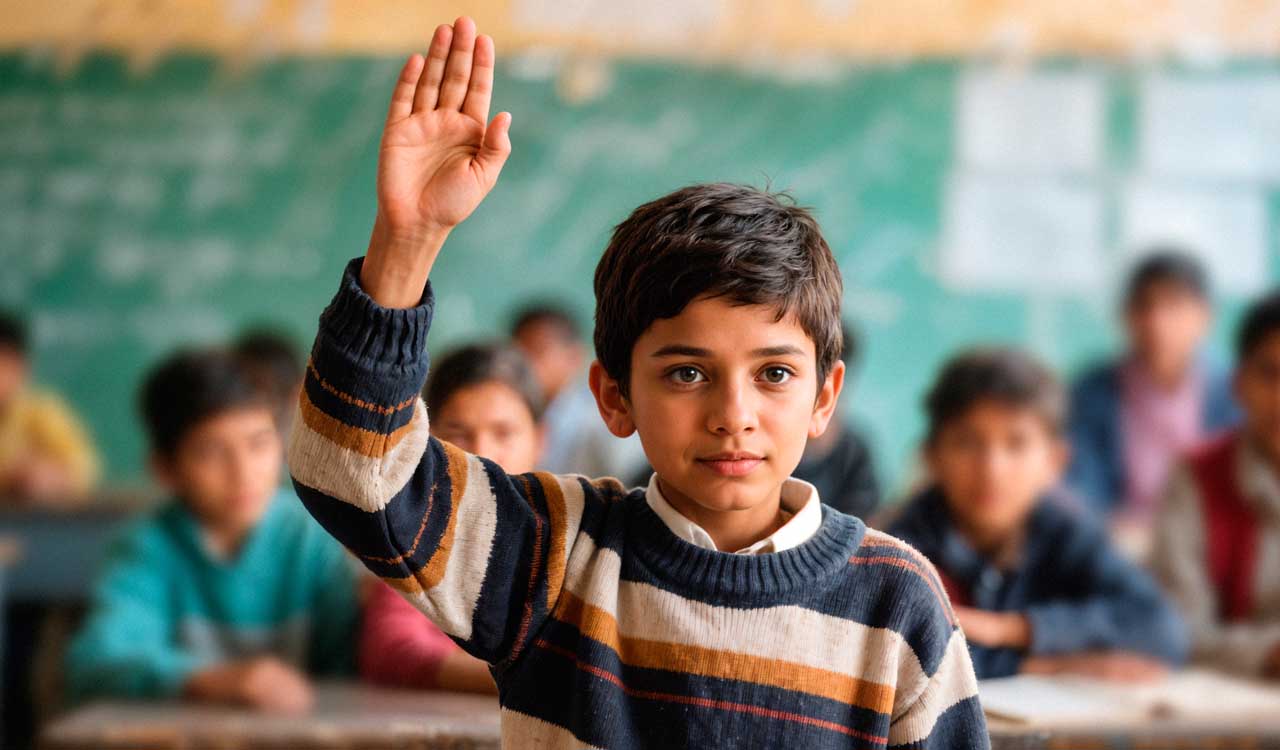
Children who are currently not attending educational institutions reflect educational deprivation and a lack of access to learning opportunities. In India, the constitutional mandate requires that all children aged 6-14 years be in school. The Right to Education Act, 2009, further conferred elementary education as a fundamental right for children in this age group.
Also Read
Globally, the norm prescribes that all children between the ages of 6 and 17 must be in school. Advances in neuroscience, which have mapped brain development, indicate that early childhood (3-6 years old) is a critical period for cognitive and psychomotor development. Appropriate preschool education during this phase enhances cognitive skills, prepares children for formal schooling, and leads to better learning and labour-market outcomes. Experimental studies provided evidence in support of this finding.
Global Norms
Opportunities for higher education are a window to better life chances through access to regular, salaried, and highly skilled employment. Therefore, non-attendance across all age cohorts within the broad 3-23 age group represents a loss of educational opportunity and deprivation in knowledge and life chances.
Recent amendments to the RTE Act, allowing detention in Classes 5 and 10 may reverse hard-won gains in age-appropriate enrolment and disrupt smooth transitions across schooling stages
Beyond crude enrolment (total number of students enrolled at a school level compared to the number of students in the official school-age group) or attendance rates, it is increasingly important to assess whether children are enrolled at age-appropriate educational levels. The global norm mandates that children aged 6–17 years should complete 12 years of schooling (Classes 1–12) and be ready for post-secondary education by the age of 18. This can be achieved through timely transitions at every stage—from pre-primary to higher secondary—without late entry, repetition, or loss of academic years.
Educational psychologists argue that children studying at an age-appropriate level perform better academically and exhibit healthier emotional growth. Children who are underage or over-aged for their grade face social and emotional challenges, often resulting in poor performance and eventual dropout.
This process must begin with children entering preschool at the age of 3 and transitioning to primary school at the age of 6. While attendance rates among the pre-primary age-cohort (3-5) have improved over time, nearly half of the children in this age group in India remain out of pre-school. In Telangana, especially, attendance among urban preschool-age children is even lower.
Major Hindrance
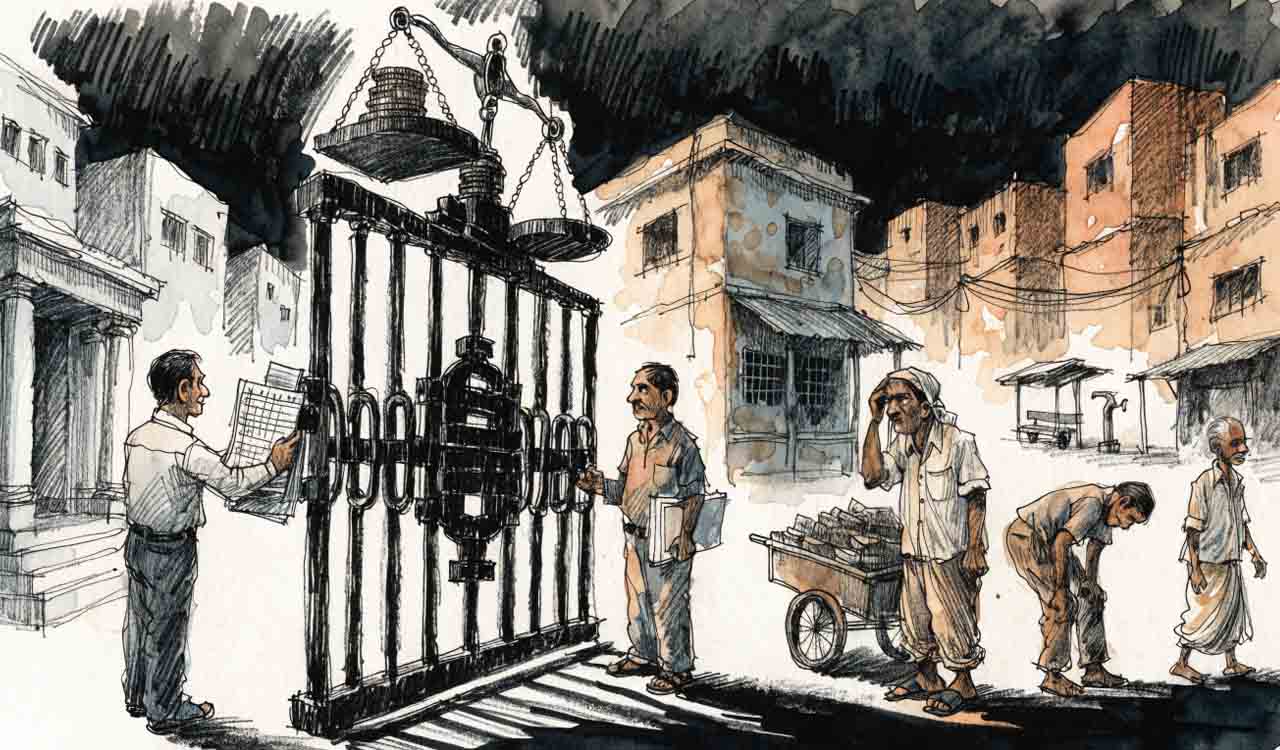
A key reason for low pre-primary attendance is the shortage of public preschools and the high cost of private ones. Pre-primary education is more expensive than any other level of schooling in Telangana. Though Anganwadi centres are adequate in rural areas, they are insufficient in urban areas. And any alternative public arrangements are scarce. Moreover, while Anganwadi centres are successful in delivering nutritional supplements to children, they are less effective in imparting pre-primary education due to the inadequate training and qualification of teachers.
Attendance at age-appropriate levels remains below 90%, even among school-age cohorts with near-universal enrolment. Despite this, Telangana has performed well in increasing the overall attendance rate across the school and college age groups. Near-universal attendance at primary and middle school levels can be largely attributed to supply-side policy initiatives, including expansion of institutions and enrolment-focused schemes.
Following the Education Act, 1982, the united Andhra Pradesh introduced the Andhra Pradesh Primary Education Programme (APEP) in two phases. It also introduced residential schools, schools for Adivasis managed by the tribal welfare department, single-teacher schools, and experimented with mid-day meals following the Tamil Nadu model. Operation Blackboard was later implemented following NEP 1986.
Subsequently, the District Primary Education Programme (DPEP) was introduced in the 1990s, followed by Sarva Shiksha Abhiyan (SSA) in 2000. The Mid-Day Meal scheme was universalised in government primary and middle schools and later extended to secondary schools.
The Rashtriya Madhyamik Shiksha Abhiyan (RMSA), launched in 2008, aimed to universalise secondary education. In 2018, SSA and RMSA were subsumed into Samagra Shiksha, which seeks to universalise school education for children aged 6 to 17.
Safeguards
Expanding the availability of government schools while implementing the central scheme, such as Eklavya model schools for tribal children, Kasturba Gandhi Balika Vidyalayas (KGBVs) for girl children and other model schools in backward regions, Telangana also launched welfare residential educational institutions for SC, ST, OBC and Minority children. The number of welfare residential educational institutions increased remarkably after State formation.
Since the 1990s, both private sector participation in school and higher education have rapidly expanded. UDISE+ data show that more than 50% of schools in Telangana were established during the 1990s or after. AISHE data indicate that colleges increased from fewer than 300 in the mid-1990s to over 2,000 today, while universities rose from fewer than seven to more than 40.
Rapid enrolment drives initially led to higher proportions of children in age-inappropriate grades, especially at middle and secondary levels. Over the last two decades, policies under SSA and RTE 2009, along with the ‘no detention policy’ (NDP) helped improve age-appropriate attendance.
However, the recent amendments to the RTE Act allow detention in Classes 5 and 10. Some States, such as Maharashtra, have adopted this change. Such policies may disrupt the smooth transition between educational stages and reverse the gains made in age-appropriate enrolment. Hence, while adopting the RTE amendments, Telangana must exercise caution and implement safeguards to minimise the impact of the detention policy and ensure smooth transitions.
(The authors are with the Centre for Economic and Social Studies [CESS], Hyderabad)

Related News