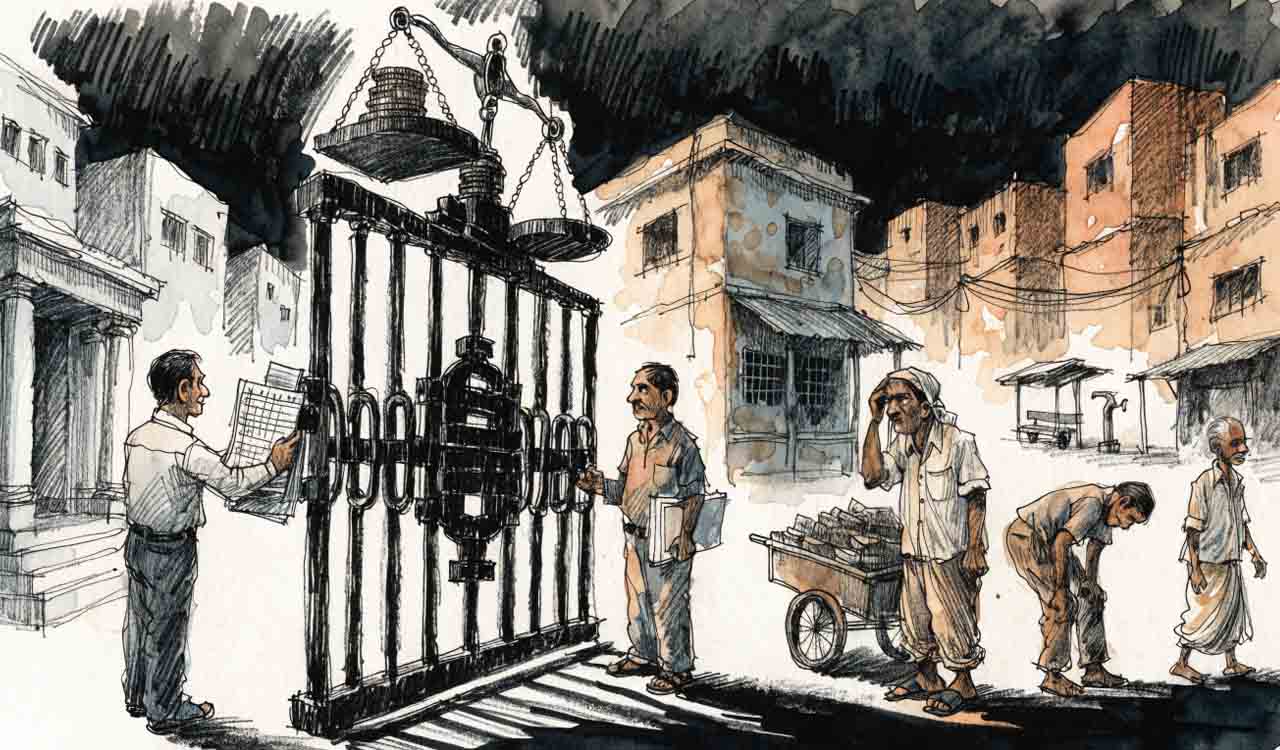
Opinion: Census 2027 at a crossroads
An accurate population count is central to planning, governance, and SDG progress, particularly after a prolonged 16-year data gap


By Dr Prem Shankar Mishra, Dr Kavitha N, Dr Manish Kumar
As India aspires to become a developed nation (Viksit Bharat) by 2047 and emerge as one of the world’s leading economies, reliable and timely census data will be critical to this transition. Achieving this vision of a developed, inclusive, and prosperous nation requires robust population data to inform planning, governance, and policy formulation at all levels, including national, State, regional, and grassroots levels. Comprehensive census data are therefore indispensable for ensuring balanced development, efficient service delivery, and equitable growth across the country.
Why Regular Census
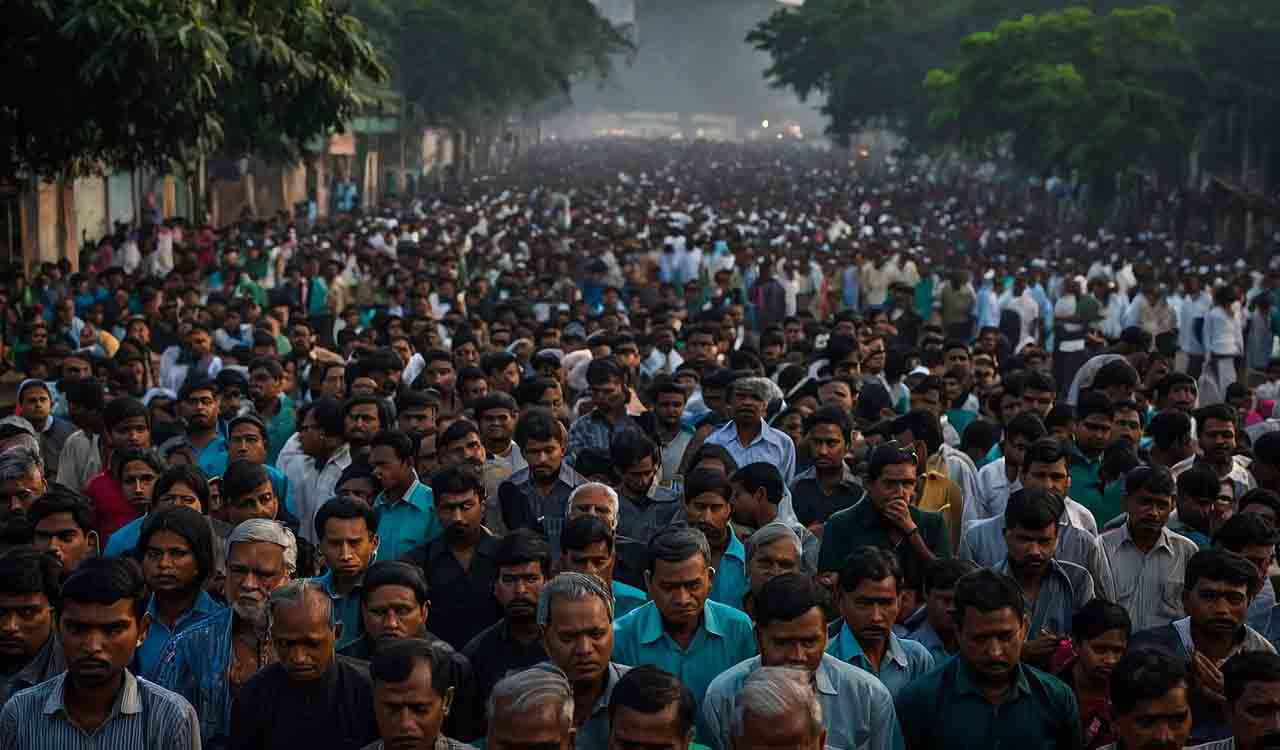
A country’s demographic structure is a fundamental determinant of its economic growth, development outcomes, and long-term policy direction. As India undergoes a significant demographic transition, Census 2027 will play a pivotal role in informing policy formulation, programme design, and development planning for balanced and inclusive growth. Given that the most recent official data are from the 2011 Census, current planning relies on increasingly outdated population estimates that are inadequate for present needs.
Achieving the Sustainable Development Goals (SDGs) by 2030 requires timely, accurate, and disaggregated population data to monitor progress and guide evidence-based interventions. The forthcoming census will provide updated population counts and granular socio-economic indicators at State, district, and sub-district levels, enabling more precise measurement of SDG indicators and improved targeting. In its absence, reliance on projections and sample surveys limits accuracy and comparability. Thus, Census 2027 will be critical for strengthening India’s SDG monitoring and supporting inclusive, data-driven development planning.
Conducting a regular population census has become indispensable for several reasons. At present, demographers and policymakers face significant challenges in estimating population figures at the district and sub-district levels. These administrative units represent the lowest tiers of governance and are critical for policies and programme planning, monitoring, and evaluation. In the absence of updated data, population estimates at the district or block level are derived using intercensal or postcensal projection methods.
For instance, during the preparation of the Karnataka Child Budget (2022), there was a requirement to allocate expenditures to the child population (0-18 years) by single-year age and sex across districts. This necessitated the collection of accurate annual population data, disaggregated by age and sex, at the district level. However, in the absence of such granular census data, district-level child population figures for 2022 were estimated using age- and sex specific population growth rates derived from the 2001 and 2011 Censuses.
A fully digital census may face challenges in remote, interior, and hilly regions with limited internet connectivity. Flexible enumeration methods and region-specific strategies will be essential
Such demographic exercises provide reasonably reliable estimates when the projection year is within a maximum range of 10 years. However, beyond this period, estimates can become erroneous or inaccurate, particularly at district or sub-district/block levels due to rapidly changing patterns in key population components such as fertility, mortality and migration.
Over the past few decades, the country has experienced dynamic shifts in population components, accompanied by rapid urbanisation and migration, along with changes in demographic transition marked by substantial variation in fertility and mortality rates. These changes are not uniform and extend to regional, district, and sub-district levels.
Consequently, applying population growth rates derived from the 2001-2011 period to estimate populations for 2022 and beyond relies more on assumption-based modelling than on empirically grounded evidence. Furthermore, the Covid-19 pandemic has significantly altered fertility and mortality patterns, making it imperative to reassess the country’s demographic profile.
Updated population data are essential for evidence-based planning, resource allocation, and policy formulation. In particular, assessing key health system indicators — such as doctor-to-population and hospital bed-to-population ratios, as well as facility-level population burden — requires accurate population denominators, for which census data are indispensable.
How Unique is 2027 Census?
Census 2027 will be unique in several respects. It will be India’s first fully digital census, offer self-enumeration options to citizens, include comprehensive caste enumeration, and mark the longest inter-censal gap of 16 years. The census will utilise mobile applications and digital tools, supported by centralised web portals and real-time data transmission, to streamline field operations and supervision. This digital architecture will enable live monitoring, improve data flow, and strengthen oversight across administrative levels.
Such innovations are expected to reduce time lags, minimise errors, and enhance transparency and accountability. Additionally, features such as automated validation checks, pre-coded responses, and unique verification identifiers will improve data accuracy, consistency, and the timeliness of census outputs.
Nevertheless, full digitisation may pose challenges, particularly in remote, interior, and hilly regions where internet connectivity remains limited. To address these constraints, alternative enumeration options and region-specific strategies must be planned and implemented in advance to ensure complete coverage and data quality.
Notably, Census 2027 will be the first instance since the 1931 Census to undertake full caste enumeration alongside standard demographic data, significantly expanding the scope of socio-demographic analysis and policy planning in India.
This will be the 16th Census, following the first conducted in 1872 and regular decennial censuses since 1881. The 2021 Census, originally planned for that year, got postponed due to the pandemic. The most recent official population figures are from the 2011 Census. Although various estimates and projections are available at national and sub-national levels, their accuracy relative to actual population counts remains a concern for planners, demographers, and policymakers.
Census data on migration are critical for understanding socio-economic and regional development, as no other source provides such comprehensive and reliable population-level evidence. With rapid economic transformation, the emergence of new urban centres, and shifts in employment structures over the past 16 years, migration patterns — both internal and international — have changed substantially since the 2001 and 2011 censuses. In this context, the forthcoming census is essential to capture contemporary migration dynamics and evolve occupational structures, thereby informing more effective planning and policy interventions.
Comprehensiveness of Census Data
The Census of India provides comprehensive data across multiple domains. The Primary Census Abstract (PCA) presents core population indicators such as total population by sex, rural-urban distribution, age structure, Scheduled Castes and Scheduled Tribes, sex ratio, and population density. Additional tables cover social and cultural characteristics (literacy, education, marital status, religion), economic activity (worker classification, occupation, work participation), migration patterns, fertility and mortality indicators, and housing and household amenities.
Furthermore, datasets include urban and town-level characteristics, slum, homeless and institutional populations, disability statistics and language profiles such as mother tongue and bilingualism. Together, these datasets offer uniquely detailed population-level insights that are not available from any other data source.
The census is a foundational statistical instrument for economic growth and social development, providing reliable population data for evidence-based planning, resource allocation, and policy formulation. It reduces reliance on projections and supports outcome-oriented budgeting by enabling accurate assessment of coverage, efficiency, and impact.
Despite being resource-intensive and administratively complex, conducting the census regularly at national and sub-national levels is essential. Delays or postponements can significantly undermine planning, governance, and programme implementation, leading to adverse socio-economic and regional development outcomes in both the short and long term.

(Dr Prem Shankar Mishra is Assistant Professor, Dr Kavitha N is Chief/Head of Department, and Dr Manish Kumar is Assistant Professor, Population Research Centre, The Gandhigram Institute of Rural Health & Family Welfare Trust, Dindigul, Tamil Nadu)

Related News