Opinion: It’s Advantage India in Afghanistan
Rising conflict between Taliban and Pakistan will benefit India strategically in the region


By Sanjay Turi
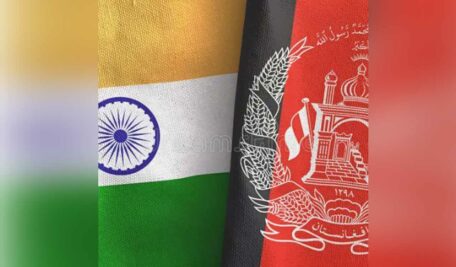
New Delhi’s evolving relationship with the Islamic Emirate of Afghanistan (Taliban) marks India’s realist perspective of foreign policy approach. India and Afghanistan have historically shared a millennium-old cultural and trade relationship dating back to the Indus Valley Civilisation.
Also Read
- Editorial: Engaging with Taliban
- Opinion: Growing China-Taliban ties
- Editorial: Pragmatic diplomacy
- Editorial: Karma bites back
- Taliban enforces ban on political parties in Afghanistan
- Editorial: Tough task in Afghanistan
- Editorial: Afghan outreach
- Opinion: Time to rethink Afghanistan
- Opinion: Taliban victory is no Pakistan triumph
Though India’s relationship with Afghanistan suffered a temporary setback following the US withdrawal from the country and the Taliban’s return to power in 2021, the recent high-level engagement with the Taliban has not only defrozen its dormant relationship but also brought a major geopolitical shift in the region.
Contemporary Aspects
From the geostrategic point of view, the deepening relationship between India and Afghanistan amid rising border tension between Afghanistan and Pakistan has worked in favour of India.
After the ousting of Ashraf Ghani and the Taliban’s takeover, India had almost lost hope of reestablishing its stronghold in Afghanistan. However, the recent talk between Foreign Secretary Vikram Misri and acting Foreign Minister of the Taliban Mawlawi Amir Khan Muttaqi has given a new hope for the revival of projects in that country.
China wants to use CPEC as a gateway to Afghanistan, Iran and other West Asian countries, but Pakistan’s inability to provide security seems to have upset it
While thanking India for delivering a significant number of humanitarian assistance, Mawlawi sought more investment in developmental projects in the country. As India still lags behind China in terms of investment in the region, Mawlawi’s request must be perceived as an opportunity for India to significantly increase investment in Afghanistan. If missed, China will certainly play it as a full toss and use this as an alternative branch to the China-Pakistan Economic Corridor (CPEC).
Moreover, India’s massive investment and developmental programmes in Afghanistan will help add to the International North-South Transport Corridor (INSTC), making this region a new gateway to carry out trade with Central Asia, Europe and Russia.
China Factor
CPEC is gradually becoming ineffective as it’s facing significant resistance from the local people of Sindh and Baluchistan regions (they constitute 44% of the total landmass of Pakistan). The resistance has deepened to the extent that they have started targeting Chinese workers and engineers. Hence, China may look for an alternative to CPEC and Gwadar port. India, on the other hand, with the help of Chabahar port, is looking to excel China in this region (Persian Gulf).
Considering Pakistan an important player of the Belt and Road Initiative (BRI), China wants to use the CPEC as a gateway to Afghanistan, Iran and other West Asian countries, but Pakistan’s inability to provide security for CPEC projects seems to have upset China. Pakistan’s inability to protect CPEC projects gives a clear indication that it is under the pressure of external powers. However, it is good from India’s strategic point of view, as the CPEC, passing through Pakistan-occupied Kashmir, violates India’s territorial sovereignty in the region.
As an alternative, China may also think of using the Wakhan corridor to bypass Pakistan’s volatile region of Sindh and Baluchistan and reach the Persian Gulf via PoK and Afghanistan. Once China is successful in convincing Afghanistan that it would extend its support to India only for the construction of railway and other connectivity projects in the region, it will be easy for it to completely overshadow India and establish its dominance in the entire region. Thus, the rising border conflict between the Taliban and Pakistan gives India a strategic advantage against Pakistan as well as China in the region.
Extra-regional Gain
As Afghanistan is sitting on one of the richest regions of minerals in the world, valued at around $1 trillion, China largely focused on exploiting these natural resources (oil and lithium reserve), whereas India focused on building infrastructure, roads and connectivity in the region.
The Islamic State Khorasan Province (ISKP), a powerful militant group operating against the policies of the Taliban, has a very strained relationship with the ruling power. ISKP has always tried to prevent the Taliban from getting its legitimacy from China and other bigger players. Such militant groups oppose China’s mineral extraction activity and keep attacking Chinese officials and engineers from time to time.
The ISKP, by preventing Chinese companies from running their mining activities in Afghanistan, has also strategically and unconsciously benefited India. In this context, India’s preparedness for development and humanitarian assistance to the Afghan people obviously helps the former build goodwill among the masses. It additionally helps India position itself as a responsible and true regional partner of the Islamic Emirates of Afghanistan.
Although Iran does not have that much appreciative relationship with the Taliban, its recent setback from the regional stronghold following the collapse of the Assad regime in Syria made it silent and almost neutral in the case of instability prevailing in Afghanistan. This will probably provide a green signal from the Iranian side to engage with the Taliban, further encouraging India to accelerate its work on the Chabahar-Zahedan connectivity project.
Amid the Putin-led Russian parliament’s recent decision to remove the Taliban from the terrorist list, India’s deepening ties with the Taliban government converge with both Russia’s and India’s common geopolitical interest in the region, which will pave the way for strengthening bilateral relations between the two countries.
Navigational Dilemma
There is a possibility that India may not face backlash from the West for having ties with the Taliban as its geopolitical presence in the region will strategically counter Chinese influence in the region.
However, while drafting policies towards the Islamic Emirates of Afghanistan, India should never forget that the Taliban’s stand on the Kashmir issue has always been against the country in the past. India should also never forget that the Taliban, as it has claimed in the past, is committed to fighting for the ‘freedom of Kashmir’. It should also not forget that it is none other than the Taliban who destroyed the Bamiyan Budhha, a cultural identity of ancient India.
Nevertheless, the country’s direct engagement with the ruling Taliban may help neutralise the anti-India sentiments arising from the other militant groups from the region. In the wake of unfolding geopolitics in the region, we can expect that the deepening ties between India and Afghanistan may strategically go in favour of the former. The idea probably lies in the fact that sometimes we have to sacrifice something to get many things in return.

(The author is Doctoral Candidate, Centre for West Asian Studies, School of International Studies, Jawaharlal Nehru University, New Delhi)

Related News