Opinion: Impeachment threats against judges endanger India’s judicial independence
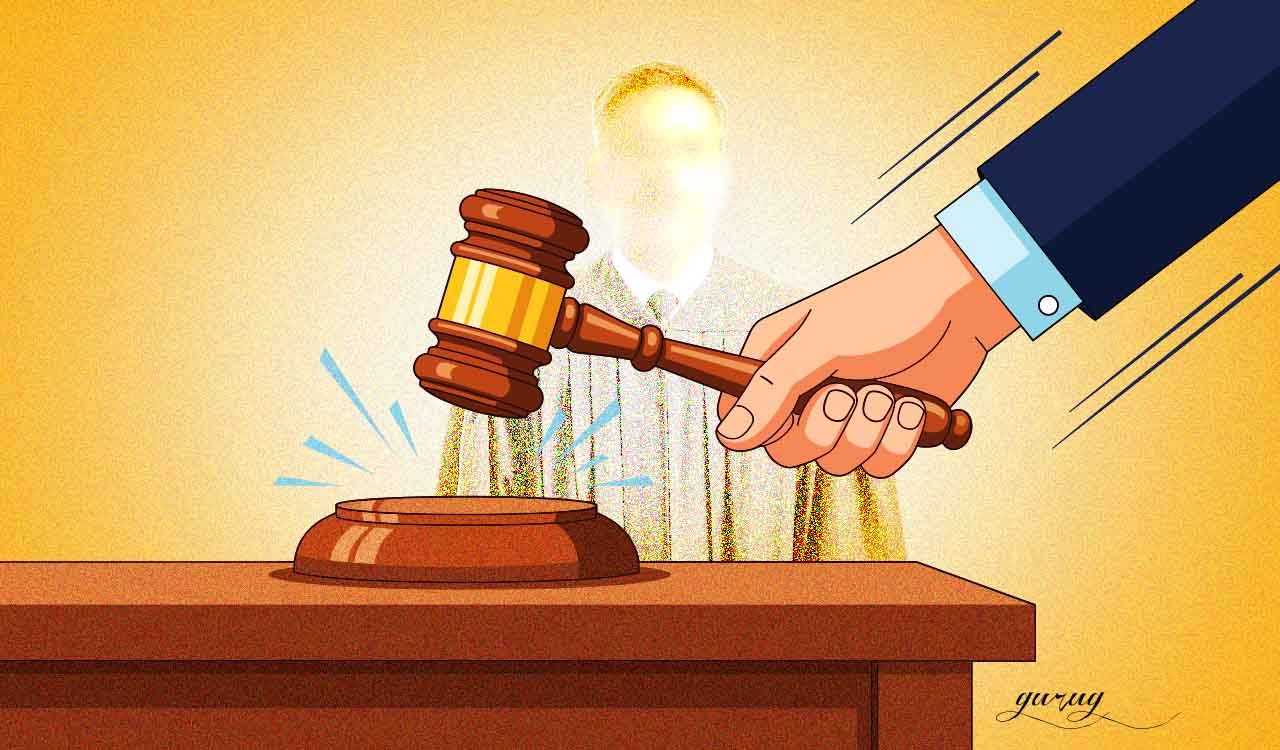
The impeachment notice against Justice GR Swaminathan for a judicial ruling raises serious constitutional concerns. If judges cannot speak or rule without fear, democracy gives way to the tyranny of the mob


By Prof Dr GB Reddy, Pavan Kasturi
The recent impeachment notice by members of Parliament against Justice GR Swaminathan (GSRJ), alleging bias in his judgment in the Tirupparankundram Deepam case (Rama Ravikumar v. State of Tamil Nadu, WP(MD) No. 32317 of 2025), sets a dangerous precedent that undermines judicial independence.
Also Read
To cut a long story short, the issue arose when devotees sought permission from the Arulmigu Subramania Swamy Temple authorities to light the annual Karthigai Deepam at the Deepathoon (Stone Lamp Pillar) on the hillock’s peak. The Temple Executive Officer denied stating that the established custom was to light the lamp at the DeepaMandapam halfway up the hill. Challenging this, writ petitions were filed.
The state, temple management, and the Dargah trustees vehemently opposed, raising multiple objections that included: the petitioners lacked locus standi; the issue requires a civil suit for demarcation; lighting at the Deepathoon was not an established custom; the matter was barred by res judicata due to a 2014 High Court division bench order; the petitioners had questionable motives; and the request violated the Places of Worship Act.
However, GSRJ, in his elaborate and reasoned order, held that the devotees had locus standi as “persons interested” under the HR&CE Act. Crucially, he ruled that the dispute was conclusively settled by the 1923 civil court decree (upheld by the Privy Council), which established the temple’s ownership over all unoccupied portions of the hill, except three specific areas granted to the Dargah.
The Deepathoon, located on the lower peak approximately 50 meters from the Dargah, was found to be within the temple’s exclusive domain. Lastly, the 2014 Division bench Judgment is on a different issue and, therefore, not binding. The petition was allowed on December 1, 2025, holding that lighting the lamp was both a legitimate assertion of the temple’s property rights and in keeping with the Tamil tradition of hilltop lamp lighting.
Subsequently, a regular writ appeal was filed, but due to a defect, it was returned on Dec 2, 2025. As the ritual was scheduled for 6 pm on December 3, 2025, the petitioners found no arrangements in place and filed a contempt petition. The court took up the matter at 5 pm that day. The matter was adjourned briefly and reconvened at 6:05 pm, by which time it was confirmed the lamp had not been lit as ordered.
Hence, in his consequential order passed later that evening, GSRJ held that the authorities were in contempt and directed the petitioner to light the lamp immediately under CISF protection.
Impeachment Process
The process in Articles 124 and 217 of the Constitution begins when a minimum of 100 Lok Sabha MPs submit a signed notice to the Speaker, or 50 Rajya Sabha MPs submit one to the Chairman, alleging proven misbehaviour or incapacity. If the presiding officer admits the motion, a three-member inquiry committee is formed, comprising an SC judge, an HC Chief Justice, and a distinguished jurist, which investigates the charges.
The judge is allowed to present a defence. If the committee’s report finds merit in the charges, the motion proceeds to a vote in the originating house. For removal, the motion must be passed by a majority of the total membership of that house, and at least two-thirds of the members present and voting. This special majority must be replicated in the other House of Parliament. Only after both Houses pass the motion is it sent to the President for a formal order for the judge’s removal. This onerous design is to safeguard judicial independence from political interference.
Sensationalised Narratives
In the era of social media and live court streams, partially informed and often sensationalised narratives proliferate. This places judges, who cannot publicly defend themselves, under immediate and intense public scrutiny. A key component of a healthy democracy is the objective evaluation of court rulings. To borrow the words of Justice Krishna Iyer, “to criticise the Judge fairly, albeit fiercely, is no crime but a necessary right”.
Article 121 bars discussions in Parliament on the conduct of any judge in the discharge of his duties, ensuring judicial independence by preventing politically motivated criticism
Even recently, open letters were written to the CJI, expressing grave concern over the remarks he made regarding Rohingya refugees. Similarly, former CJI BR Gavai faced criticism when he defended applying the creamy layer principle to SC reservations. The list is endless, and this trend is not new.
However, one must understand the effect of non-objective criticism versus the chilling effect the impeachment creates on judicial freedom. There have been eight motions of impeachment against judges to date, from CJI DipakMisra, concerning his conduct in administrative matters, and even the next in line, 57th CJI JB Pardiwala, while in the Gujarat HC, for his remarks that reservations were holding the country back, yet no motion has ever advanced.
Unfettered Freedom
In India, impeachment has been invoked only in the rarest and most serious cases, exclusively for allegations of personal misconduct and corruption, and never for judicial decisions. As a judge with over 52,000 rulings to his name, Justice GR Swaminathan’s work is, like any judge’s, subject to legitimate review. Any party believing his reasoning to be flawed has clear remedies: an appeal to a division bench, a Special Leave Petition before the Supreme Court, or a recusal motion if bias is suspected.
While reasonable legal minds may disagree with his conclusions, such disagreement falls squarely within the normal bounds of judicial interpretation. These are matters for appeal and academic debate, not the extraordinary charge of “proved misbehaviour or incapacity” as mentioned in Article 124(4), warranting removal.
In fact, Article 121 bars discussions in Parliament on the conduct of any judge in the discharge of his duties, ensuring judicial independence by preventing politically motivated criticism. Fearless judges are the need of the Hour, in the words of Justice Douglas of the US SC, “No matter how strong an individual judge’s spine, the threat of punishment remains the greatest peril to judicial independence.”
Judges must retain the unfettered freedom to voice their considered opinions and deliver orders grounded in the facts of each case. A judiciary shackled by fear is a constitution on its deathbed. If judges cannot speak or rule without intimidation, democracy gives way to the tyranny of the mob. We must choose either independent courts or the slow surrender of our constitutional Republic. There is no middle ground.
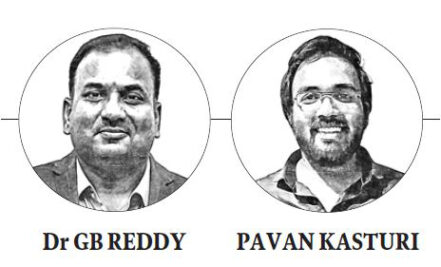
(Prof Dr GB Reddy is Vice Chancellor, NUALS [National University of Advanced Legal Studies], Kochi, and Pavan Kasturi is practising advocate, High Court for the State of Telangana)

Related News
-

Opinion: India’s Urban Challenge Fund—bankable isn’t the same as vulnerable
-
NEET-PG 2026: Plea seeks permanent copies of question papers and response sheets
-
SC issues notice to ECI on Rahul Gandhi-led plea against Special Intensive Revision exercise
-
Internet shutdown during October 10 CJP protest was necessary: Centre to SC