Opinion: Growing China-Taliban ties
Greater presence in Afghanistan provides China with an opportunity to strengthen its regional power and influence


By Jose Caballero
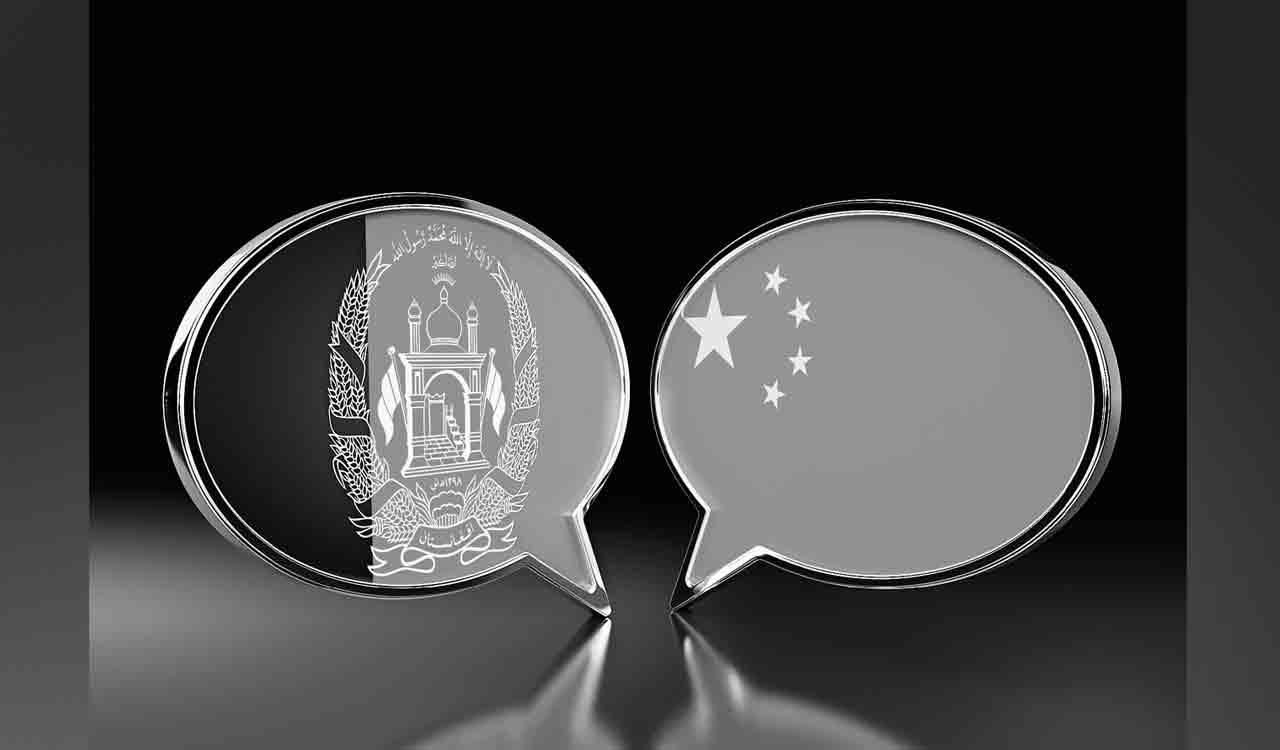
China is one of the few countries that is committed to expanding its dealings with the Taliban government in Afghanistan, where it hopes to expand its use of the vast natural resources while also improving its own geopolitical security.
Also Read
In mid-2021 China welcomed a Taliban delegation, showing its willingness to recognise the Taliban government as the US signalled its planned withdrawal. In early January 2023, a Chinese firm agreed to sign a 25-year contract for oil extraction in Afghanistan. There is also the possibility that a Chinese state-owned company will be contracted to operate a copper mine in the country.
It is unsurprising that as western countries withdraw almost all their links with Afghanistan, China is willing to increase its commercial presence in the country. Although traditionally its Afghan policy has not been a diplomatic priority, it now sees opportunities.
Despite being one of Afghanistan’s largest foreign investors in the past and its strategic partner, China’s involvement in the country has previously been relatively limited when compared with others such as Russia and the US.
Arguably, its policy in regard to Afghanistan has been driven by domestic economic interests and security issues. However, in the last decade or so, China has adopted a more assertive foreign policy. At the same time, commercial interests have also led to increased Chinese involvement in Afghanistan.
Useful Natural Resources
Greater active engagement with Afghanistan will enable China to benefit in several ways. Afghanistan is one of the world’s most resource-rich countries, but its security conditions have constrained the development of the sector. Some estimates set the value of Afghanistan’s untapped mineral deposits, such as copper, iron and lithium, at £811.5 billion. In terms of crude oil, it has 1.6 billion barrels. As for natural gas, Afghanistan possesses 16 trillion cubic feet, and has access to 500 million barrels of natural gas liquids.
However, in the past, Chinese activities in Afghanistan’s mineral sector have stalled. In the late 2010s, for example, security concerns hindered the activities of Chinese enterprises tapping into the country’s mineral resources.
There is another related gain in working with the Afghan natural resources sector.
China’s domestic energy supply is limited both by geology and energy density, and its dependence on other countries leads to “energy security anxieties”.
Access to Afghanistan’s natural resources, then, not only provides economic incentives for China to increase its commercial presence in the country. It also has the potential to help ease its growing demand for energy. Increasing involvement in Afghanistan falls within China’s prioritisation of short-term energy security. But it can become a fundamental strategic element for its long-term energy requirements.
Fragile Internal Security
Afghanistan’s fragile internal security has affected China in two ways. First, it worried that years of instability in Afghanistan would spill over into China’s Xinjiang autonomous territory, where there is a long history of religious and ethnic tension with Beijing. This has included crackdowns by Beijing on the Muslim Uyghur people, and widespread accusations of extensive human rights abuses.
Second, the instability that stems from Afghanistan negatively affects the development of China’s Belt and Road Initiative (BRI), which is building trade routes with the rest of the world, because two of its fundamental corridors run adjacent to Afghanistan. As a global infrastructure and development investment plan encompassing over 60 countries (although there is no official count), including some from east Asia and Europe, the initiative is a vehicle to expand China’s global economic and political influence. Such an expansion is paramount for China’s superpower aspirations.
Trade frictions with the US and other countries have increased the pressure to open other markets for China’s goods. The BRI is an effective channel to develop new export markets which can alleviate trade pressures. And although the Afghan consumer market is small, it is an untapped market for Chinese goods – particularly those produced in China’s western regions.
Building Superpower Status
An additional gain is geopolitical. After decades of hegemonic presence “next door” but a degree of reluctance to get involved in Afghan affairs, China seems to be somewhat ready to fill the power vacuum created by the withdrawal of western countries.
Greater presence in Afghanistan provides China with an opportunity to strengthen its regional power and influence. In doing so, it can contribute to the stability of Afghanistan. In turn, such a role will improve China’s image as a responsible rising power.
So far, China has been reluctant to take on a security role in Afghanistan, because this could have led to friction with other countries and increased its exposure to threats by international terrorists networks. However, a change in strategy to increase the economic stability of Afghanistan can contribute to the reduction of China’s own security vulnerabilities.
theconversation.com


Related News