Opinion: Telegram banned, but is NEET secure?
The bigger problem isn’t the platform but the vulnerabilities within India’s examination system, where leaks often originate long before they surface on messaging apps



By Shashank Shekhar, Dr Sonia Pandey
Days before the NEET-UG 2026 re-examination, the Union government took an extraordinary step. Acting under Section 69A of the Information Technology Act, 2000, it has temporarily restricted access to Telegram across India until June 22 and directed the platform to disable certain features, including message editing, for a limited period.
Also Read
The National Testing Agency (NTA) welcomed the move, arguing that organised cheating networks had exploited the platform to spread fraudulent claims, circulate leaked material, and deceive candidates ahead of the examination.
The decision reflects the seriousness of the crisis confronting India’s examination system. Yet it also raises a larger question: can platform blocking become a substitute for institutional reform? The answer matters not merely for NEET but also for the future of digital governance in India.
Examination Integrity
Competitive examinations are among the most consequential exercises conducted by the Indian state. Every year, millions of students compete for a limited number of educational and employment opportunities. The legitimacy of this process rests on a simple constitutional promise: equality of opportunity.
Articles 14 and 16 of the Constitution demand fairness, non-arbitrariness, and equal treatment. When question papers leak or organised cheating networks operate successfully, these constitutional commitments are undermined. Students who spend years preparing honestly find themselves competing on an uneven playing field.
The Supreme Court has consistently emphasised the sanctity of examinations. In cases involving recruitment tests, admissions, and public service examinations, courts have repeatedly held that maintaining public confidence in merit-based selection is a compelling state interest. A compromised examination is not merely an administrative failure; it is an assault on constitutional fairness. The government is, therefore, justified in taking strong measures to secure examinations. The real issue is whether blocking a digital platform is the most effective way of doing so.
Why Govt Chose Telegram
The government’s justification is straightforward. According to official statements, Telegram was allegedly being used by organised groups to circulate purported examination papers, run fraud networks targeting students, and manufacture misleading claims of paper leaks. Authorities also expressed concern that the platform’s message-editing feature could be used to create fabricated evidence by altering old messages while retaining original timestamps. As a result, access to the platform has been restricted until June 22, while message-editing functionality has been separately curtailed for a longer duration.
Viewed narrowly, the decision appears rational. If a particular platform is facilitating misconduct immediately before a high-stakes national examination, temporary restrictions may seem a reasonable preventive measure. However, the larger policy question remains unanswered. Even if Telegram disappears tomorrow, would paper leaks disappear with it?
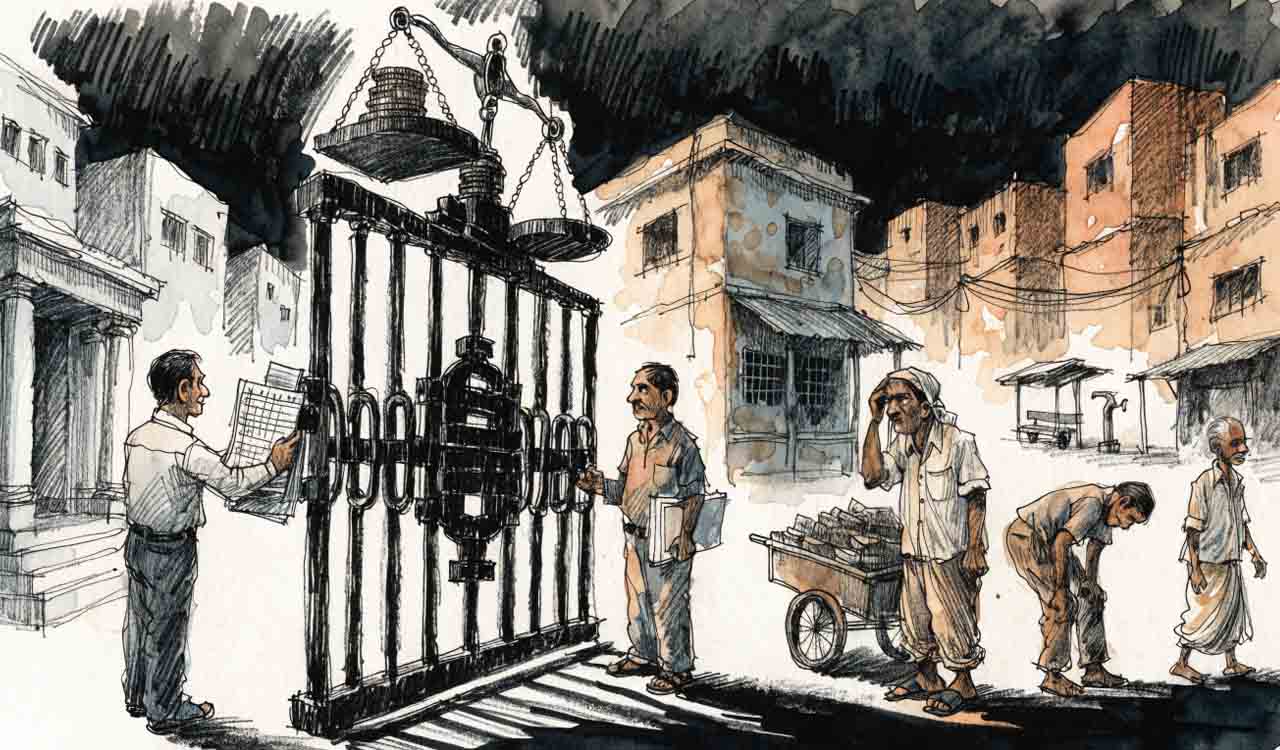
The real challenge before India is institutional, not technological. Preventing future NEET paper leaks demands stronger cybersecurity, transparent processes, independent oversight, and greater institutional accountability—not merely restrictions on digital platforms
Source of Leak
A leaked examination paper must originate somewhere. It can emerge during paper setting, printing, storage, transportation, digital transmission, or local administration. Every leak begins with a human or institutional failure long before it reaches a messaging application.
Telegram may facilitate dissemination. It does not create leaks. This distinction is critical because policy responses often focus on the most visible stage of a problem rather than its origin. By the time leaked material appears on a messaging platform, the security failure has already occurred.
If Telegram is blocked today, malicious actors can migrate to WhatsApp, Signal, Discord, encrypted email services, cloud-storage platforms, private forums, or entirely offline networks. Technology changes; incentives remain. The lesson is simple: distribution channels matter, but source vulnerabilities matter far more.
Limits of Platform Blocking
The Telegram restriction has been framed as temporary, targeted, and linked to a specific examination window. That limited character strengthens the government’s legal position. Yet temporary restrictions can still create difficult precedents.
Section 69A gives the government broad powers to block online content in the interests of sovereignty, security, public order, and related concerns. Courts have generally recognised the legitimacy of targeted restrictions when supported by statutory safeguards. At the same time, constitutional jurisprudence. particularly the proportionality doctrine developed in decisions such as Modern Dental College, Puttaswamy, and Anuradha Bhasin, requires that restrictions be necessary, proportionate, and connected to a legitimate objective.
The challenge for policymakers is, therefore, not whether restrictions are permissible in principle. They often are. The challenge is ensuring that exceptional measures do not become routine responses to administrative failures. A democracy cannot solve every governance problem through platform restrictions.
The Real Problem
The recurring cycle of examination scandals across India points toward deeper institutional weaknesses. Whether the controversy involves recruitment examinations, entrance tests, or professional admissions, a familiar pattern emerges. Leaks occur. Investigations follow. Arrests are made. Public outrage peaks. Re-examinations are conducted. Then the system returns to business as usual until the next scandal erupts.
What remains largely absent is structural reform. India still lacks a comprehensive examination-security architecture that imposes uniform cybersecurity standards, independent audits, mandatory breach reporting, and continuous oversight across examination agencies. The problem is particularly acute because examination systems have become increasingly digitised while governance mechanisms remain fragmented.
Security protocols vary significantly across institutions. Accountability is often diffused. Responsibility becomes difficult to trace once a breach occurs. Blocking Telegram may prevent one mode of dissemination. It does little to address these systemic vulnerabilities.
Public Examinations Act
The Public Examinations (Prevention of Unfair Means) Act, 2024, was enacted to tackle organised cheating, paper leaks, and examination-related fraud. The law imposes stringent penalties on individuals and networks involved in unfair practices and reflects growing recognition of the scale of the problem. Yet criminal law is largely reactive. Punishment occurs after the breach. Trust, however, is lost the moment the breach occurs.
What India needs is a preventive framework that combines technology, cybersecurity, transparency, and institutional accountability. Mandatory third-party security audits, encrypted paper management systems, tamper-resistant digital workflows, and independent oversight mechanisms should become standard features of all national examinations. The objective should not merely be to punish leaks. It should be to make leaks extraordinarily difficult in the first place.
Beyond Telegram
The government’s temporary restriction on Telegram may help reduce specific risks surrounding the NEET re-examination. It may even succeed in disrupting certain cheating networks. But it should not create the illusion that the examination crisis has been solved. The integrity of India’s examination system cannot depend on blocking one application after another. Students lose faith not because a messaging platform exists but because institutions appear unable to guarantee fairness. Every leak, every cancellation, and every re-examination chips away at public confidence in meritocracy.
The larger challenge before India is, therefore, institutional rather than technological. The question is whether examination authorities can build systems that remain secure even when every digital platform remains fully operational. That is the standard a modern constitutional democracy should aspire to meet. Until then, banning Telegram may provide temporary relief. It will not provide a permanent solution.
(The authors are Assistant Professors of Law, Lloyd Law College, Greater Noida)

Related News