Opinion: Texts beyond known worlds
By Pramod K Nayar Counter-balancing the fictional/fantastic account of Star Trek, the first major spacetravel saga on TV, were images from the moon, from spacecraft leaving the solar system and the ‘Blue Marble’ photograph. Now there is also a genre of travel writing from outer space — the astrojournal. Footprints beyond Earth The critic Mary […]


By Pramod K Nayar
Counter-balancing the fictional/fantastic account of Star Trek, the first major spacetravel saga on TV, were images from the moon, from spacecraft leaving the solar system and the ‘Blue Marble’ photograph. Now there is also a genre of travel writing from outer space — the astrojournal.
Footprints beyond Earth
The critic Mary Fuller has argued that travel and writing go together. Travel writing embodies a rhetorical imperialism in the form of describing, and thereby asserting textual control over, the new, bringing the new into the social imaginary. It constructs other spaces as potential sites for human adventure, terraforming and conquest. The colonising imagination is integral to the European travelogue and spacewriting.
It is thus instructive to note an astrojournal referencing a pioneer imperial traveller. Sandra Magnus in her journal of her stay on the ISS [International Space Station] compares her travel with that of Columbus:
“The exploits of Columbus, the first pioneers across the western plains, and the early excursions to the poles came to mind. In each case the people involved were going places no one had been before and doing things that no one, or at least not many, had attempted. In each case they had the most modern equipment and techniques that were available to them and in each case we look back and wonder how they were able to do what they did with such bare-bone primitive means. Columbus had only the most basic of navigational aids. We have GPS. The pioneers set off in covered wagons pulled by horses, and perhaps oxen, to cross unknown miles of harsh landscape. We have rockets that deliver us through the Earth’s atmosphere to the vacuum of space and low Earth orbit in eight and a half minutes…”
Magnus is locating her journey into space within a tradition of travel and exploration. The myth of a terra nullius — nobody’s land — propels humans into space, just as it did Columbus into the ‘New World’. Human footprints, placed on all parts of the earth, now seek another surface to imprint. Does the space journey mark the next stage of colonisation, as critics as diverse as Chris Pak and Michael Gormley seem to suggest?
Astrojournals and Astropolitans
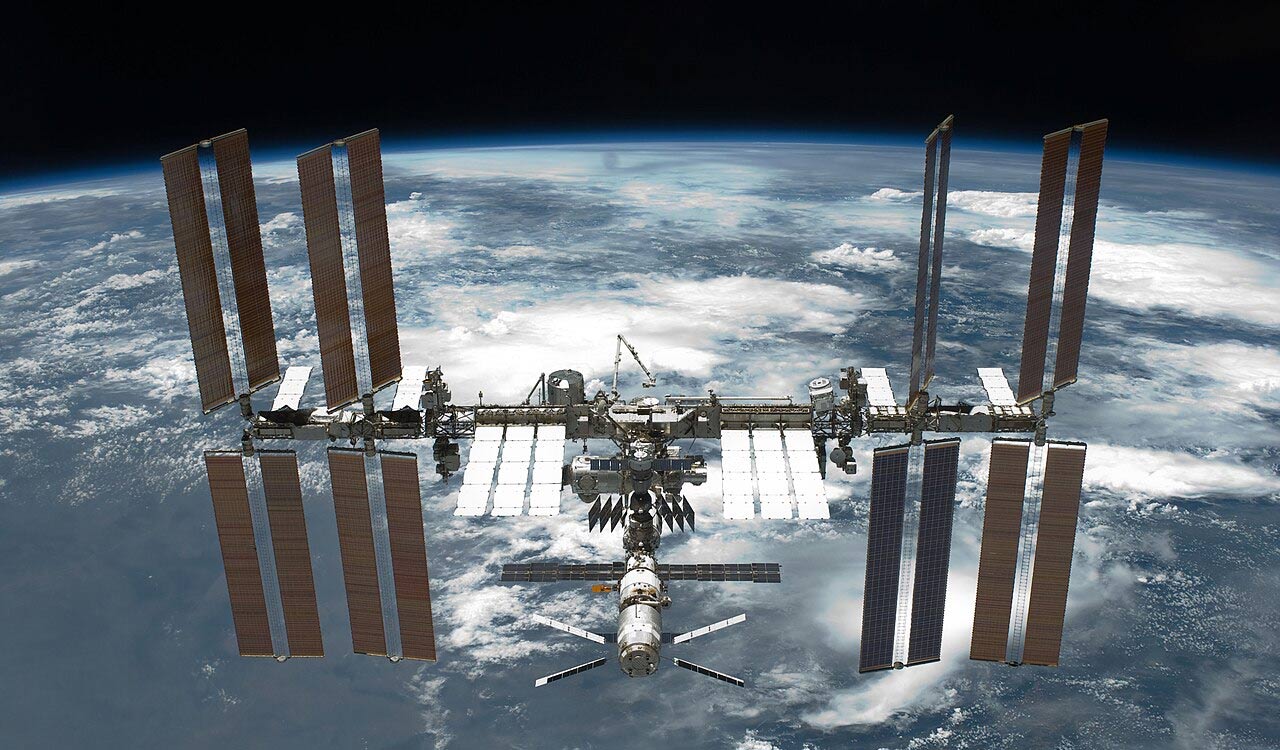
Magnus writes: “Close your eyes and imagine yourself here in ISS with me looking out of the docking compartment window. You are positioned so the Earth is passing by below and you can see the horizon as well as the night sky behind it”.
The astronaut’s vision is something beyond what any human can even conceive of, because it encompasses the very heavens. Astrojournals embody an expansion of human vision and techniques of observation and travel.
Magnus and her cohort circling the earth have come a long way, literally, from Columbus, but like her predeccesors, believes that humanity must see the worlds beyond. Jeff Williams, like Magnus, records how they observe the heavens, but declares that ‘earth observation’ is their favourite pastime and professional work: ‘you can never tire looking at part of God’s creation we call Earth’. To record sights as a mode of demonstrating the ‘being-thereness’, as eyewitness evidence, is a standard feature of travel writing, and of the astrojournal.
Like other travellers down the ages, from Egeria’s account of her pilgrimage through the diaries of Cabot and Columbus, the accounts by Humboldt and Cook and Darwin, to the famous exploration narratives of the Livingstone variety and the colonial travelogue of Africa, Asia and South America, Magnus too documents the experiences — from cooking to handling the troublesome confinement, terming it, in one of her entries, ‘an adventure’.
Such an adventure in travel is meant to widen one’s horizons. AL Roy writes in his Reminiscences English and American (1888):
“The chief value of travel in foreign countries … is to enlarge one’s ideas, to make them broad enough for approximation with the ideas of other nations—to make one cosmopolitan….”
The space journey then, perhaps, fits the human as an astropolitan — where humanity is maybe one form of life among many out there.
Sublime Spaces
The space adventure has its risky moments, like in traditional travelogues, and requires both presence of mind and planning when faced with the new and the unknown. For example, astronaut Jeff Williams describes the potential loss of muscle mass and bone density, to avert which they exercise regularly (there are images of Williams working out on the ‘Treadmill Vibration Isolation System’ on the ISS).
The astrojournal documents a sense of magnitude and distance that easily fits in with the aesthetic of the sublime: vastness, distances beyond compare, hyperobjects (as the critic Tim Morton would term objects too large for human comprehension) and the fragility of the observer. Awesome beauty is also something the astrojournal documents. Sunita Williams writes in her mission log:
“We really have the most beautiful planet in our solar system. None other can sustain life like we know it. None other has blue water and white clouds covering colorful landmasses filled with thriving, beautiful, living things like human beings”
Traditional travel writing enables the traveller to explore new places but also, in the process, reflect upon the home s/he left behind. Thus, all travel is simultaneously about the Other — the other culture/people/places — and the self — my home, my culture, my people. Williams too reflects on home when away:
“There are so many places we need to go visit and see responsibly to preserve not only their beauty but the balance that nature has given to us.”
She calls for the responsible preservation of the earth, thereby underscoring not (just) the conquest of outer space but also a stewardship of the home.
The astrojournal as a subset of travel writing is an amazing genre, not only encoding multiple themes from its source-genre but also offering much more.
It is a whole new textual world.

(The author is Professor, Department of English, University of Hyderabad)
Now you can get handpicked stories from Telangana Today on Telegram everyday. Click the link to subscribe.
Click to follow Telangana Today Facebook page and Twitter .

Related News
-

Sky is not the limit for you or Bharat, Shubhanshu Shukla tells students
-
Astronauts remove faulty ISS antenna during spacewalk; out of time to install spare
-
NASA astronauts Anil Menon, Jessica Meir undertake spacewalk to upgrade space station
-
Indian-origin NASA astronaut Anil Menon arrives at ISS for first eight-month space mission