Opinion: The Mudiraj struggle between heritage and hunger
The Mudiraj demand for BC-A status reflects a deeper crisis of livelihoods, dignity, and social justice in Telangana


By Pittala Ravinder
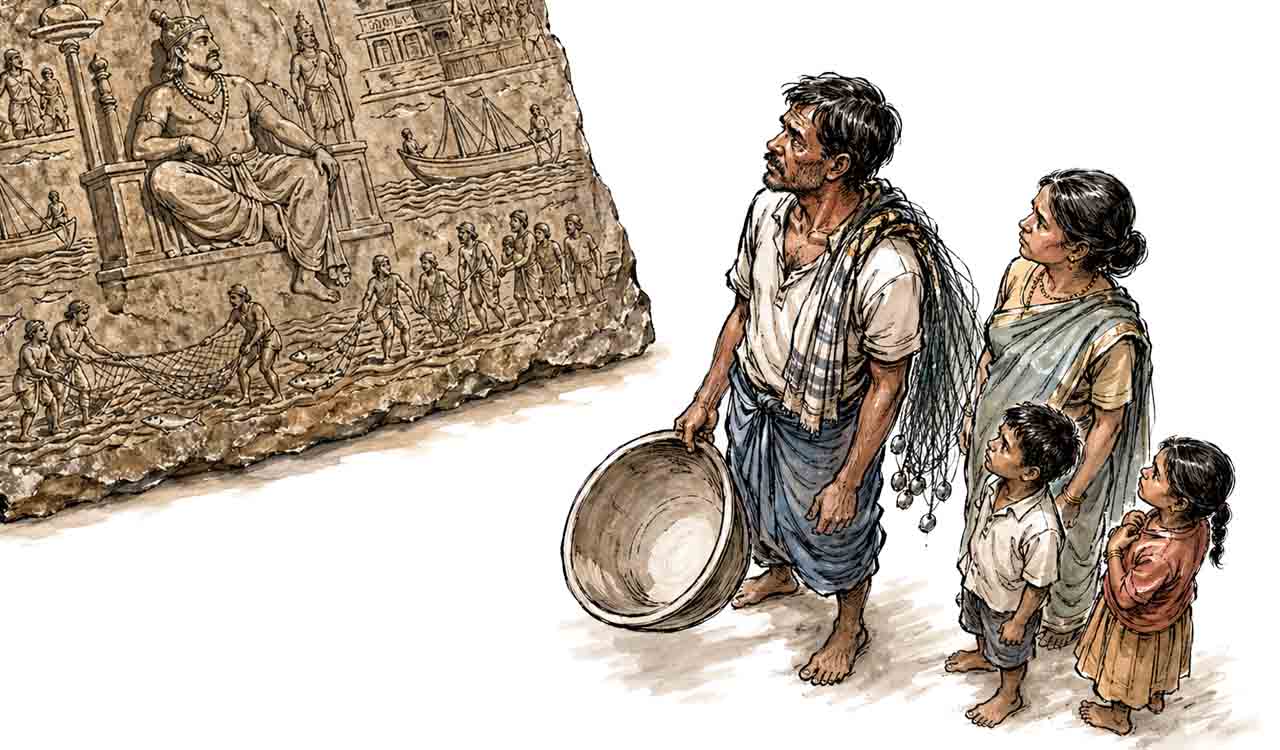
When the name Mudiraj is spoken, it still carries the weight of ancient forts and tank-built kingdoms — a memory of stewardship that once shaped landscapes and lives. Yet that echo of royalty now rings hollow against the daily reality of empty plates and seasonal toil: hands that once raised ramparts now mend nets at dawn and stand in line for casual work by dusk. This is not merely a contrast of past and present; it is a rupture in dignity, where a proud identity has been hollowed out by decades of neglect and economic displacement.
Also Read
The State’s own enumeration lays bare this rupture: the Mudiraj community — the largest BC group in Telangana — scores 94 on the Composite Backwardness Index, well above the State average of 81, a figure that translates into lost classrooms, fragile health, unproductive land and incomes that cannot sustain a family. This number is not an abstraction; it is the map of a people’s shrinking possibilities and the measure of a republic’s unfinished promise.
To read the Mudiraj story is to confront a stubborn paradox: a name that evokes kingship and a life that struggles for basic security. If we are to honour that name, our response must move beyond nostalgia and token sympathy to structural remedies that restore livelihoods, protect children’s futures, and rebuild the social fabric that once made dignity possible.
Foundation Cracked at the Roots
Education is the ladder to social emancipation, but for many Mudiraj families, that ladder is broken at the first rung. The problem is not lack of aspiration; it is the crushing weight of socio-economic disadvantage. Quality English-medium and corporate-oriented training is expensive; for households earning less than Rs 1 lakh a year, such education is an unreachable luxury. Even when talented students secure places in engineering or medical colleges, soaring fees and hostel costs force many to drop out. The absence of digital skills and communication training further excludes them from modern job markets, perpetuating a cycle of underemployment and social backwardness.
Once, lakes and water resources were the backbone of Mudiraj’s prosperity. Today, modern fishing methods and corporate pressures have stripped them of their economic autonomy. Traditional owners have become day labourers in the very trades they once dominated. Dependence on seasonal fishing and agriculture means income is irregular; debts taken during lean months swallow the meagre gains of good seasons. Without stable employment, pensions or insurance, families live on the edge — their health, nutrition and dignity steadily eroded. The average annual income for Mudiraj households remains below Rs 1,00,000, compared with the State average of Rs 1,50,000, a gap that translates directly into poorer health and educational outcomes.
If Telangana’s progress is to be more than a headline, the State must move beyond rhetoric, address gaps in education and livelihoods, and commit to reforms that transform lives rather than secure votes
Poverty here is not only economic; it is social neglect stretched over decades. Lack of decent housing, safe drinking water and sanitation exposes families to seasonal illnesses like cholera and typhoid. Overcrowded, poorly lit homes stunt children’s learning and harm the elderly’s health. Neglect of girls’ education leads to higher dropout rates and early marriages, perpetuating cycles of illiteracy and maternal vulnerability. Simply building cement roads will not bring light into these communities; what is needed is trust in girls’ schooling and a determined campaign to break the chains of child marriage and social stigma.
For decades, the Mudiraj demand to be reclassified from BC-D to BC-A has been a recurring political promise — a bargaining chip in electoral manifestos. Using Mudiraj votes as a bankable bloc without committing to scientific, transparent remedies is not just political failure; it is a moral failure of democracy. The community’s 94-point charter of demands calls for more than rhetoric: they demand validated data, public transparency, and policy design that resists short-term electoral calculation.
Pathways to Empowerment
Reclassification and reservation must be grounded in robust, verifiable data and constitutional safeguards so that benefits reach the children who need them most and withstand legal scrutiny; beyond this empirical foundation, structural interventions are essential. Real water infrastructure and irrigation projects should replace token subsidies so smallholding farmers can make their land productive and secure year-round incomes. Traditional livelihoods must be modernised by equipping fishers and small farmers with appropriate technology, cold chains, and market access so they can transition from wage labour to entrepreneurship.
Targeted scholarships and vocational training programmes that teach digital and communication skills should be created to prepare youth for competitive job markets and reduce dropout rates. Finally, expanding preventive healthcare, nutrition programmes, pensions, and insurance will break the cycle of debt and illness and provide the social security necessary for long term emancipation.
From Symbolic Glory to Everyday Justice
The Mudiraj story is not merely a statistic to be debated in committee rooms or a slogan to be waved during campaigns; it is a human ledger of hopes deferred and dignity diminished. A proud name that once signified stewardship and sovereignty now sits uneasily beside empty plates, seasonal wages and classrooms that close their doors to girls; this dissonance should unsettle every citizen who believes in an inclusive republic.
If Telangana’s progress is to be more than a headline, the state must treat these figures as a moral mandate rather than electoral fodder — not because politics demands it, but because justice, measured in children’s futures and in the quiet dignity of daily life, demands it.
Restoring the “royalty” in a name means restoring the conditions that make a life worthy of that name: steady livelihoods that free families from the debt cycle, schools that keep girls and boys learning through adolescence, health systems that prevent illness from becoming catastrophe, and social protections that cushion the shocks of a bad season. These are not charity; they are investments in the commonwealth.
When irrigation turns marginal plots into productive fields, when fishers can sell through cold chains instead of begging for work, when a young Mudiraj graduate can compete for a job on merit rather than on the mercy of patronage, the community’s pride will be reflected in everyday realities — in secure meals, in children’s laughter, in the quiet confidence of parents who can plan beyond tomorrow.
This is also a test of our democracy’s seriousness. Promises that evaporate after elections corrode trust and deepen alienation; policies anchored in transparent data, legal safeguards and measurable outcomes build durable inclusion. The task is intergenerational: the choices we make now will determine whether the next generation inherits a caste named glory that is only ceremonial, or a living legacy of opportunity. To leave the Mudiraj people with nothing but a proud label and no means to live that pride is to betray the very idea of citizenship.
Let this be an urgent, compassionate call to action: move beyond rhetoric, commit to structural reforms, and measure success by lives transformed rather than by votes secured. Only then will the “royal” in their name cease to be an irony and become, at last, a reflection of real social and economic freedom.
(The author is State Convenor of Telangana Asthitva Vedika and a senior freelance journalist)

Related News