Study links insufficient sleep, stress to symptoms resembling concussion
This study was conducted by the Concussion Assessment, Research and Education (CARE) Consortium established by the NCAA and U.S. Department of Defense.


Washington: While we all know how getting less sleep and stress can be harmful to a person’s health, a new study suggested that lack of sleep, pre-existing mental health issues, and stress could also lead to symptoms that resemble concussion.
The study was published in the journal ‘Sports Medicine’. This finding supports researchers’ argument that athletes recovering from a brain injury should be assessed and treated on a highly individualised basis.
This study was conducted by the Concussion Assessment, Research and Education (CARE) Consortium established by the NCAA and U.S. Department of Defense.
In the study, between 11 per cent and 27 per cent of healthy college athletes with no history of a recent concussion reported combinations of symptoms that met the criteria for the post-concussion syndrome (PCS) as defined by an international classification system.
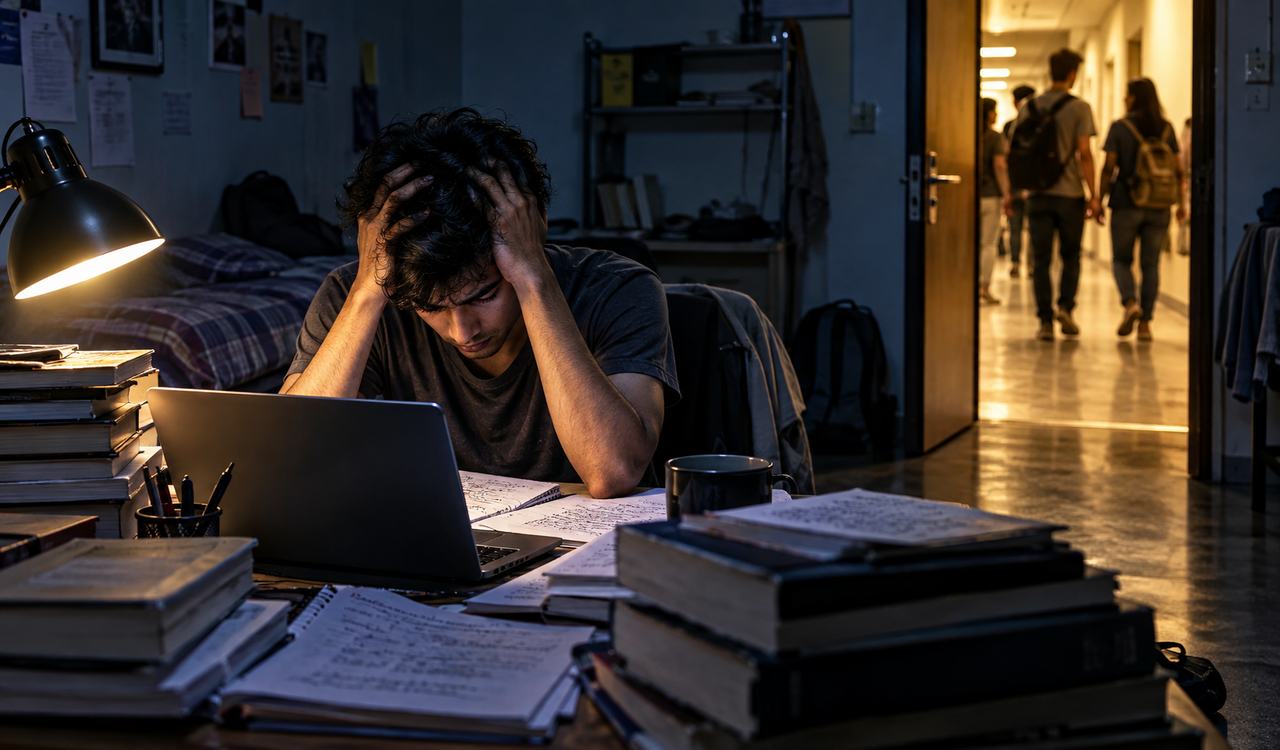
Among the nearly 31,000 student-athletes surveyed, three factors stood out as the most likely to predict PCS-like symptoms: lack of sleep, pre-existing mental health problems, and stress.
The participants were cadets from four U.S. military service academies, who undergo rigorous training and are required to participate in athletics and students who competed in NCAA sports at 26 U.S. higher education institutions.
Beyond the substantial numbers of students who reported clusters of PCS-like symptoms, between one-half and three-quarters of all of the athletes surveyed reported one or more symptoms commonly experienced by people who’ve had a concussion, the most common being fatigue or low energy and drowsiness.
“The numbers were high and were consistent with previous research in this area, but it is quite shocking,” said study lead author Jaclyn Caccese, assistant professor in The Ohio State University School of Health and Rehabilitation Sciences.
“These are elite athletes who are physically fit, and they are experiencing that many symptoms commonly reported following a concussion. So looking across the general population, they’d probably have even more,” Caccese added.
It’s important to understand that there are multiple sources of these symptoms, researchers stated, so that student-athletes’ post-concussion care zeroes in on symptoms caused by the injury. In addition, knowing athletes’ medical history and baseline symptom status may help clinicians predict which pre-existing factors could contribute to a slower recovery from a concussion.
“When a patient comes into a clinic and they are a month or more out from their most recent concussion, we need to know what symptoms they were experiencing before their concussion to know if their symptoms are attributable to their concussion or something else. Then we can start treating the concussion-related symptoms to hopefully help people recover more quickly,” Caccese said.
The initiative is designed to fill gaps in knowledge about concussion effects and recovery among student-athletes at colleges, universities, and military service academies by collecting and analyzing data on men and women who compete in a range of sports and undergo military training.
Participants in this study included 12,039 military service academy cadets and 18,548 NCAA student-athletes who completed the Sport Concussion Assessment Tool symptom evaluation as part of the consortium’s baseline testing. The consortium also collected demographic data and personal and family medical histories from participants.
Statistical analyses showed which factors in athletes’ medical histories were most closely associated with reports of symptoms that aligned with PCS criteria. Among cadets, 17.8 per cent of men and 27.6 per cent of women reported a cluster of symptoms that met PCS criteria.
Among NCAA athletes, 11.4 per cent of men and 20 per cent of women reported combined symptoms that mimicked the PCS criteria.
Caccese said the varied timing of data collection at military service academies compared to NCAA preseason testing likely contributed to the symptoms reported by a higher percentage of cadets.
For both groups, sleep problems – and particularly insufficient sleep the night before the test – and pre-existing psychiatric disorders were the most predictive conditions, and a history of migraines also contributed to symptoms that met PCS criteria. In cadets, academic problems and being a first-year student increased odds of having symptoms that met PCS criteria, and in NCAA athletes, a history of ADHD or depression contributed to meeting PCS criteria.
The International Classification of Diseases, Tenth Revision uses the term post-concussion syndrome for persistent symptoms following a concussion, although the cause or causes of these symptoms can be difficult to determine. Symptoms range from persistent headaches, dizziness, and fatigue to anxiety, insomnia, and loss of concentration and memory.
A complicating factor with high symptom reporting is that recognising a concussion and determining return to play is based on reported symptoms. And while some symptoms may be more closely connected to concussion than others – such as dizziness, pressure in the head, or sensitivity to light or noise – others, like fatigue, drowsiness, and even headaches, can be linked to a variety of causes.
The CARE Consortium also aims to identify factors that will help predict outcomes in student-athletes and cadets who suffer concussions.

Related News