Administering rabies vaccine at the wrong site can be fatal: Shoulders or thighs only, warn experts
Hyderabad pediatrician Dr. Sivaranjani Santosh warned that rabies vaccines must not be injected into the buttocks, as fat prevents proper absorption. Infants require injections in the thigh, adults in the deltoid, and severe bites also need Rabies Immunoglobulin for effective protection
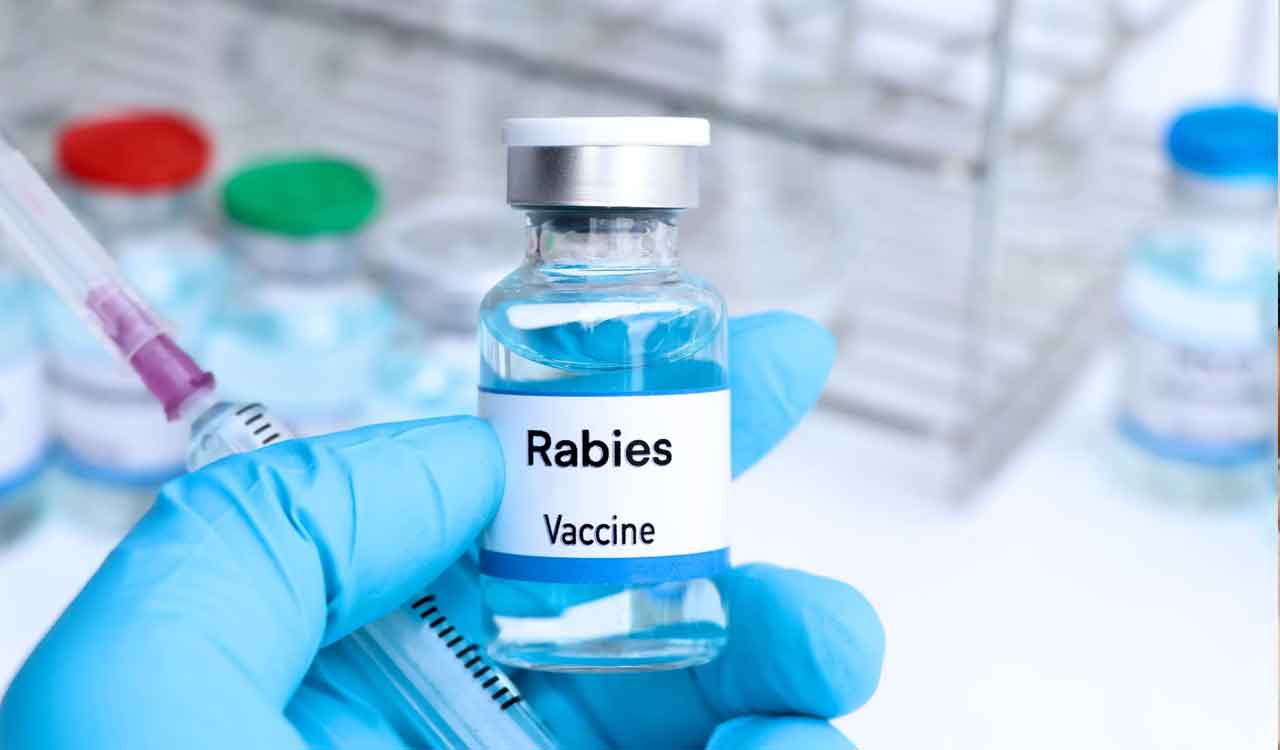


Hyderabad: While most people know that a dog bite requires immediate medical attention, a critical detail that is often overlooked is where exactly should the injection be administered?
People should keep in mind about the dangerous practice of administering rabies vaccines in the buttocks or gluteal region, pediatrician from Hyderabad, Dr. Sivaranjani Santosh on Tuesday warned.
Quoting WHO guidelines, she said the rabies vaccine should never be administered in the buttocks because that area has a thick layer of fat.
If the vaccine is injected into this fat rather than the muscle, the body may not absorb it correctly, leading to a vaccine failure.
In a disease like Rabies, which is 100 percent fatal once symptoms appear, such a failure is a death sentence. To ensure the vaccine reaches the muscle effectively, the site of administration depends entirely on the age of the patient, with infants and toddlers requiring injection in the anterolateral thigh, while older children and adults must receive it in the deltoid muscle of the upper arm or shoulder, the senior paediatrician on X noted.
Dr Sivaranjani pointed out that vaccines must also be given with the appropriate needle length to reach the necessary depth.
For severe Category 3 bites, a vaccine alone is insufficient and must be accompanied by Rabies Immunoglobulin (RIG), which consists of “ready-made” antibodies that must be injected directly into and around the wound as soon as possible to neutralize the virus before it travels to the nerves, the doctors pointed out.
If a child has completed a full rabies schedule, they are generally protected for three months. However, if a bite or scratch occurs after this period, they require two booster doses but not the antibody injection, Dr Sivaranjani pointed out.
Ultimately, whether it is a tiny scratch from a pet or a deep bite from a stray, the injury must not be ignored, and caregivers must ensure medical professionals follow these correct site protocols because when it comes to Rabies, there is no room for error.

Related News