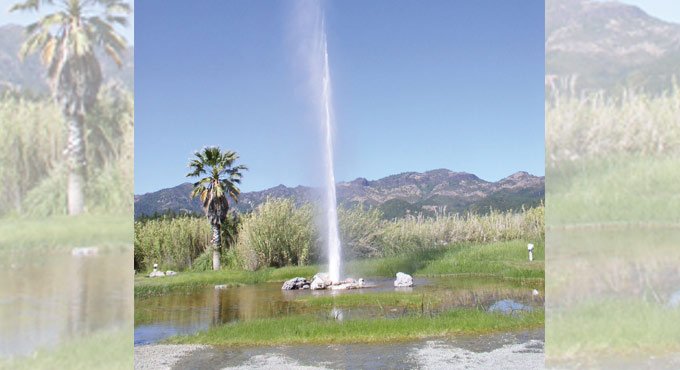
Do you know how geothermal or hot springs are formed? And how many hot springs are there in India!
One common method is when rain or ground water is heated up by contact with rocks that have been heated by magma, deep beneath the Earth’s surface. These types of hot springs generally form near areas of volcanic activity.


Geothermal springs
A geothermal spring or a hot spring or a thermal spring is a naturally occurring spring of water that is hotter than 98 degrees Fahrenheit (36.7 degrees Celsius) when it flows from the ground. A hot spring is a spring produced by the emergence of geothermally heated groundwater that rises from the Earth’s crust. While some of these springs contain water that is a safe temperature for bathing, others are so hot that immersion can result in injury or death
Science behind hot water
As we know, deeper we go down the earth hotter it gets and find magma (molten rock) at the outer core of the earth. This magma (80,01,300°C) is surrounded by different layers of the earth. If there is a crack or thrust fault in the layers of earth (one layer of the crust breaking and being thrust over another), tremendous amount of heat will be transferred from the magma to the surrounding rocks. Now, all that thermal energy will be transferred from the rocks along that thrust fault to the water present down there. As the temperature of the water increases, its density decreases which results in the rise of the hot water toward the surface along this thrust fault in the form of hot springs. These phenomena are very similar to geysers, and like geysers, many of them form near areas of volcanic activity. Mud pots form when hot spring waters mix with dirt and clay before they reach the Earth’s surface.
How are they formed?
Hot Springs can form in several ways. One common method is when rain or ground water is heated up by contact with rocks that have been heated by magma, deep beneath the Earth’s surface. These types of hot springs generally form near areas of volcanic activity.
Another type of hot spring forms when rain water flows into the ground and is heated by the radioactive decay of elements present in the rocks and soils that it flows through. For each 1000 feet the rain water travels down, it is heated an additional 10 – 15 degrees Fahrenheit. The hot water again becomes more viscous and buoyant than the cold water flowing down. The hot water then rises through other cracks and fissures to the Earth’s surface. As the hot water reaches the Earth’s surface, they may flow slowly, seeping into a still pool, or quickly, forming a small river. Some hot springs release great amounts of pressure, much like a geyser.
Mud & paint pots
When the water in a hot spring mixes with dirt or clay before it reaches the surface, the spring is called a mud pot. Mud pots are often highly acidic, bubbling pools. When minerals in the mixture cause the mud to be brightly coloured, it is called a paint pot. Mud pots and paint pots can be found in the United States and Europe.
Warmth for animals
Some animals take advantage of the warmth of natural hot springs in order to survive cold winter temperatures. In Japan, for example, troops of monkeys called macaques or snow monkeys live in a very cold area, where snow is present for much of the year. They have been observed entering and bathing in the hot springs, even in spa areas frequented by humans.
Grand Prismatic Spring
This hot spring is located in Yellowstone National Park. It is the largest hot spring in the world – it is 300 feet (91 meters) wide and 160 feet (49 meters) deep. The spring is called prismatic because it seems to display all the colors of the rainbow – deep blue in its center, changing to green, yellow, orange and red near its banks. This coloration is caused by the presence of algae and thermophile bacteria.
How many hot springs are there in India?
Here is the list of hot springs or geothermal springs in india.
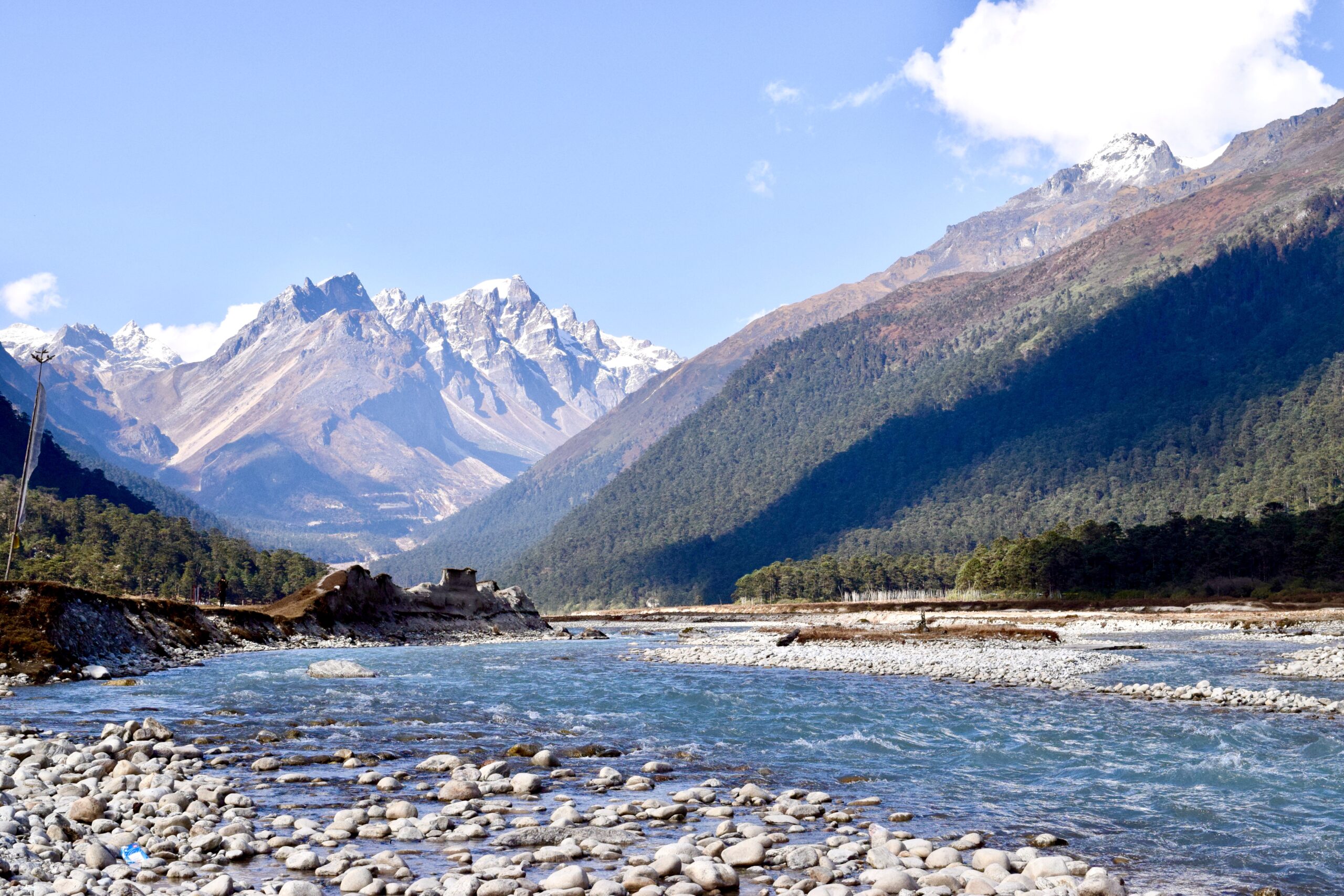
Yumthang
Not just home to one but many, hot springs in Sikkim have found a natural home. And one of the most famous one is Yumthang. With a high sulphur content in the water, it is frequented by the locals and they believe that the water here has great medicinal properties as well. This well preserved hot spring is located near the bank of the river Lachung.
Panamik
Located in a small village, in the Nubra Valley, near the Siachen glacier is the northernmost hot spring in Panamik. Situated at a height of over 10,000 feet above sea level and a few kilometres from Leh, this sulphur hot spring is known for its medicinal properties and its serene surroundings.
Tapovan
Situated in close proximity to the Gangotri Glacier, Tapovan hot spring is located in a small village, a few kilometres away from Joshimath. Considered sacred owing to its location, and despite being a popular pilgrim town, this hot spring in Joshimath has remained hidden and offers the much required calm and peace that you’ve been looking for.
Bakreshwar
The only natural geothermal spring in West Bengal, Bakreshwar is a pilgrim site. Characterised by minerals such as sodium, potassium and calcium, the waters are believed to have healing properties for the human body. In the town of Bakreshwar, the temperatures of the hot springs are soaring, sometimes as high as 80 degrees.
Manikaran Sahib
Manikaran Sahib in Himachal Pradesh is considered the most sacred hot spring and is a major attraction for several pilgrimage. Like any other hot spring, the hot water which comes deep from the earth core carries away lot of minerals mainly sulfur. It is good for curing skin diseases that is why people take bath in Manikaran’s hot water.
Gaurikund
It is located at 2040 metres above sea level and is located on the banks of Mandakini river. It is popular owing to the natural thermal spring in this village which was destroyed after the recent earthquake in the area but a small stream still flow through the village.

Related News