Editorial: Big boost for India’s nuclear ambitions
Progress at Kalpakkam signals rise of a self-sustaining nuclear ecosystem, strengthening India’s energy security while advancing scientific innovation, strategic autonomy, and long-term economic stability
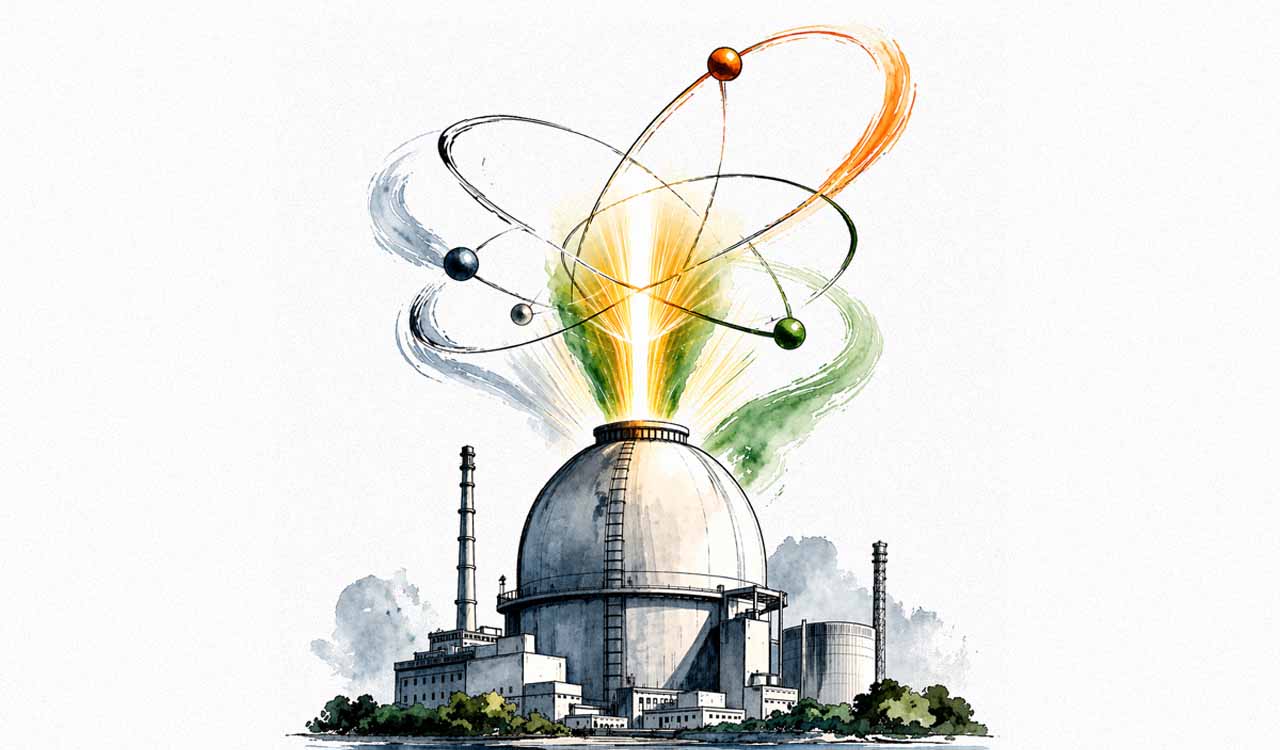


India’s first indigenously built Prototype Fast Breeder Reactor (PFBR) in Tamil Nadu’s Kalpakkam going critical is a defining moment in the country’s journey towards nuclear self-reliance. The PFBR is expected to generate fissile material that supports a future transition to thorium-based fuel cycles. India holds some of the world’s largest thorium reserves, making this shift strategically significant. The nuclear scientific community considers this reactor a bridge between current uranium-based systems and a more sustainable thorium-driven future. This transition could strengthen energy security and reduce dependence on imported nuclear fuel. Plans for additional breeder reactors at Kalpakkam highlight India’s intent to scale this technology further. Attaining criticality means that the nuclear reaction in the 500-megawatt electric (MWe) reactor has become self-sustaining and will eventually lead to the generation of electricity. The Kalpakkam reactor, capable of producing more fuel than it consumes, reflects the depth of India’s scientific prowess. Since India accounts for 25% of the world’s thorium reserves, reaching the third stage of the nuclear programme is crucial for the country’s energy security. Dr Homi J Bhabha, the father of India’s nuclear programme, had dreamt of making the country self-reliant in the nuclear power sector by exploiting the vast thorium reserves found in the monazite sands of the coastal regions of south India. Once the reactor becomes fully operational, India will become only the second country after Russia to have a commercial fast breeder reactor. The Department of Atomic Energy (DAE) has drawn up plans to increase the share of nuclear power in the energy mix by producing 22,400 MWe by 2032.
The Kalpakkam reactor’s criticality is not just a scientific milestone but a much-needed intervention in India’s future energy cost curve. While upfront capital costs and long gestation periods are characteristic of breeder technology, lifecycle economics improve significantly due to fuel multiplication and resource efficiency. Over time, this can lower the marginal cost of nuclear energy, particularly when scaled within a closed fuel cycle ecosystem. India’s nuclear programme was structured precisely for this transition. The first stage, built around Pressurised Heavy Water Reactors (PHWRs), created a steady pipeline of plutonium while delivering grid-scale electricity. With Stage 2 now operational, that accumulated plutonium is being reinvested into a closed fuel cycle that enhances efficiency, reduces waste, and multiplies output per unit of mined uranium. From an economic standpoint, this shift is significant. The breeder route allows India to bypass its uranium constraint and progressively transition toward a thorium-based fuel economy in Stage 3. This reduces long-term import dependence, insulates the energy sector from global commodity volatility, and ensures predictable baseload power for industrial growth. In a world where energy security defines economic resilience, India’s progress at Kalpakkam signals more than technological success. It marks the emergence of a self-sustaining nuclear ecosystem — one that aligns scientific innovation with strategic autonomy and long-term economic stability.
Also Read

Related News