Editorial: Vizag Steel Plant tragedy — address loopholes in safety standards
The accident at Vizag Steel Plant once again exposes serious gaps in industrial safety, maintenance and accountability. Independent investigations and stronger safety protocols can no longer be delayed
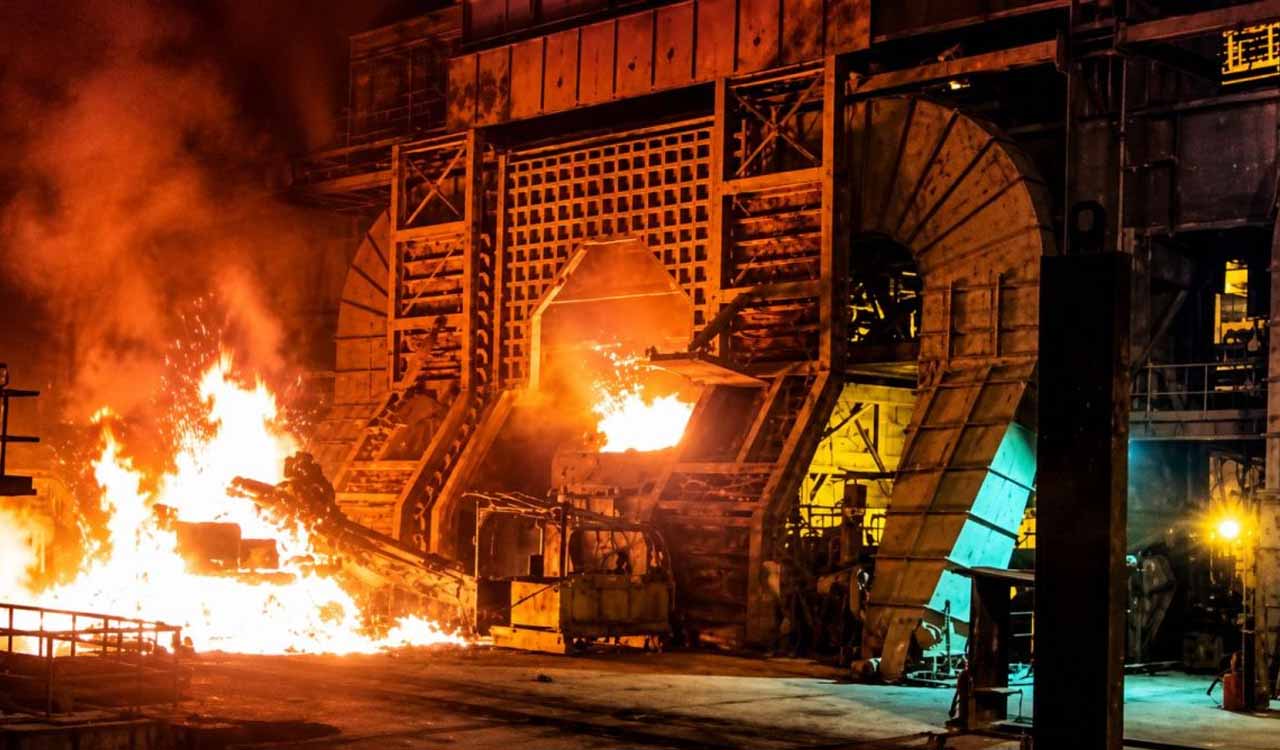


The death of nine workers at the Visakhapatnam Steel Plant (VSP) due to the malfunction of a ladle carrying molten metal came as a grim reminder of the loopholes in the safety standards at India’s first shore-based integrated public sector steel plant. The workers were engulfed in a torrent of liquid steel at 1,500–1,600 degrees Celsius following the explosion. It was a preventable tragedy. Experts suspect that inadequate maintenance of the plant could have led to the accident. The ladle must be periodically inspected before operation. There is a shortage of experienced people to run a critical unit like the Steel Melt Shop (SMS) where the tragedy occurred. Unfortunately, no lessons were learned from past mistakes. One feels a grim sense of déjà vu whenever an industrial mishap occurs. The patterns are disturbingly familiar. As are the responses that follow. Ex gratia is announced, a probe is ordered, and a few officials are suspended amid a political blame game. It’s business as usual until the next tragedy strikes. Apart from the investigation initiated by Rashtriya Ispat Nigam Limited (RINL), which runs the plant, the Union Steel Ministry has constituted a three-member external inquiry, headed by the Director-in-Charge, Bokaro Steel Plant, Steel Authority of India Limited (SAIL), to conduct an independent inquiry. Monday’s tragedy was not an isolated incident in the history of the steel plant, fully operational since 1992. It is the latest in a long record of preventable accidents.
The worst-ever mishap took place on June 14, 2012, when 19 workers, including some officers, were burnt alive in a massive explosion in the oxygen plant. In the immediate aftermath, trade union leaders made a damning allegation that routine maintenance at the plant had been neglected for more than 12 months. After every major accident at VSP, inquiry committees came to the same conclusion that ‘no human error was involved’ in the incidents. This raises serious questions about safety protocols. For the record, the VSP, with a capacity of 7.3 million tonnes per annum, conducts an external safety audit every year and internal inspections every three months through the plant’s safety engineering department. There is a need for an independent probe as the inquiry committees led by officials from sister public sector undertakings — however competent the members may be — cannot substitute for a genuinely independent forensic investigation. It is also time to critically assess the operational efficiency of ageing equipment, as the plant has seen capacity expansions in 2015 and 2017. Rigorous life-cycle assessments of critical equipment — ladles, cranes, refractory linings, oxygen supply systems — must be conducted. While India is the second-largest steel producer globally, safety remains a critical concern. According to the Directorate General of Mines Safety, over 4,500 industrial accidents occur annually in India, with a significant share from the steel sector.
Also Read

Related News