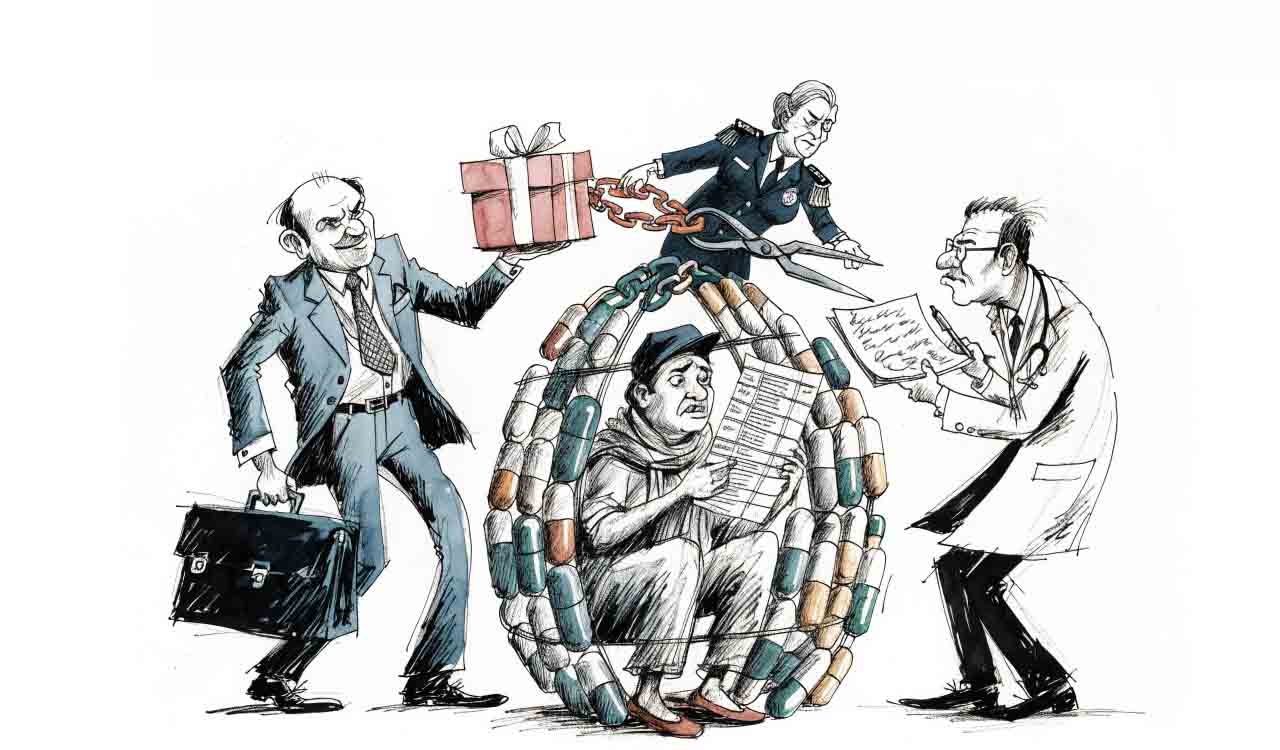
Editorial: No wishing away canine menace
The Supreme Court’s intervention in India’s growing stray dog crisis highlights the urgent need to balance animal welfare with public safety



The threat from stray dogs is a brutal everyday reality for many Indians, particularly the middle-class and the poor. Many are bitten, contract rabies, and die in agony. In 2024, over 37 lakh dog bite cases were reported across the country, though the actual number must be much higher. Rabies is primarily transmitted through stray dog bites and claims numerous lives. India accounts for 36% of global deaths. Reports pour in from across the country every day about hapless people, particularly children and the elderly, becoming victims of stray dog attacks. The Supreme Court’s latest directive on controlling the canine menace is a welcome development. The apex court has rightly ruled that the state cannot remain a “passive spectator” as citizens face the constant threat of dog attacks in public spaces. Voicing concern that the country’s stray dog crisis had reached alarming proportions, the top court refused to dilute its directions on removing stray dogs from public institutions. It is certainly a necessary intervention in a worsening public safety crisis. For years, civic authorities across India have failed to address the alarming rise in dog-bite incidents, forcing courts to step into what is essentially an administrative vacuum. Linking the issue directly to Article 21 of the Constitution, the SC held that the right to life includes the right to move freely in public spaces without fear of attack. The Constitution does not envisage a society where children and elderly citizens are left to survive at the mercy of physical strength or chance.
Several States and cities have been witnessing an unprecedented surge in dog bite cases. Behind these statistics are children attacked near schools, elderly citizens unable to walk safely and residents living in fear of aggressive stray packs. The SC has rightly held that humane treatment of animals cannot mean ignoring human safety. The court’s emphasis on lawful relocation must now be matched by investments in shelters, sterilisation centres, vaccination drives and veterinary facilities. The challenge is to build a humane, accountable and effective stray management system that protects both citizens and canines. In August last year, the apex court had given three months to the States to report on the progress made in implementing the ABC Rules, which require local authorities to run sterilisation and anti-rabies programmes based on the catch-neuter-vaccinate-release model. The advocates of animal rights seem to ignore the harsh reality that the menace of street dogs is a full-blown public safety crisis in India. Aggressive canines roaming freely on the streets are a nightmare for workers returning home late at night or children from poor and middle-class families playing near their homes. It is only the rich and celebrities, who live behind fortress-like gates and rarely set foot on a street where stray dogs run wild, who can afford to be unaffected by this problem. They are the insulated elite.
Also Read

Related News