IISc study shows enhanced recombination boosting spread of SARS-CoV-2
The team showed that with the aid of these mutations, several such Omicron recombinant and mutant strains were able to escape from the host's defences and bind more tightly to the host cell.


Bengaluru: A study by a team of researchers at the Indian Institute of Science (IISc) here has added to the growing body of evidence about how efficient the new strains of SARS-CoV-2 virus are at escaping immune attack and at causing infections.
The team has identified several new mutations that accumulated through recombination at a high rate and affected viral proteins, especially different parts (domains) of the viral spike protein.
Also Read
The findings of the study have been published in the ‘Journal of Medical Virology’.
It all began in January 2022, around the time that the Omicron variant of SARS-CoV-2 started spreading rapidly. The team led by Shashank Tripathi, Assistant Professor at the Department of Microbiology & Cell Biology, and Centre for Infectious Diseases Research, analysed genomic sequences of all the viral strains that appeared between November 2019 and July 2022 in various databases worldwide.
They noticed that there was an unusually high increase in the number of recombinant strains of the Omicron variant.
The team showed that with the aid of these mutations, several such Omicron recombinant and mutant strains were able to escape from the host’s defences and bind more tightly to the host cell.
Viruses like SARS-CoV-2 are known to change constantly, making it hard for our immune system to identify and destroy them. This is a major concern when generating vaccines. The genetic material in SARS-CoV-2 is a long single-stranded RNA. In addition, the protein that is required to make copies of this RNA – RNA polymerase – is known to be error-prone in this virus, an IISc release noted.
Viruses can evolve via one of two mechanisms: Mutation or recombination, Tripathi said.
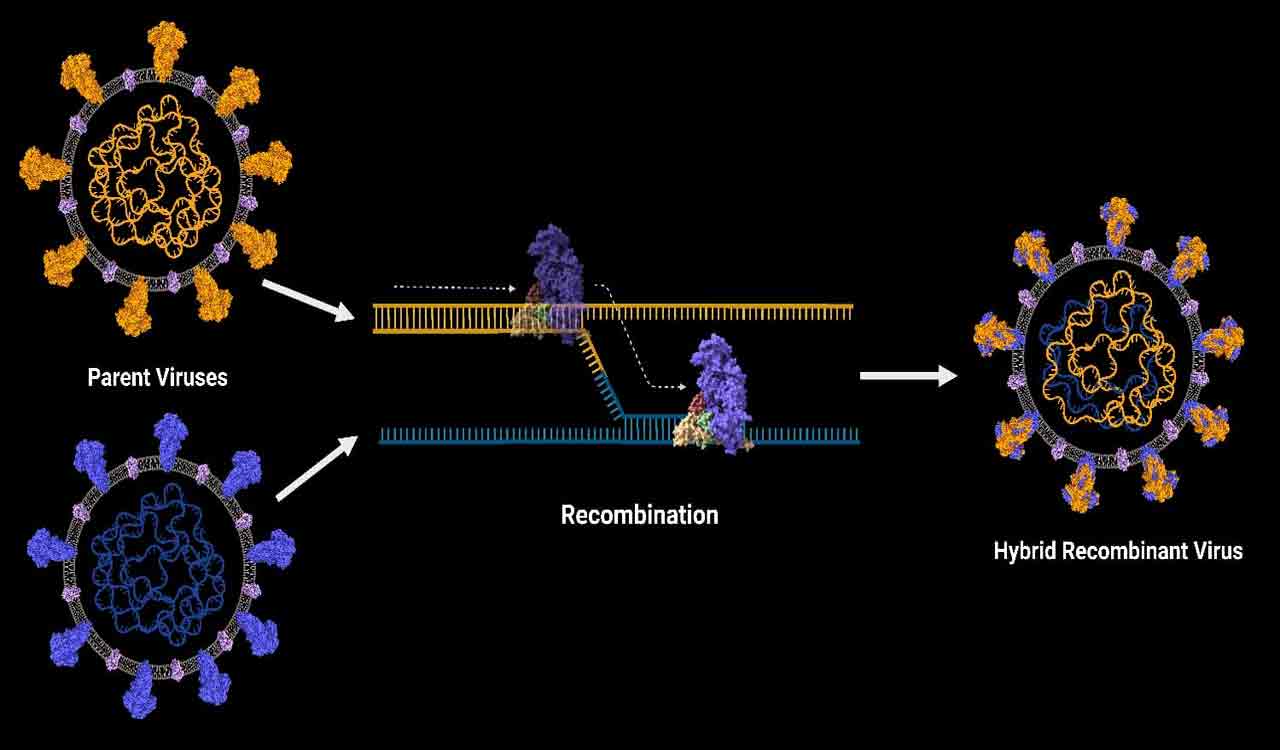
“This is a strategy to increase its genetic diversity. The polymerase doesn’t just allow mutations to accumulate, it often also causes recombination to happen between different strains of the virus. This is possible when there is co-infection – when a host cell is infected by more than one strain of the virus.
“When copying the viral RNA, the polymerase can jump from one RNA template to another that is nearby. If the nearby sequence is that of another strain, the new copy will be a recombinant or a hybrid of the two parental strains. There are currently more than 35 recombinants of SARS-CoV-2. For example, one of the more efficient variants, XBB, which emerged in 2022, was born from recombination between two other versions of Omicron,” Tripathi said.
There are two possible reasons for the increase in these recombination events, according to the study. First, the number of infections and co-infections were high during the 2022 Omicron wave. Second, the team noticed that a specific mutation has appeared in a viral gene for an exonuclease, a protein that can cleave RNA and is believed to be involved in recombination.
“Our findings show that the virus is not cooling down but is actually warming up as far as mutations go,” Tripathi said.
Because enhanced recombination can increase the chances of new strains emerging, tracking such recombinations through regular sequencing of the virus is crucial, the researchers said.

Related News