It’s in the Genes – is it?
DNA profiling generates genetically imagined communities, as the search moves from individual to family, community and race


By Pramod K Nayar
In China’s Xinjiang province, the minority Muslim Uyghur population has been the subject of a special surveillance model. A nationwide DNA database is used alongside the traditional face-recognition scanners and cameras to monitor the Uyghurs. What was more fascinating was the Chinese company, Forensic Genomics International, declaring that it stored the DNA profiles of more than 1,00,000 people from across the country, and this information was available to users of WeChat (the Chinese WhatsApp) – although a user could only access their own records and not of a third party.
Not only was China making DNA the subject and object of a census-of-sorts, it was also linking it to targeted surveillance of minority populations and commonplace data for users. The news prompted the world to sit up and take notice, and Nature carried an entire piece on this new level of surveillance in 2019.
The State Under Your Skin
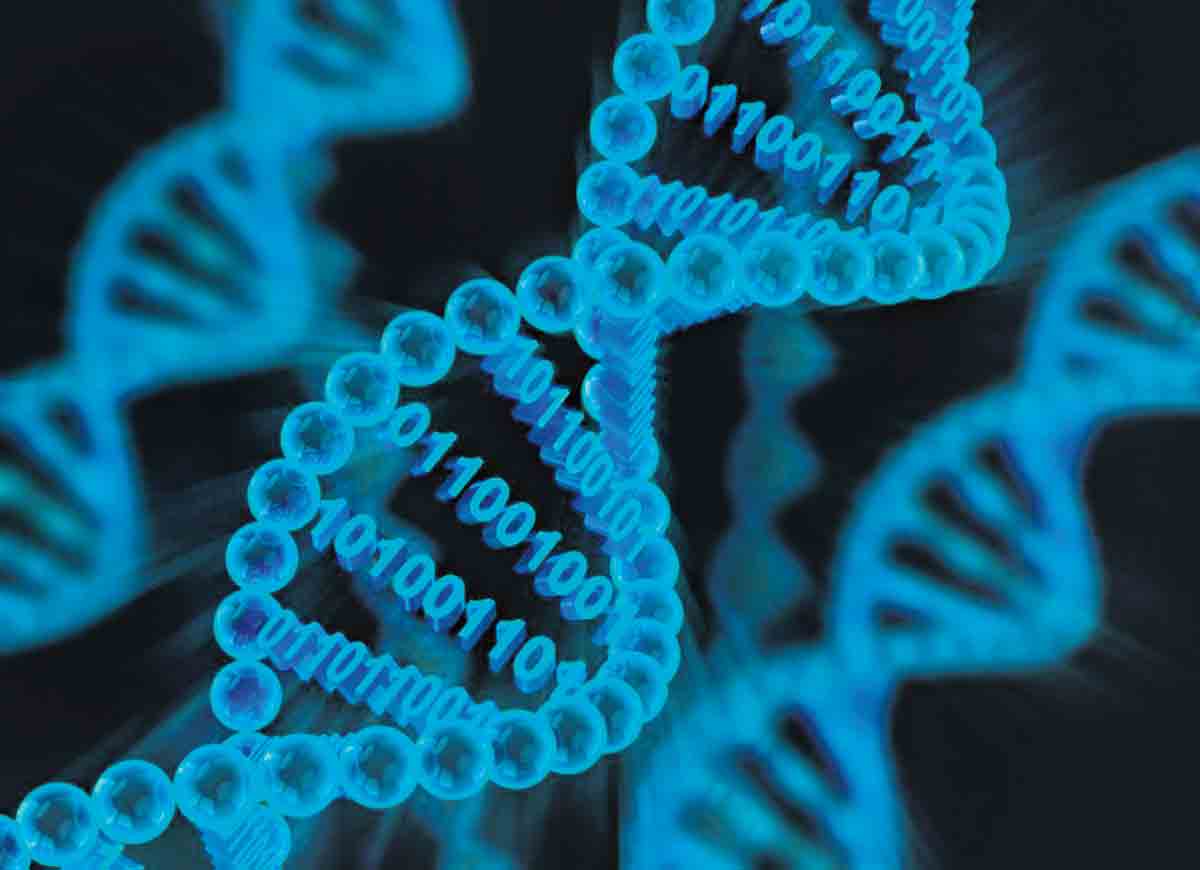
Genetic surveillance is the monitoring of individuals or groups based on their genetic body data in order to detect or solve a crime. Thus, while genetic data gathering began as a mode of documenting health and illness states of being in population, it evolved into something else altogether.
First, genetic profiling of the kind described above reinforces the datafication of the person. Genetic or DNA data has been defined by Europe’s General Data Protection Regulation (GDPR) as: “personal data relating to the inherited or acquired genetic characteristics of a natural person which give unique information about the physiology or the health of that natural person and which result, in particular, from an analysis of a biological sample from the natural person in question.”
Second, the technology no longer deals with the surface of the person – face, fingerprints, irises, gait etc – but dives down into what could be thought of as the essence of the individual, the DNA.
Third, it is not just individuals but their families and kin that are drawn into the surveillance network. When the state or a corporate body owns the DNA of a specific individual, this data can be used to engage in ‘familial searching’. In this, the surveillance can be extended to the biological relatives of people whose profiles are stored in the DNA database.
The government has just entered your skin, and that of your family’s.
There is of course another side to this datafication – the DNA profiles have helped find missing family members and reunite missing children with their parents: what one can think of as a humanitarian geneticisation of the world.
Biolegality
With ‘forensic DNA phenotyping’ (FDP) and ‘next generation sequencing’ (NGS), critics argue, we are looking at the ‘speculative generation of criminal suspects based on information provided by DNA profiles’. This marks the rise of the age of biolegality. Biolegality is a historical and political transformation of the very nature of citizenship and identity through the legitimisation of bio-data (the term no longer means what it used to!) as a mode of monitoring people.
Critiques of genetic surveillance call attention to the enormous possibilities of misuse and targeting of specific populations, as the Chinese example cited indicates. Such critiques often cite the GDPR which cautions in Article 9:
“Processing of personal data revealing racial or ethnic origin, political opinions, religious or philosophical beliefs, or trade union membership, and the processing of genetic data, biometric data for the purpose of uniquely identifying a natural person, data concerning health or data concerning a natural person’s sex life or sexual orientation shall be prohibited.”
The GDPR also calls upon its member states to “maintain or introduce further conditions, including limitations, with regard to the processing of genetic data, biometric data or data concerning health”.
Why is the rise of biolegality a matter of concern? Let us take one example of this move.
Collectivisation
With forensic DNA phenotype profiling, suppose the data produces a genetic identikit picture of the perpetrator as a “dark skinned, black eyes, curly-haired” individual. With familial searching, this profile could be used to focus attention on entire groups who have such traits – which effectively makes it a social sorting process. Familial searching is the speculative searches in criminal DNA databases for criminal suspects through partial matches with real/potential biological relatives of an individual whose DNA exists in the database.
That is, this social sorting creates not just an individual perpetrator but a perpetrator population. And this is the likely departure point for possible ethnic and racial discrimination because this technique can be easily used to reinforce dominant views about the so-called prevalence of criminality within certain families, races and social groups. Thus – to expand Benedict Anderson’s influential argument about ‘imagined communities’ – genetic profiling enables us to generate genetically imagined communities, belongings and behaviour as the search/surveillance moves outward from the individual to the family to the community and the race/ethnic group.
Biolegality has also gone transnational with processes like the Prüm decisions by the EU which “allows a Member State to query DNA, dactyloscopic and vehicle registration data in one or several other Member States’ national databases”, according to the EU’s website on Migration and Home Affairs.
DNA data is what Bruno Latour, the philosopher-anthropologist of science, called “immutable mobiles”: the data moves from nation to nation, database to database, even from particular to the universal, and yet remains stable because it has been standardised through specific scientific protocols. The collectivization of DNA data through genetic surveillance also means that the scientific community, more than ever, works with the criminal justice system across the world.
Our socio-technical imaginary now is almost entirely DNA-driven. One could say: it is in our genes.
(The author is Professor, Department of English, University of Hyderabad)
Now you can get handpicked stories from Telangana Today on Telegram everyday. Click the link to subscribe.
Click to follow Telangana Today Facebook page and Twitter .

Related News