Opinion: Bangladesh on the brink — India’s policy choices in Eastern challenge
Strategic patience, backed by calibrated leverage, remains India’s best option for navigating the Bangladesh crisis


By Brig Advitya Madan (retd)
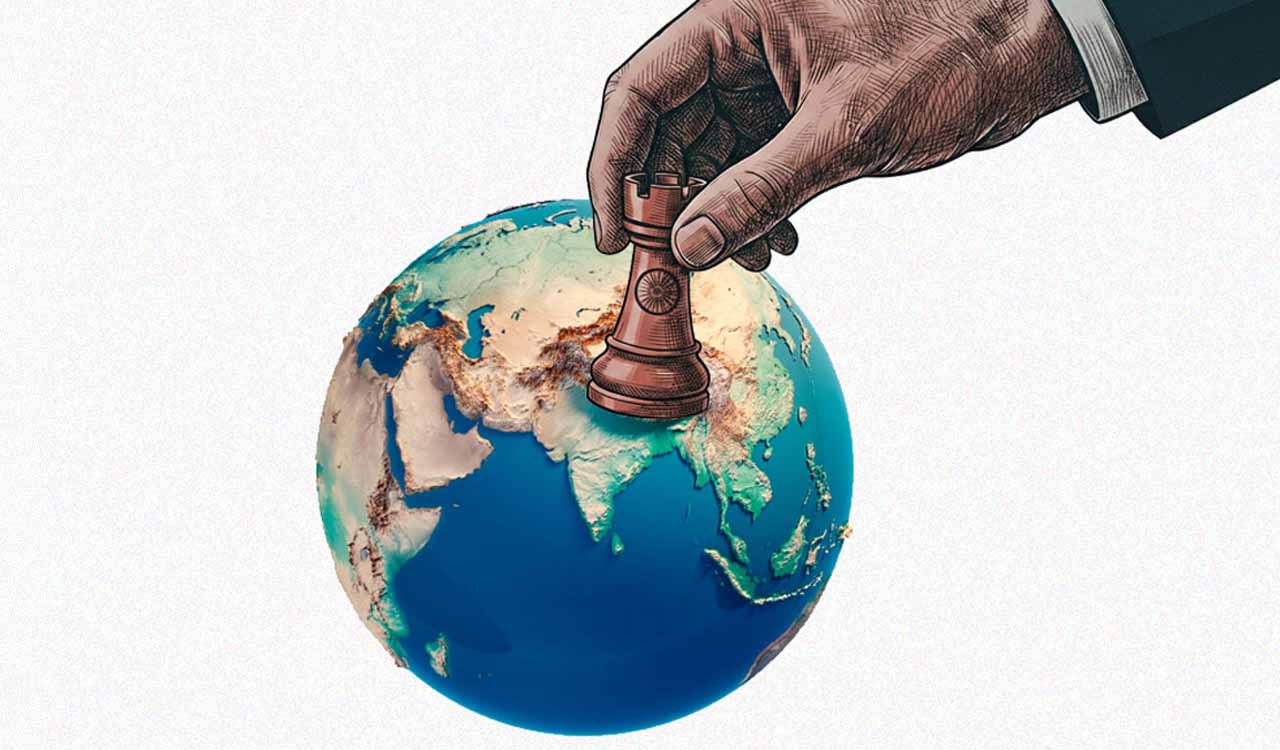
The rapidly deteriorating law-and-order situation in Bangladesh is no longer an internal affair confined to Dhaka’s domestic politics. It has begun to acquire clear regional and strategic dimensions, directly impinging on India’s security, diplomacy, and economic interests. For Indian policymakers, therefore, the challenge is not merely to react to episodic violence, but to carefully analyse the deeper causes of the current anarchy and evaluate calibrated policy options that protect India’s long-term interests without playing into the hands of hostile external actors.
Also Read
Spiral of Instability
Any serious analysis must begin with the immediate trigger that pushed Bangladesh into the current spiral of instability: the murder of Osman Hadi. In the aftermath of the killing, a section of Islamist groups quickly propagated a false and incendiary narrative — without presenting a shred of evidence — that Hadi’s killers had escaped to India. This misinformation campaign was further fuelled by Pakistan’s Inter-Services Intelligence (ISI), clearly aimed at maligning India and externalising Bangladesh’s internal crisis.
However, subsequent developments have decisively punctured this narrative. Hadi’s own brother has publicly stated that there is a high probability the murder was orchestrated by the Yunus government itself to create grounds for postponing elections. Other credible sources suggest that Faisal Karim Masood is the suspected killer, who continues to hide within Bangladesh.
Yet another strand of reporting indicates that a Lashkar-e-Taiba (LeT) operative has been arrested in connection with the murder. What is clear is that the attempt to blame India was a deliberate diversion from uncomfortable domestic truths. If the Hadi murder exposed political manipulation, the brutal killing of a Hindu, Dipu Chandra Das, laid bare the deep rot within Bangladesh’s governance and security apparatus. This incident, too, was cynically misrepresented. It began as a minor altercation between two groups of factory workers, but Islamist radicals quickly spun a fabricated narrative claiming that Dipu had insulted Prophet Mohammad.
The most disturbing aspect was not merely the mob violence that followed, but the role of the state itself. Bangladesh police reportedly handed Dipu over to the mob and then stood by as mute spectators to his lynching. This abdication of responsibility is a profound moral and institutional failure. For India, which shares deep civilisational, historical, and people-to-people ties with Bangladesh, such targeted violence against minorities is not just unacceptable — it is a serious red flag with regional implications.
Geopolitical Context
To understand why Bangladesh has descended into this phase of disorder, one must look beyond individual incidents and examine the geopolitical context since August 2024. Pakistan and China have systematically exploited Bangladesh’s political fragility to expand their influence. The pattern is neither coincidental nor subtle. In January 2025 alone, senior ISI officers and Pakistani trade delegations visited Bangladesh separately.
India must evaluate policy options that protect its long-term interests without playing into the hands of hostile external actors
On April 17, 2025, Pakistan’s foreign secretary travelled to Dhaka to revive trade, tourism, and cultural ties. Barely weeks earlier, on March 26, Muhammad Yunus had visited China to deepen foreign policy coordination. The most telling development came on June 19, 2025, when the foreign secretaries of Pakistan, China, and Bangladesh held a trilateral meeting in Kunming.
That same month, Bangladesh Nationalist Party (BNP) delegates also visited China. The sequence continued with Pakistan’s commerce minister visiting Bangladesh on August 21, 2025, followed by Pakistan’s deputy prime minister and foreign minister arriving on August 23 to sign multiple memoranda of understanding. For those Bangladeshi journalists who still question evidence of collusion with Pakistan’s ISI and China, the record speaks for itself.
These external engagements cannot be separated from Bangladesh’s internal political paralysis. From the very beginning, Yunus has appeared unable — or unwilling — to exercise effective control, while consistently seeking to delay elections. This must be viewed alongside the provocative statement by Pakistan’s Army Chief, AsimMunir, who openly declared that India would be attacked from the eastern direction.
Simultaneously, Bangladesh’s media landscape has come under unprecedented pressure, with journalists and media houses operating under constant threat. The underlying objective appears clear: to create conditions that make elections, scheduled for February 12, 2026, impossible to hold.
For the first time since 1971, Jamaat-e-Islami is wielding disproportionate influence over Bangladesh’s institutions without contesting elections. Unsurprisingly, it has every incentive to prolong the interim arrangement and further consolidate its power by postponing democratic processes.
Meanwhile, the return of Tarique Rahman, son of former prime minister Khaleda Zia, on December 25, 2025, after 18 years in exile, is a significant political development. The BNP remains the largest and most organised party at the grassroots level. Ultimately, only free, fair, and inclusive elections can restore political legitimacy and economic stability in Bangladesh, whose economy is already under severe stress.
Importantly, public sentiment should not be ignored. Surveys indicate that nearly 70 per cent of Bangladeshis want the Awami League to participate in elections, irrespective of whether they intend to vote for it. This underscores a broader desire for pluralism and democratic normalcy, rather than governance by exclusion and fear.
India’s Options
Against this backdrop, India faces a complex menu of policy options. Any response must be unemotional, deliberate, and strategically sequenced. India could consider cancelling its budgetary allocation of Rs 120 crore to Bangladesh, noting that this is not a one-off cash grant but part of ongoing cooperation.
New Delhi could recall Indian citizens from Bangladesh, curtail the supply of 1,200 megawatts of electricity transmitted through cross-border lines, or restrict cotton exports —currently at 5.7 lakh tonnes annually — which are critical to Bangladesh’s textile and garment sector. Diplomatic steps, including scaling down or even closing the High Commission, and tightening trade, are also available. Bilateral trade stands at $13.5 billion, with India exporting $11.5 billion worth of goods and importing only $2 billion, resulting in a $10 billion trade surplus in India’s favour.
However, the key question is not what India can do, but what it should do. Each action must be assessed for how effectively Pakistan and China could exploit it to their advantage. A blunt, punitive approach risks pushing Bangladesh further into the arms of hostile powers. At the same time, inaction would embolden anti-India forces and normalise impunity.
India must, therefore, walk a fine line — signalling firm red lines on security and minority protection, while keeping channels open for engagement with any legitimately elected government. Above all, New Delhi must factor in the growing trilateral nexus between Pakistan, China, and Bangladesh, which threatens to exacerbate border management challenges and fuel proxy conflict in India’s eastern theatre. Strategic patience, backed by calibrated leverage, remains India’s best option in navigating this emerging challenge.
(The author is a retired Army officer)

Related News