Editorial: Bangladesh at an inflection point
By sending External Affairs Minister S Jaishankar to Khaleda Zia’s funeral, India signals cautious outreach to Bangladesh’s emerging political order
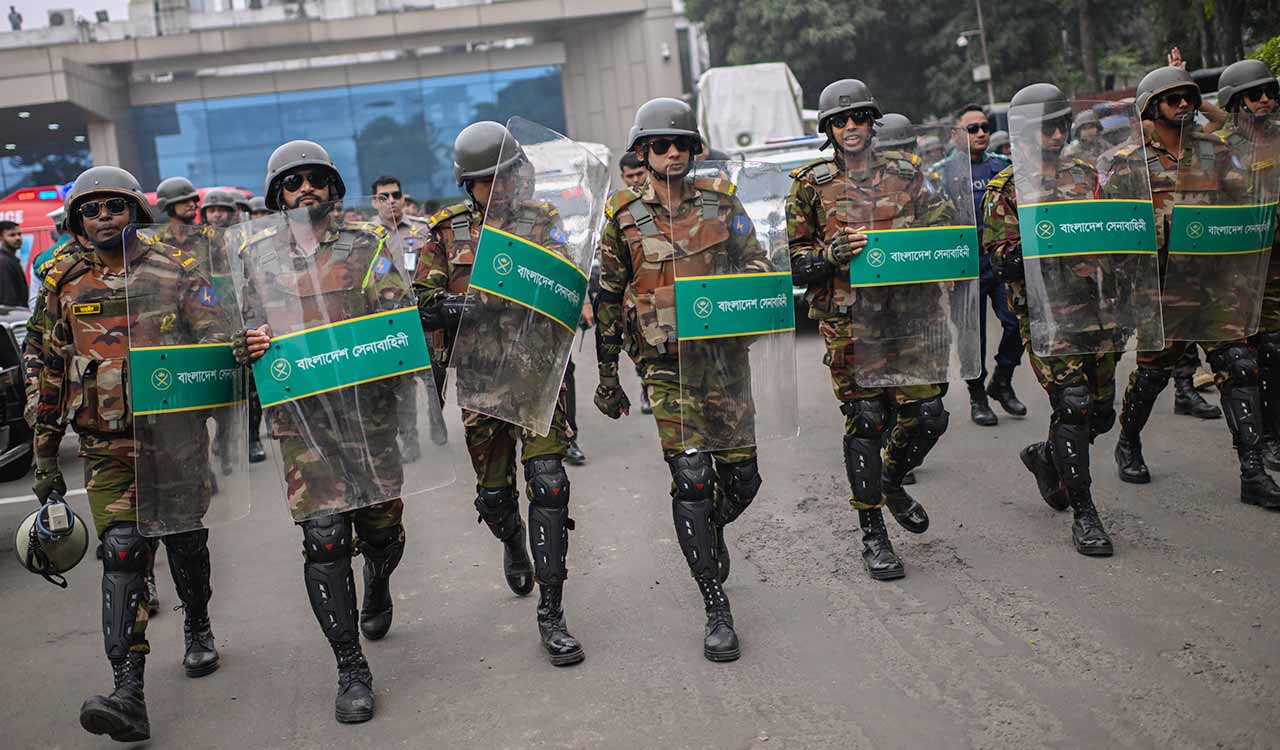


Carrying the burden of a turbulent history since its birth, Bangladesh is now at an inflection point. The death of Khaleda Zia, the former Prime Minister who played a key role in the country’s politics for over three decades, will cast a shadow on the national elections, slated for February 12. For the first time, neither of the rival begums — Zia and the ousted Prime Minister Sheikh Hasina, now in exile in India — will be around for the elections, which are being held amid prolonged political turmoil and the rise of Islamist hardliners. However, their political legacies will shape the future of a nation that stands on the precipice of major transformation. Khaleda Zia’s son and acting chairman of the Bangladesh Nationalist Party (BNP), Tarique Rahman, who returned to the country last week from his self-imposed exile in London for 17 years, will lead the party to the polls. It is a foregone conclusion that he will take over the reins of the country because Hasina’s Awami League party has been barred from contesting the elections. Given the BNP’s cosy political equation with extremist Islamist groups in the past, it remains to be seen how Rahman would calibrate his party’s stand on the issue, as it would determine the upcoming regime’s policy towards India. It was during Begum Zia’s tenure as Prime Minister between 2001 and 2006 that anti-India terrorist outfits and insurgent groups targeting India’s Northeast found political space and legitimacy in Bangladesh. The BNP had joined hands with the Islamist Jamaat-e-Islami.
This period was marked by strained bilateral ties, a sharp contrast to the warming of relations after Hasina’s return to power in 2008, when Dhaka cracked down on such groups. After the ouster of Hasina, following massive student protests and the subsequent strife, Dhaka’s relations with New Delhi have nosedived. Systematic attacks on minorities and the growing anti-India rhetoric have further worsened the situation. The recent lynching of a Hindu worker, Dipu Chandra Das, in Mymensingh had raised serious concerns over the safety of minorities in the country. The incident was a grim indicator of how rapidly the country is sliding into mob rule under the watch of an unelected interim dispensation. Over 2,900 incidents of violence against minorities have been documented by independent sources during the tenure of the interim government. The unfolding developments in Bangladesh are bound to have security implications for India. By sending External Affairs Minister S Jaishankar to attend Khaleda Zia’s funeral, New Delhi signalled an outreach to the new political establishment in Dhaka. A stable and peaceful Bangladesh is in the best interests of India. Post-poll developments and policies of the new regime in Bangladesh would be keenly watched by New Delhi before resetting the terms of bilateral engagement. In the meantime, India needs to keep the communication channels open.
Also Read

Related News