Opinion: Banning plastic only solution
Given the seriousness of the problem, perhaps the only solution will be to stop production of new unnecessary plastics


By Andrea Cocchini
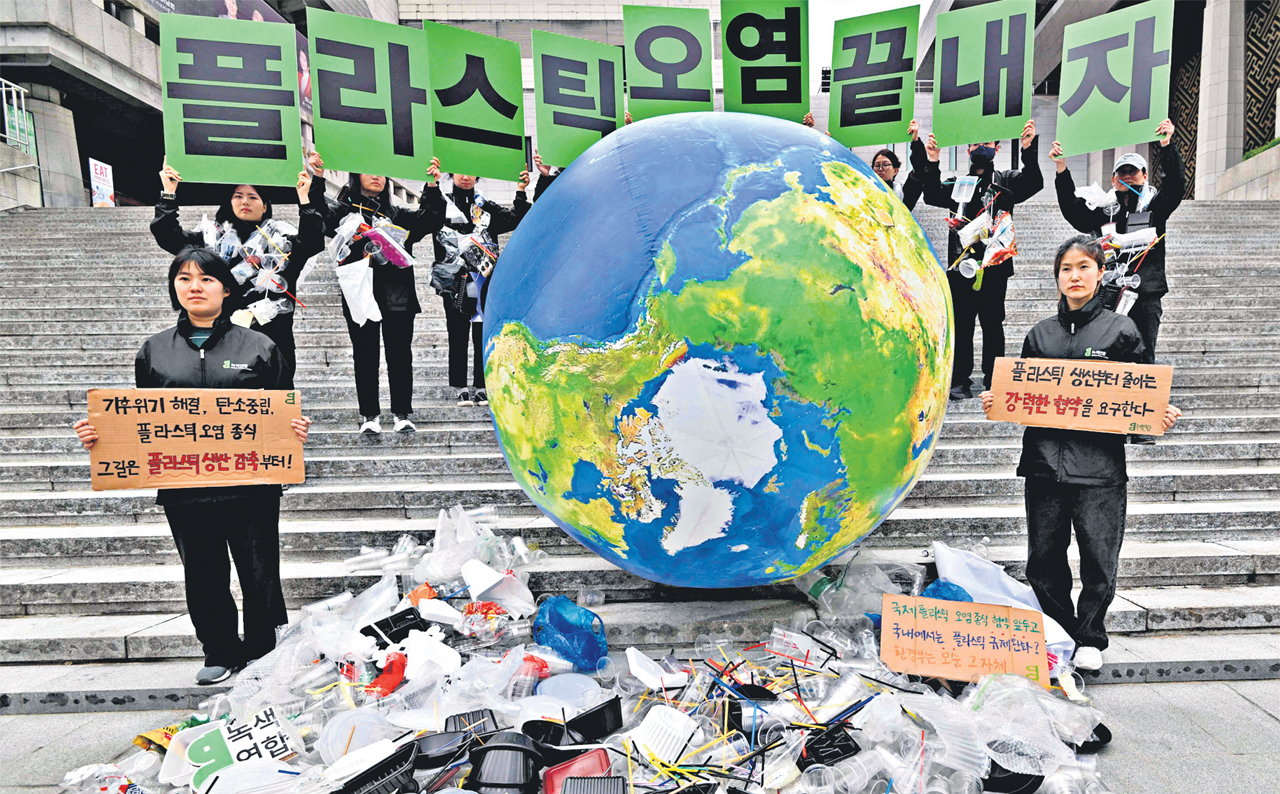
On April 22, like every year since 1970, International Earth Day was celebrated, the most important day dedicated to the protection of the environment. On this occasion, the Earth Day organisation has chosen the motto “planet versus plastic”. The movement’s aspiration is to “reduce plastic production by 60% between now and 2040 to build a plastic-free future for future generations.”
During this year’s Earth Day, all initiatives focused on informing and raising public awareness about the harm that plastic pollution poses to human health, biodiversity and the environment and about the measures necessary to tackle the problem.
Among them, Earth Day mentions the need to urgently promote the adoption of the future treaty against plastic, included in the United Nations Environment Program and which is being worked on with states since 2022 in the Intergovernmental Negotiation Committee on Plastic Pollution (INC). Regardless of whether a treaty is expected to be finalised within 2024, it is very likely that the agreement that results from the negotiations will not live up to the ambitious objective proposed by the promoters of Earth Day.
590 mt plastics in 2050
Global production of thermoplastics is expected to reach 445.25 million tonnes in 2025 and annual production volumes will continue to increase in the coming decades to reach approximately 590 million tonnes in 2050. This would represent an increase of more than 30% with respect to 2025.
These data show the inadequacy of current recycling systems, as well as alternatives, apparently more sustainable, such as biodegradable plastics or bioplastics.
Of course, the future treaty cannot be expected to regulate and resolve the multiple challenges – technical, economic and social – that all phases of the life of plastics entail (the extraction of raw materials, the design of the products, their consumption, the management and cross-border transfer of plastic waste).
However, given the seriousness and urgency of the problem, it seems that one (perhaps the only?) solution still possible to reverse the direction that the aforementioned figures are taking us would be the inclusion in the new treaty of a ban on states parties from producing new unnecessary plastics.
However, after the third round of the Intergovernmental Negotiation Committee on Plastic Pollution negotiations (of the five planned), the feeling is that state delegates are not really considering this possibility, not even in the medium term.
New Negotiations
At the time of writing, we have a second draft treaty that will be the reference document for the negotiations of the fourth session, taking place from April 21 to 30 in Ottawa, Canada. The document includes the different positions of national representatives during the third round of negotiations that took place in Nairobi (Kenya), in November 2023.
This second draft covers a wide range of alternatives, sometimes diametrically opposed. On the one hand, it maintains the proposal to prevent, progressively reduce and eliminate future plastic pollution by 2040, thus reflecting the positions of the countries most interested in eradicating the problem, such as those gathered in the Alliance of Small Island States.
On the other hand, in agreement with states that propose focusing more on the rational management of plastic waste and on improving the design of plastic to make it more recyclable (such as those of the Cooperation Council for the Arab States of the Gulf ), the draft suggests excluding from the scope of application of the future treaty the extraction and transformation phases of the raw materials necessary for the production of plastics (essentially, crude oil and gas).
Likewise, in line with the positions of countries such as, for example, Russia, the draft proposes omitting the phases related to the production of virgin polymers, because they do not generate – strictly speaking – plastic pollution and the extracted raw materials could still be destined for the production of other non-plastic materials.
However, excluding raw materials, such as hydrocarbons, and intermediate products, such as virgin plastic polymers, from its application because they are not technically finished plastic products would seriously undermine the main objective of the agreement: ending plastic pollution and creating an efficient circular economy also for plastics.
Medical, Scientific Use
If the negotiators had the same aspiration as the Earth Day promoters to reduce plastic production by 60% by 2040, the treaty they are negotiating would have to be more legally daring.
The agreement should introduce binding legal rules that, by giving concrete action to basic principles of international environmental law (such as due diligence, precaution and prevention), impose a progressive, but now unavoidable, ban on the production of virgin plastics and that exempt, obviously, plastics necessary in the medical field and for scientific research.
If we want to stop ingesting the equivalent of a credit card per week and avoid taking a dip in seas that by 2050 could have more plastic than fish, the legal solution is to ban this harmful material once and for all, for us and the planet.

(The author is Professor of Public International Law, University of Navarra, Spain. theconversation.com)

Related News