Opinion: Blend for better learning
The purpose of digitisation should be to supplement the current teaching process rather than to replace it entirely.


By Dr Siya Seth
Hyderabad: The tectonic shift toward digitisation over the past decade has brought the future closer. Moreover, the combination of being confined to our homes and socially isolated as a result of the pandemic compelled us to rely on technology more than ever.
Also Read
Many industries have been quick to adapt to the new norm, but the education sector, which was already heavily reliant on technology, needed to accelerate its digital adoption to pave the way for blended learning. In light of the unpredictability of the times, technology-enhanced learning solutions will help future-proof the education space, making it more relevant for students of all ages.
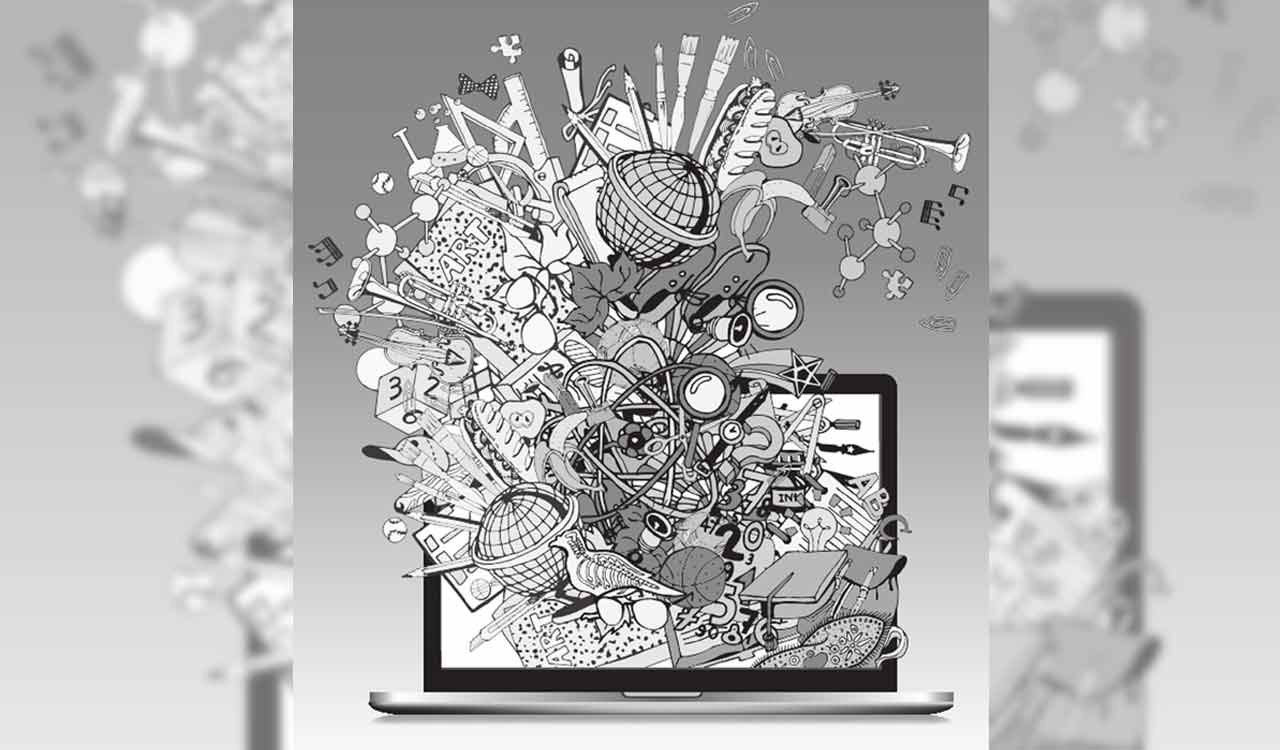
Blended learning, or a combination of physical and digital learning, has become the “New Essential”. It combines the efficacy of digital intervention with the effectiveness of traditional teaching techniques to provide students with an engaging learning environment. And now that the term is so prevalent, it is time to decipher the significance and future of integrated or blended learning.
Experiential Learning
Based on the central philosophy of ‘Learning by Doing,’ experiential learning has supplanted memorisation. Whereas rote learning is beneficial for simple concepts and situations where spaced repetition can occur, visual aids make learning difficult concepts extremely simple and eliminate the need to repeatedly review concepts.
In less than a week, the retention rate of students who utilised the immersive learning approach increased 18%, according to a study conducted by Practically. Now that parents and children recognise the limitations of repetitive or rote learning, they are exploring scientific methods to make the learning process enjoyable and worthwhile. In addition to providing an accurate assessment of a student’s strengths and weaknesses, modern tools facilitate a stronger connection between students and teachers.
Long hours of studying repetitive concepts or staring blankly at the screen or a classroom study board can be taxing for both teachers and students. Blended learning can help students and teachers break the ice more quickly and infuse classrooms with energy. Math and science, for example, have a reputation for being difficult and dull, but blended learning can simplify concepts for all types of students.
Inclusive Solutions
Blended learning is cost-effective and promotes students’ self-learning skills. To provide a comprehensive education, schools must invest in and prepare teachers for blended learning success. In addition, students must develop the mindset of a co-learner rather than relying solely on the teacher to impart knowledge.
To achieve 100 per cent literacy, the implementation of the National Education Policy (NEP 2020) also seeks to internationalise indigenous knowledge through digitalised course materials. Modern courses such as Artificial Intelligence, Machine Learning, Gaming, and Robotics provide learners with vast opportunities to advance their careers in accordance with international standards.
As people spend more time at home, schools have rapidly adopted e-learning to capitalise on the rising number of online enrollments. The University Grants Commission (UGC) introduced the blended mode of teaching and learning in universities and colleges in May 2021 in an effort to make the learning process more engaging and interesting for aspirants. To keep up with the ever-evolving technology, the digital format will assist the younger generation in skilling, upskilling, and reskilling according to industry requirements.
Right Investment
Despite the fact that schools and educational institutions recognise the significance of integrated learning, it is imperative that they select the most appropriate product and solution. The purpose of digitisation is to supplement the current teaching process rather than to replace it entirely. It is imperative to choose a modern solution that provides teachers with a comprehensive academic toolkit to make their classrooms engaging and interactive.
An experiential learning product enriched with immersive content, games, and simulations, among others, will bring much-needed efficiency to the teaching-learning process and positively influence learning outcomes.
Blended learning is necessary to foster innovation through a unified learning system. Instead of attempting to eradicate the classroom culture, the EdTech industry must concentrate on reducing the burden on teachers and making classes more interactive by incorporating new challenges, quizzes, and simulations.
It is essential to foster an atmosphere in which students feel free to participate actively. Students are expected to be invested in their experience in order to reflect on their learning and derive insights from it.
Digital literacy will instil the spirit of collaboration, allowing participants to work together and engage in discussion, thereby accelerating the realisation of Digital India’s vision. The coming year will be an exciting year with its own set of challenges; more than ever before, the education landscape will shift toward modern learning and teaching strategies. It is reasonable to conclude that those who are unable to adopt blended learning may fall significantly behind the curve.


Related News