Opinion: Hormuz is open, but far from normal
Uncertainty should not be mistaken for normality: an open Hormuz can still impose substantial economic costs


By Brig Advitya Madan
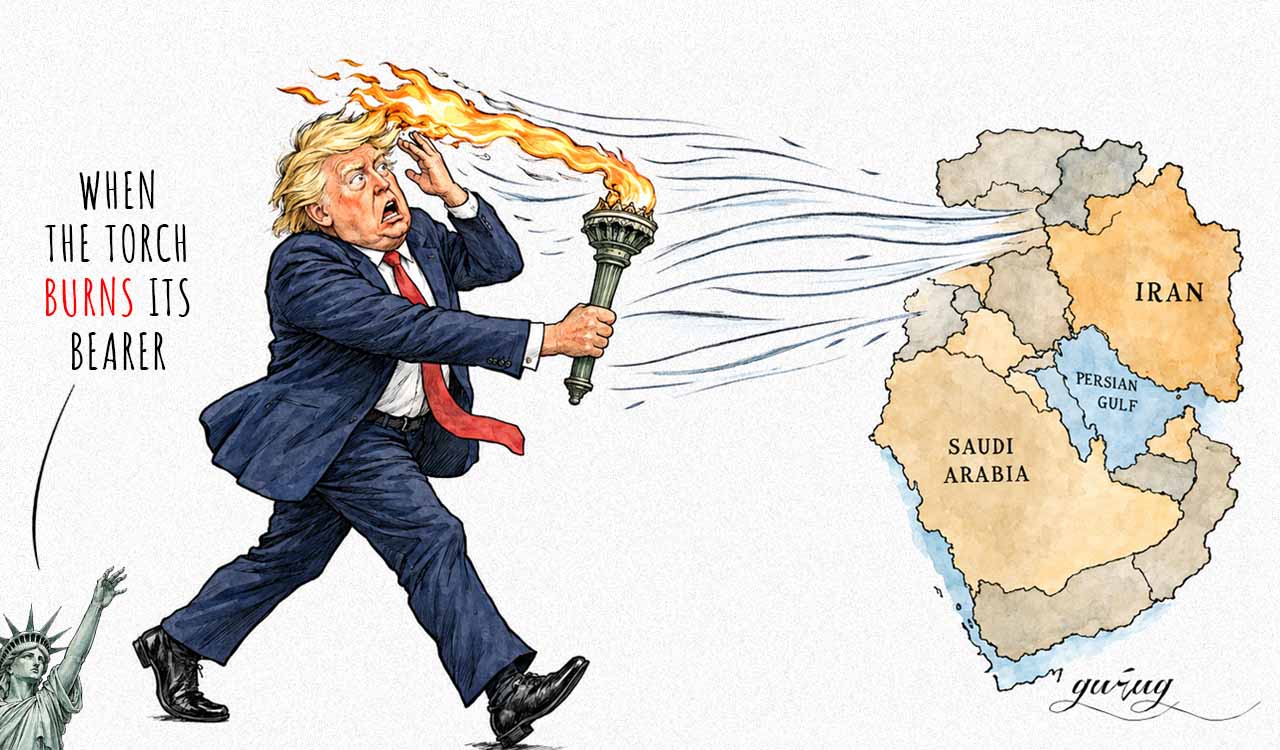
The Strait of Hormuz is neither closed nor functioning normally. That distinction has become increasingly important as Washington and Tehran wage a parallel battle over what the strait’s shipping data actually means.
Also Read
On September 1, the United States escorted about 40 commercial vessels carrying an estimated 18 million barrels of oil through Hormuz. President Donald Trump subsequently claimed that oil volumes were “back” at 18 million barrels a day, against a pre-war average of about 20 million. But a single wartime peak is not the same as restored normality.
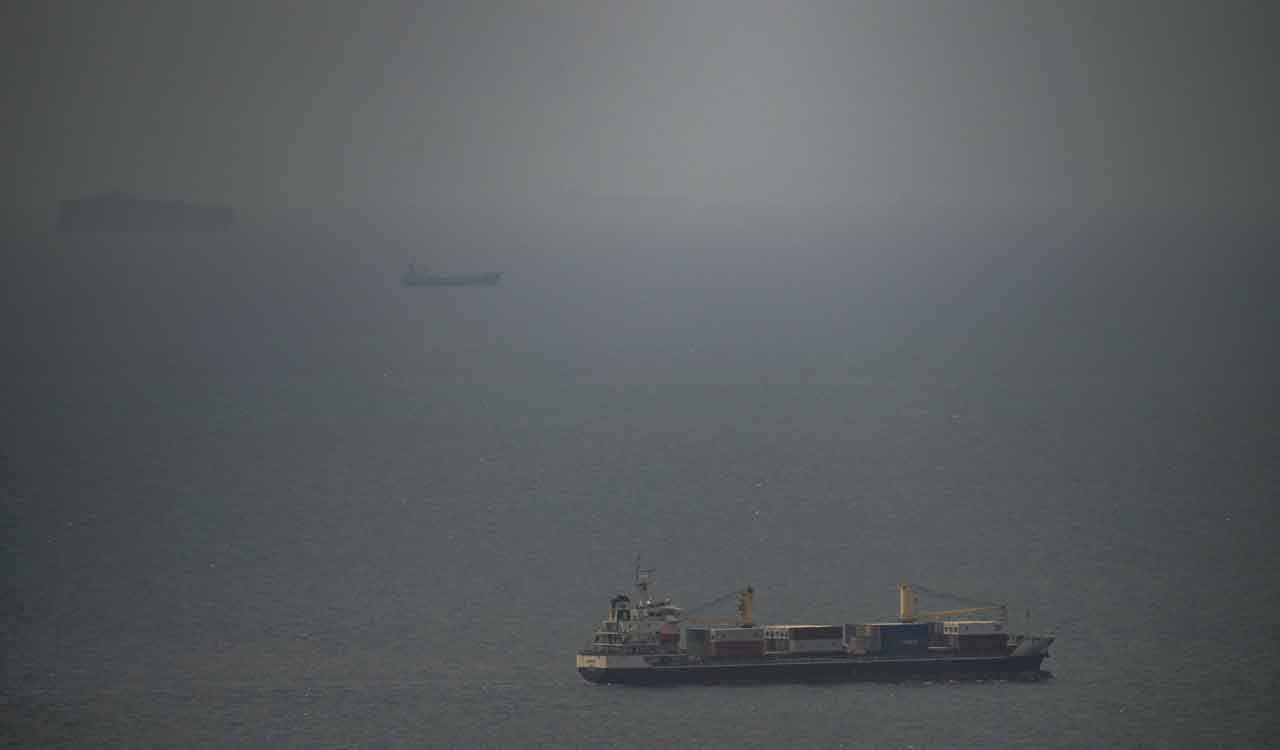
The subsequent data tells a different story. Kpler recorded only seven commodity vessels crossing on September 7, down from eight the previous day. By September 17, just three commercial vessels crossed. Over the weekend of September 19-20, only 17 commodity vessels transited the strait, compared with a pre-war average of about 125 vessels a day.
These figures are imperfect because some ships have switched off their Automatic Identification System transponders, but the scale of the decline is difficult to reconcile with the suggestion that Hormuz has returned to normal.
Competing Narratives
This is where the competing narratives become revealing. The Trump administration has an obvious incentive to demonstrate that its costly military effort to escort tankers is restoring freedom of navigation. Iran, for its part, has an equally strong interest in maintaining that it retains leverage over the strait. The disagreement is therefore not simply about ships and barrels. It is also about strategic signalling.
The most useful indicator is what the market and shipping industry are actually doing. Gulf oil exports have remained well below pre-war levels despite the emergence of so-called dark crossings. Vessels are increasingly sailing with transponders switched off or using other methods that make their movements difficult to track. Ship-to-ship transfers, including offshore transfers near Oman, have also become an important mechanism for moving cargo while reducing exposure to the most vulnerable sections of the route.
Falling vessel traffic, dark shipping, and higher insurance costs point to a deeper shift: in a geopolitical crisis, resilience may depend on having several imperfect alternatives rather than one efficient route
This makes the September 1 figure important, but not conclusive. It may have captured an exceptional day rather than an established trend. Kpler’s subsequent observations show how quickly traffic can fall back. Vortexa, another major shipping-data provider, has likewise recorded only two days since February when flows exceeded 16 million barrels a day. The available evidence therefore points to a strait that remains usable, but under conditions very different from those before the war.
‘Shadow’ Shipping
The difficulty of measuring traffic has itself become part of the problem. Several tankers are crossing with their transponders switched off to reduce the risk of becoming targets. Some vessels have reportedly manipulated their radio signals to obscure their locations. Others are moving at night, when satellite visibility is more limited. Cargo can change hands before reaching the high seas through ship-to-ship transfers, after which it may continue under another flag or on another vessel. Such “shadow” shipping makes conventional estimates of traffic increasingly uncertain.
Yet uncertainty should not be mistaken for normality. A waterway does not have to be formally closed to impose a substantial economic cost. War-risk insurance, tanker availability, freight rates, routing uncertainty and the possibility of attack can together achieve much of the economic effect of a blockade without an official closure.
The Gulf has, meanwhile, been trying to compensate for the disruption. Saudi Arabia has pushed more crude through its East-West pipeline and exported additional volumes from Red Sea ports. The UAE has also routed crude through its pipeline to Fujairah. These alternatives, however, have limited capacity and cannot simply reproduce the scale and flexibility of Hormuz. Recent attacks on ships and infrastructure have further complicated these arrangements.
Oil prices provide another indication of the market’s uncertainty, although they cannot by themselves establish the actual volume moving through Hormuz. Brent crude briefly returned above $100 a barrel as the conflict intensified. Even where prices subsequently eased, shipping and insurance costs remained elevated. The market was, therefore, pricing not simply the quantity of oil being moved, but the risk attached to moving it.
The consequences extend beyond energy. Prolonged maritime disruption is beginning to reshape the economic geography of the region by reviving land-based alternatives. Pakistan has reopened six land crossings with Iran to deal with a backlog of about 3,000 Iran-bound containers stranded at Karachi. The UAE and Oman have eased customs procedures, while Saudi Arabia has simplified duties on goods bound for other Gulf countries.
Revival of Land Routes
Rail networks are also acquiring renewed importance. Iran’s rail links with China through Turkmenistan have seen an increase in activity. Elsewhere, discussions about rail connectivity from Kuwait to Oman and between Turkey and Saudi Arabia point towards a broader effort to create alternative trade corridors linking the Gulf to Europe through Jordan and Syria. Pipelines from Iraq towards the Mediterranean are also being rebuilt or reconsidered.
There is a historical irony here. In 1507, the Portuguese capture of Hormuz helped consolidate maritime power in the Gulf, while the emergence of new sea routes gradually displaced older overland trading networks. Today, prolonged insecurity at sea is encouraging the partial revival of those land routes. The old Silk Road logic is reappearing in a very different strategic environment.
The same search for redundancy extends beyond trade and energy. Gulf States have linked their electricity grids and are now examining deeper integration of water supplies after attacks on desalination infrastructure. Digital connectivity is also being reassessed. Much of the region’s internet traffic has traditionally depended on fibre-optic cables beneath the Red Sea, but attacks and damage have encouraged countries to seek alternative routes.
None of these alternatives can replace maritime trade. Moving goods by sea remains roughly six times cheaper than rail, 20 times cheaper than road and hundreds of times cheaper than air. But the strategic value of an alternative lies precisely in the fact that it does not have to be cheaper in normal times. It has to remain available when the cheapest route becomes unreliable.
That is the larger significance of the Hormuz crisis for India. The issue is not simply whether the strait is technically open on a particular day or whether Washington or Tehran has the more favourable shipping statistics. The bigger change is that an open strait can no longer automatically be assumed to be a reliable strait.
The conflict has consequently accelerated a regional search for redundancy in energy, transport, infrastructure and digital connectivity. It has also compelled Gulf and Middle Eastern states to cooperate more closely on trade and infrastructure.
Maritime routes will remain dominant because of their economic advantages. But the strategic lesson is increasingly clear: in an era of geopolitical disruption, resilience may depend less on having one efficient route than on having several imperfect alternatives.

(The author commanded 15 Punjab in Lebanon under United Nations Flag, 27 Sector as DIG in Churachandpur and was Brigadier Operational Logistics in HQ Western Command. He is currently an analyst on geopolitics, international and defence affairs)

Related News