Opinion: Making millets meaningful
Millets can play a pivotal role in enhancing farmers’ income and help in achieving sustainable development goals


By Tamali Chakraborty, Jyotishmita Kalita, Barun Kumar Thakur
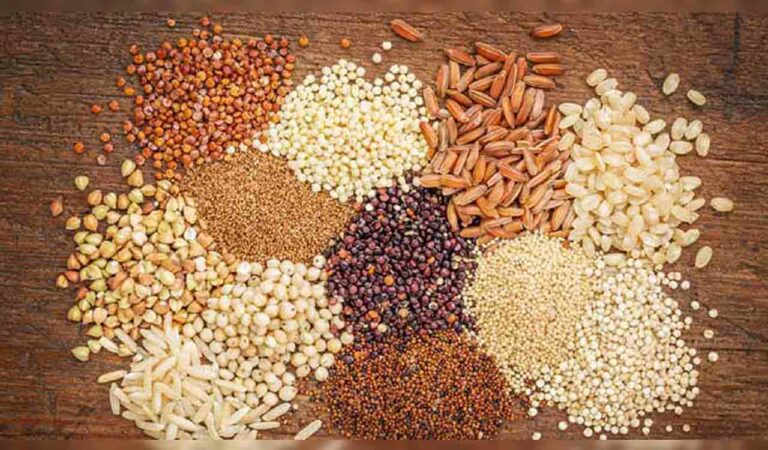
Millets, small-seeded kharif grains, are mainly cultivated in developing countries of Asia and Africa as a subsistence crop for local consumption. Jowar, bajra, ragi, kangni etc are some of the major millet crops grown in India. The usage and production of the ancient food of India (dating back to Indus Valley Civilisation, around 3000BC), millets declined as an after-effect of the Green Revolution’s emphasis in the 1960s.
Millets became an inferior good as people reduced their consumption with an increase in their income. However, in the union Budget 2023, the importance of millets was highlighted. Also, the recent policies of the government have enhanced the demand and it is interesting to observe the transformation of millet from an inferior good to a normal good as people started consuming more millet with an increase in their income.
Affordable Option
The National Agricultural Policy 2000 prioritised an increase in agricultural yield and output to keep up with the growing global demand for food to tackle the food security issue. The Integrated Cereals Development Programme (ICDP), a centrally sponsored scheme was implemented for millets in conjunction with increasing wheat and rice output. To increase cultivable area, productivity and output, the government of India introduced the Intensive Millets Promotion Initiative (INSIMP) in 2011-12, and later in 2015 changed it to NFSM-Coarse Cereals. The National Food Security Act, 2013, which includes subsidies for coarse grains in addition to rice and wheat, went into force in less than a year, in 2013.
The Centre announced 2018 as the ‘National Year for Millets’ to promote millets for nutrition security. The year 2023 was declared the ‘International Year of Millet’ by the Food and Agriculture Organisation (FAO) following India’s proposal and stated “As the global agrifood systems face challenges to feed an ever-growing global population, resilient cereals like millets provide an affordable and nutritious option and efforts need to be scaled up to promote their cultivation. Millet production can ensure sustainable agriculture, and environmental resilience and improve nutrition”.
Poverty, Malnutrition
The Global Hunger Index 2023 ranked India very poorly at 111 out of 125 countries. As millets are enriched with protein, calcium, iron, dietary fibre, micronutrients and phytochemicals with nutraceutical properties, they can be a good way to tackle malnutrition and hunger. Many studies have pointed out that millets are nutritionally superior to staple foods of rice and wheat, and the calcium content is ten times richer in ragi than traditional foods like rice.
Moreover, it also has a low glycemic index (GI), which lowers blood sugar levels. A recent study on the effects of a millet diet on lipid profile suggested that it lowers hyperlipidemia and increases levels of high-density lipoprotein cholesterol. Without changing regular eating habits, daily millet intake significantly decreased blood pressure and body mass index.
The pervasive influence of millet consumption on tackling the issue of undernutrition in India is undeniable. Undernutrition indicates the insufficient consumption of nutrients for an individual to lead a healthy life. Consuming enough wheat and rice won’t keep you healthy as there is a significant ‘hidden hunger’ in South Asia and India. The Global Food Policy Report 2023 stated that the number of undernourished people worldwide climbed to 768 million in 2021, up 34.2% from 572 million estimated in 2014. To tackle this, a diversified diet is required.
Enhancing Income
The Finance Minister during the Budget 2023-24 stated India was among the world’s top producers and second-largest exporter of millet. There is a chance to open up significant global markets for Indian millets because India is leading the way in marketing. India wants to increase the demand for millets both domestically and internationally.
As per the Food and Agricultural Organisation (FAO) of the United Nations, India’s share was 12.49 million tonnes mt out of 30.464 mt in 2020. The major millets producing States are Maharashtra, Uttar Pradesh, Rajasthan, Karnataka, Haryana, Gujarat, Tamil Nadu, Andhra Pradesh, Madhya Pradesh and Uttarakhand. During 2020-21, these ten States together accounted for around 98 per cent of the millet production in India. Among these, six States namely Rajasthan, Karnataka, Haryana, Maharashtra, Uttar Pradesh and Gujarat account for more than 83 per cent share in production.
Moreover, parallelly, it can be easily observed, the growth in quantitative export of millets over the years, particularly after 2018 was declared the ‘National Year for Millets’. In 2018-19, India exported $77.93 million worth of millets to the world. In 2019-20, 2020-21 and 2021-22, it reduced to $59.41 million, $58.81 million and $62.95 million respectively owing to Covid. However, it bounced back and in 2022-2023, India exported $75.43 million worth of millets to the world.
According to the Agricultural and Processed Food Products Export Development Authority (APEDA), India accounts for 20% of the world”s millet production. It contributes to an astounding 80% of the millet produced in Asia. It has suggested that the UN proclaim a global year of millet. The main goals of the International Year of Millets are to increase knowledge of the nutritional benefits of millets and how they might help end food insecurity and inequality.
Impact on Sustainability Millets are sustainable crops as they have huge ecological benefits. They require lesser water and agricultural inputs compared to wheat and rice, and also help in the reduction of carbon footprint. Millet can be grown in dry areas such as in temperate, subtropical and tropical regions. According to ICRISAT, a single millet plant of any variety needs nearly 2.5 times less water required by one rice plant. These crops are fairly resistant to diseases and pests. This resilience can contribute to price stability, reducing the vulnerability of farmers to fluctuations in commodity prices. The lesser input requirements can contribute to stable or lower production costs, potentially affecting market prices and ensuring better returns for farmers.
Thus, millet production can play a paramount role in reducing economic problems such as reducing poverty and malnutrition. It can also help in enhancing income generation among small farmers, achieving sustainable development goals and reducing hunger globally.
(Dr Tamali Chakraborty is Assistant Professor, Indian Institute of Management Visakhapatnam. Jyotishmita Kalita is studying at University of Hyderabad. Dr Barun Kumar Thakur is Associate Professor, Department of Economics, FLAME University, Pune. Views are personal)

Related News
-

Eight killed, 17 seriously injured as minibus falls into ditch on Delhi-Mumbai Expressway in Rajasthan’s Kota
-
Tamil Nadu lorry driver arrested in Mancherial constable hit-and-run case
-
Seven arrested for illegal transportation of explosives in Adilabad
-
BJP leader robbed of Rs 50 lakh at Kanpur farmhouse hours after taking charge of new party responsibility