Opinion: Stay tuned — Seeking attention
In the “attention economy”, hate speech narratives are the ones that often seduce the most, offering an easily achievable sense of community: Unesco


By Pramod K Nayar
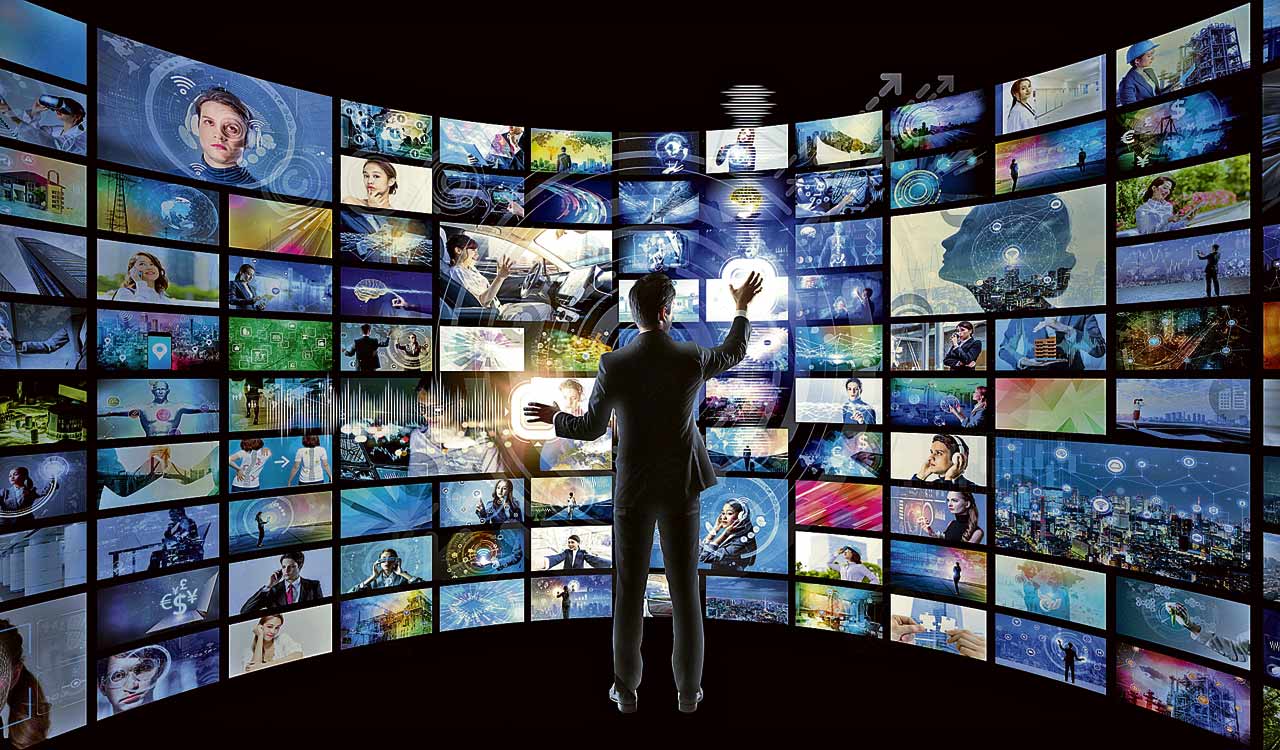
Launch an app. Or find that song you were nostalgic about on YouTube. In both cases, the site ensures that we stay on it. Every site induces you to linger, follow the next link. What is at stake is not necessarily a product or service: the site and the company that owns it, is monetising your attention. Stay tuned: there is something to interest you.
Also Read
Economies of Attention
The Nobel Laureate in Economics, Herbert Simon, argued:
in an information-rich world, the wealth of information means a dearth of something else: a scarcity of whatever it is that information consumes. What information consumes is rather obvious: it consumes the attention of its recipients.
What Simon predicted is that as the quantum of information grows exponentially, it becomes difficult for human cognition to stay tuned to a particular info-byte. This condition makes attention itself a scarce commodity. Hence companies, advertisers and cultural intermediaries begin to vie for the attention of the consumer: how to get the consumer to stay online, paying full attention to whatever they wish to sell?
When one of the scarcest commodities is attention, then strategies and processes are directed at leveraging the amount of time (which is central to the act of paying attention) spent on their adverts and products. Influencers and advertisers see attention as the core of their sales pitch. (In this they are not very different from teachers – whose principal job is to keep the class full of students, some indifferent, some sleepy, attentive to what s/he is saying.)
The acknowledgement of the importance of the attention economy has led to active research in the area. In 2015, the Harvard Business Review examined four different kinds of video advertisements. Cinema, they discovered, induced full attention because the audience was captive and so ‘advertisers can assume that their audience will pay full attention until the end of the commercial’. In the case of television, where people had more options (change channel, go away) attention was partial, and mostly to the ad screen. The advertiser has to balance entertainment and information to ensure attention. In the case of multitasking audiences (evening-time television, in this case study), the advert has to compete for their attention because they are not even constantly looking at the TV screen (which is their second screen, the first being their mobile). Finally, when there is no attention at all, the advert has to grab attention first.
Attention Economy Engineering
TV programmes are not, contrary to established ideas, the chief purpose of the device. The programme is an excuse to grab eyeballs, retain them and then sell the products in the commercials. That is, the programme is merely a context for embedding commercial information.
The aim is to grab attention at the lowest possible expense. The desperation to control the attention of audiences drives incendiary content, as a UN Economist Network document from March 2023 notes. Titled ‘New Economies for Sustainable Development: Attention Economy’, the document states:
to maximize profits, algorithms are programmed to increase engagement by maximizing virality of the content, which often promotes highly “incendiary, controversial, or polarizing” content to drive interactions. This increases exposure to unhealthy content often based on mis- or false information, significantly impairing conscious decision-making and risks creating addiction, desensitization and radicalization.
It draws attention to the present context where ‘people falsely believe they are getting objective data when using search engines, while in fact algorithms have been applied to create filter bubbles to select information a user would like to see based on information about the user, such as location, past click-behaviour and search history’. It asks: is it ‘appropriate to use technology to influence user behaviour for commercial gain’? Every search query, every click, every datum revealed is a source for the attention merchants, as they are called, to compute consumer behaviour for their own ends: they know what you pay attention to, they know what site/product you linger over. Banners like ‘discounts’ or ‘offers’, or ‘never before prices’ are easy slogans that immediately grab eyeballs.
Attention Economy Deficits
To the question of commercial gain, we need to add political gain as well, given that trolling, hate speech and electorate manipulation through one-sided information dispersion is an established tactic now. Thus, targeted advertising, manipulation of click behaviour and outright incendiary content are modes of grabbing and retaining attention.
Political micromarketing, first initiated during Barack Obama’s presidential campaign in which, as philosophers Vincent F Hendricks and Mads Vestergaard observe in their book Reality Lost: Markets of Attention, Misinformation and Manipulation (2019): ‘Over a billion targeted e-mails were sent, particularly to young people and members of minorities in order to mobilize them to vote for the first time and vote for Obama’.
We recognise the above strategy now as a commonplace. Potential voters are sent incendiary messages, repeatedly. The rhetoric is crisp and direct. There is no pause or need for reflection because the markers in the discourse tap into cultural anxiety about, say, ‘my culture’, ‘my religion’ or ‘my identity’. By definition, in the age of short attention spans, these incendiary materials have to have strong emotional content, wrapped in partial or outright misleading information (‘they are breeding faster than us and will soon overrun the country’, ‘they are persuading our daughters and sisters to have liaisons with their young men’). Only one form of belonging and identity is vouchsafed and alternative forms of belonging ruled out (belonging to a religion does not preclude my participation in other cultural forms/practices).
UNESCO states the case for attention economy’s vulnerability when it writes in a document titled ‘What you need to know about the new guide on addressing hate speech through education’ (2023):
In the “attention economy”, hate speech narratives are the ones that often seduce the most, offering an easily achievable sense of community and maximized reach of such messages.
It calls for greater levels of educational engagement to point out alternative models of belonging, of identity-making, as a counter to hate speech and attention manipulation. Reflective reading and sustained analytical discourses whether in the classroom or in public discourse (who reads extended editorials or op-eds now, unless you are retired? – give me the one-line news flash that goes right to the (diseased) heart of the (hateful) matter) which used to be the domain of the liberal arts need to be brought back.
Once upon a time media scholar Susan Moeller spoke of ‘compassion fatigue’. We are now, in the age of unending information supply, open to attention fatigue. The problem is: in the minimal attention frames we now possess, we have filled it with the most distressing one-liners that condition us into animosity and a questionable pride in narrow affiliations and exclusionary monumental constructions. In the attention economy, we are information vulnerable. More hate is coming your way to make you in equal parts, distrustful and anxious.
Stay tuned.

Related News
-

Mrunal Thakur calls brother Mandar her ‘first baby’: ‘You’ve taught me patience’
-
KTR demands withdrawal of coal mine proposal near Ramappa temple
-
ED raids Ex-Bengal minister Indranil Sen’s home in UNESCO pass sale probe
-
Anupam Kher shares heartfelt birthday tribute for Robert De Niro, recalls drama school days