Opinion: What 16th Finance Commission misses
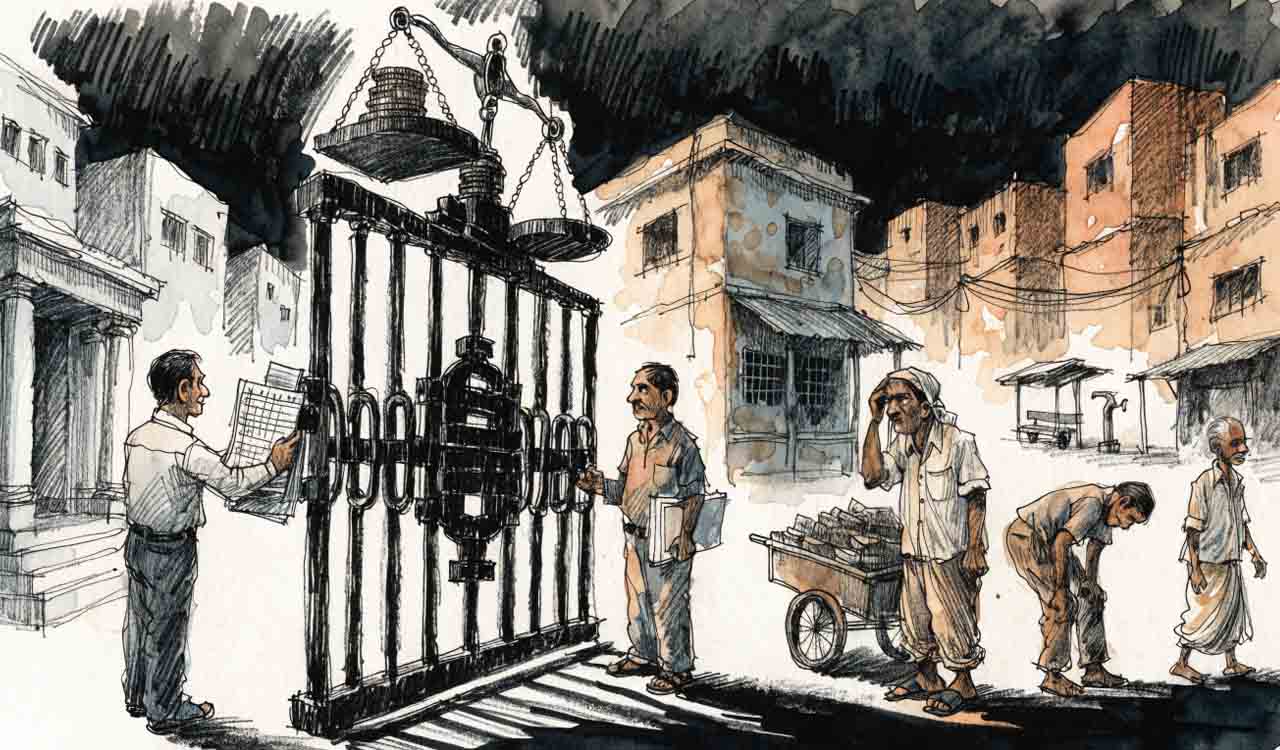
The approach to treat ULBs as a homogenous group, with a one-size-fits-all model, risks limiting autonomy and widening inequalities among Indian cities


By Anshu Kalkal, Dr Arvind Kumar Pandey
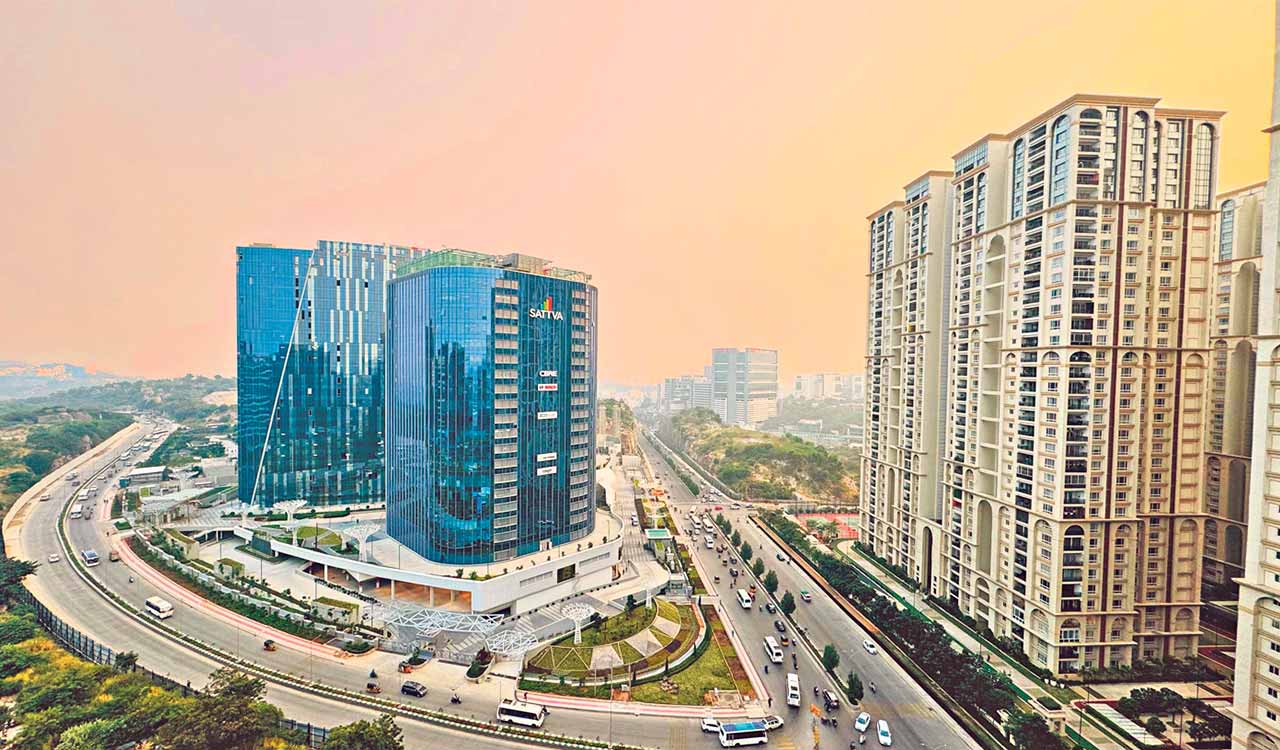
Indian cities are urbanising faster than ever. As cities continue to grow, so does the need for adequate infrastructure, including water supply and waste management, housing, and transport. The World Urbanisation Prospects 2025 highlights that India is one of the major drivers of global urbanisation. This underscores the need for robust urban infrastructure. In this context, the discussion should not focus solely on rapid urbanisation but also on how cities will address the infrastructure needs of the current and future urban population.
Also Read
Recommendations
The 16th Finance Commission (FC) has made several recommendations on the finances of urban local bodies, making this an important point of discussion among academia and urban professionals.
The Commission has recommended a total allocation of Rs 7,91,493 crore to duly constituted Rural Local Bodies (RLBs) and Urban Local Bodies (ULBs) for the period 2026-27 to 2030-31, the largest allocation ever made to the third tier of government. Of this, ULBs are expected to receive Rs 3,56,257 crore, along with a special infrastructure component of Rs 56,100 crore. At first glance, this signals a clear recognition of India’s rapidly urbanising future.
Importantly, the Commission has acknowledged issues related to census towns and outgrowths, where rural settlements are governed by Panchayats but counted as urban in population statistics. This creates a gap in infrastructure availability for citizens living in these peri-urban areas. To overcome this challenge, the Commission has recommended a one-time grant as an incentive for merging peri-urban villages into adjacent larger municipalities with a population of not less than one lakh. An urbanisation premium of Rs 10,000 crore will be disbursed as a one-time eligibility amount.
Flawed Design
However, this design carries the risk of excluding census towns and peri-urban areas that are not adjacent to larger municipalities. These areas often suffer from inadequate infrastructure and a lack of urban fiscal transfers because their rural governance leaves them fiscally stranded. While the urbanisation premium may benefit a large subset of transition areas, it may bypass several fast-growing settlements.
Additionally, even after more than three decades since the implementation of the 74th Constitutional Amendment, urban decentralisation remains incomplete. The concept of “devolution” is yet to be fully realised. The FC report outlines a structured system of grants over a five-year period, with clear annual trajectories and a defined split between basic and performance grants. However, this does not automatically translate into autonomy for ULBs.
To translate record allocations into real autonomy, the panel must expand untied grants, differentiate funding, support smaller ULBs, and strengthen decentralisation
In practice, funds continue to flow from the Union to States and then to cities, with States controlling their timing, release and compliance conditions. The report itself shows wide variation: a few States, like Haryana and Maharashtra, transfer significant funds, while others, including West Bengal and Andhra Pradesh, lag behind. This weakens the intent of the grants. Cities are held accountable for service delivery, but do not fully control the flow of money.
The push to mandate State Finance Commissions (SFCs), audited accounts, and transparent reporting is largely compliance-driven rather than a structural shift in the State-ULB balance. Though these measures aim to improve accountability and fiscal discipline, they reinforce a similar pattern, which is “cities being the primary implementing agency rather than autonomous fiscal units”.
The 16th FC has also emphasised expanding grants, allocating a record Rs 7,91,493 crore. However, there is relatively limited focus on strengthening municipal revenue structures or expanding cities’ tax and non-tax bases. While the scale of grants has increased, the fiscal design remains largely unchanged, just like old wine in a new bottle.
The Commission also links a portion of these funds to performance. From 2027–28 onwards, urban local bodies must demonstrate growth in their own source revenue (OSR) to qualify for performance grants, while States must transfer at least 20% of the basic grant from their own resources. In principle, this “reward effort” approach is sound.
However, the design assumes the existence of an ideal city, which is digitally enabled, adequately staffed, fiscally buoyant and institutionally compliant. As a result, it risks performance thresholds becoming exclusionary rather than enabling. Cities with better resources are more likely to meet these conditions and capture a larger share of funds, while weaker municipalities may fall further behind.
Grants to States
Another critical design issue lies in how the FC distributes grants across States. The 16th FC assigns a weight of 90% to the projected urban population and 10% to an index based on its own source revenue. While this appears objective, weak State Finance Commissions mean that allocations within States are largely driven by population-based criteria.
This approach treats ULBs as a homogenous group, with a one-size-fits-all model. In reality, Indian ULBs are a diverse group, from metropolitan cities to medium towns and small municipalities, with differing service costs, revenue bases, and challenges. A uniform formula in such a case is akin to comparing apples to oranges. It brings the risk of formula-based equity at the national level while reproducing inequality across cities on the ground.
To translate record allocations into real autonomy, there must be an expansion of untied grants, differentiated funding based on city size, performance-linked conditions supported by capacity-building, especially for smaller ULBs, and a stronger push for decentralisation rather than administrative dependence. The opportunity now lies in building on FC’s unprecedented scale by refining its design so that increased spending translates not just into better services, but also into stronger, more autonomous and equitable cities.
(The authors are associated with the Department of Humanities and Social Sciences at the Indian Institute of Technology Tirupati. Views are personal)

Related News